
Kalispell, MT · Flathead County
Kalispell, MT Attic Insulation Built for Cold-Climate Performance
Attic insulation in Kalispell, MT has to handle a long heating season and real snow load. We air seal the ceiling plane and install closed-cell spray foam, with thickness set by the assembly and the code requirements for your project.
- Air Sealing First: Top plates, chases, and hatches are sealed before anything else is added.
- Closed-Cell SPF Only: Roughly R-6 to R-7 per inch, so target R-values fit in less depth.
- Roof Deck or Ceiling Plane: We spray the assembly that suits the house, vented or unvented.
- Ventilation Handled Deliberately: Baffles stay clear in a vented attic, or the attic is brought inside the envelope.
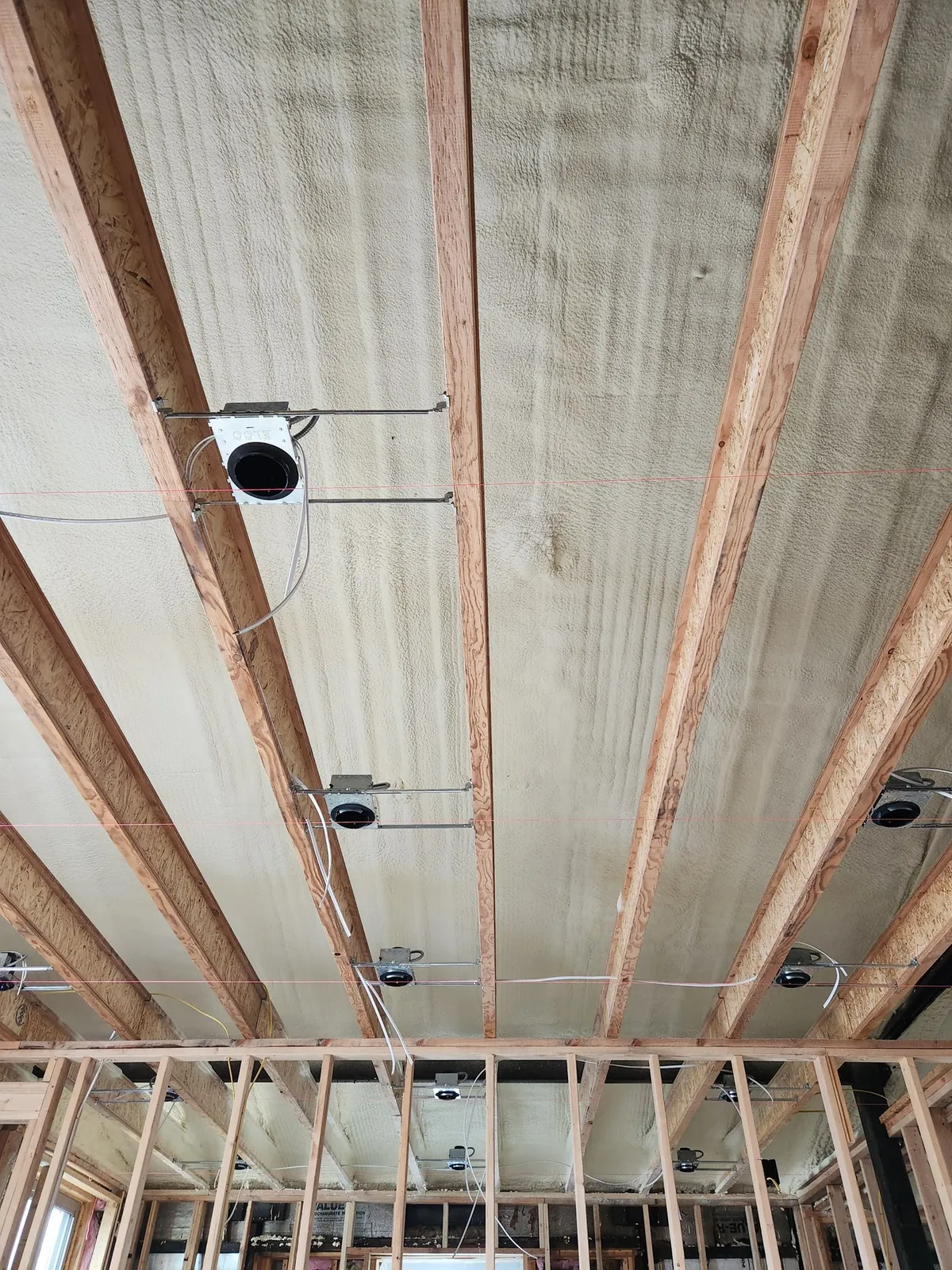
Example of the kalispell attic insulation work Peak Insulation provides for homes and shops across the Kalispell service area.
Cold-climate performance
Why Attic Work Matters in a Flathead Valley Winter
Kalispell heating seasons are long, and the attic is where stack effect does the most damage. Most attics we open show shallow fiberglass installed decades ago, often compressed, and almost always sitting over an unsealed ceiling plane. Depth alone does not fix that, because the air is moving straight past it.
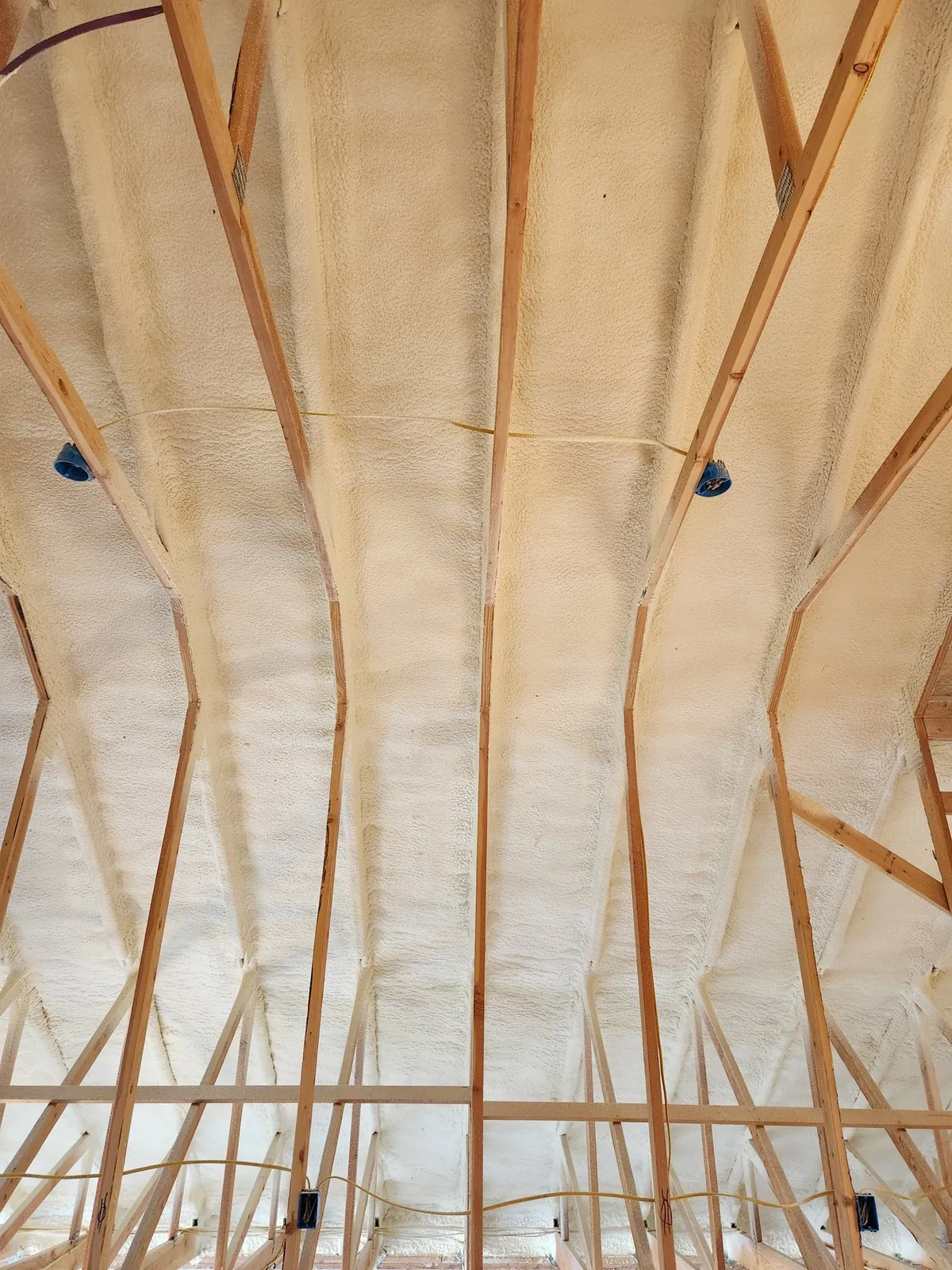
Closed-cell spray foam changes the assembly rather than adding another layer on top of the old one. It air-seals and insulates in the same pass, and at roughly R-6 to R-7 per inch it reaches target R-values in less depth than loose-fill needs.
What Closed-Cell Foam Brings to a Cold-Climate Attic
- R-Value Per Inch: Roughly R-6 to R-7 per inch, which matters where depth is limited.
- Air Barrier in One Pass: The insulation and the air seal are the same layer, applied together.
- Vapor Behavior: At typical installed thickness, closed-cell foam also acts as a vapor retarder.
- Stays Put: Rigid foam does not settle or shift away from edges the way loose-fill can.
From the field
Blown-in insulation can still be a sensible lower-cost choice in an open, well-sealed vented attic where depth is available. Closed-cell foam is the better fit when the ceiling plane leaks, depth is tight, or the roof deck needs to come inside the envelope. Peak Insulation Co. installs closed-cell spray foam only.
Google Reviews
What neighbors near Kalispell say
Rated 5.0 on Google by homeowners and contractors across Northwest Montana
“They are absolutely professional and timely. They do a phenomenal job and clean up. I definitely recommend to all. 5 stars”
“We use Peak Insulation exclusively for all of our homes. They do great work, with very competitive pricing.”
“Josiah with Peak Insulation was very professional to work with. I called him about insulating my dog house after the cold weather arrived. The day after I called he stopped by my house and sprayed it. Prompt, professional service.”
Our install process
Our Cold-Climate Attic Upgrade Methodology
- 1
Inspect Attic Bypasses and Venting
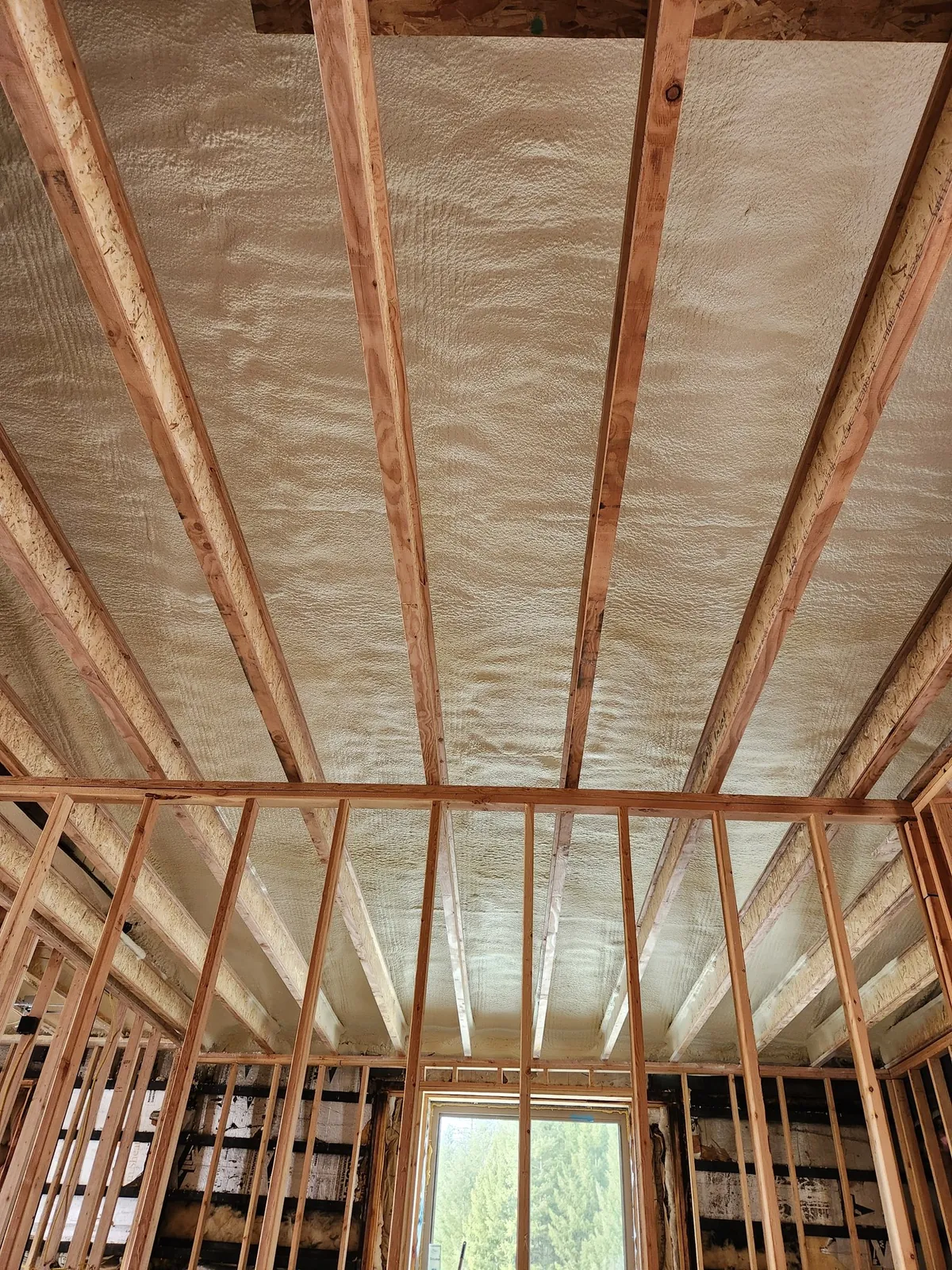
We walk the attic and map recessed lights, bath fans, plumbing chases, and hatches, which is where most of the leakage lives.
- 2
Check Existing Insulation and Decking
Depth checks show where old insulation compressed, and we look at the sheathing for staining or past leaks that need repair first.
- 3
Decide the Assembly
Ceiling plane or roof deck, vented or unvented. That decision drives ventilation, thickness, and any covering requirement.
- 4
Apply Foam in Controlled Lifts
Closed-cell foam goes on in lifts so it cures and bonds properly, then thickness is checked across the assembly.
What sets us apart
Comprehensive Attic Performance Solutions
Insulation alone will not fix comfort or energy problems while air leakage and moisture sources go unaddressed. We treat the attic as a system, not a depth number.
Air Barrier Continuity
Sealing top plates, wire penetrations, and dropped soffits stops warm air from pushing into the attic. That work comes before anything else.
Ventilation Decided Up Front
A vented attic keeps clear soffit to ridge airflow. An unvented roof deck assembly brings the attic inside the envelope instead. The two are not mixed.
Moisture Source Control
Bath fans have to exhaust outside, not into the attic. We check duct runs before foam goes in, because foam over a moisture source makes it worse.
Coverage Verification
We check thickness and continuity across the assembly, especially at kneewall intersections and eave transitions where coverage is easy to lose.
Comfort and efficiency
How Does Better Attic Work Improve Home Comfort?
The usual complaint is a furnace that runs constantly while upstairs bedrooms stay cold. That is stack effect: warm air rises, leaks through attic bypasses, and pulls cold replacement air in through every gap below. Insulation without air sealing only slows it down.
Real-World Comfort Gains from Attic Work
- More Even Temperatures: Second-floor rooms track much closer to the thermostat setting.
- Fewer Drafts: Sealing attic bypasses cuts the cold-air infiltration you feel at baseboards and outlets.
- Less Ice Dam Risk: Keeping the roof deck colder reduces the melt and refreeze cycle at the eaves.
- Quieter Upstairs: A sealed ceiling plane cuts some of the outside noise that came in with the air.
Most clients notice the difference within the first heating cycle. On one 1980s Kalispell split-level, the master bedroom would not hold temperature no matter where the thermostat sat. The attic hatch had no weatherstripping and sat directly above the hallway, working as a thermal chimney. No amount of added depth was going to fix that.
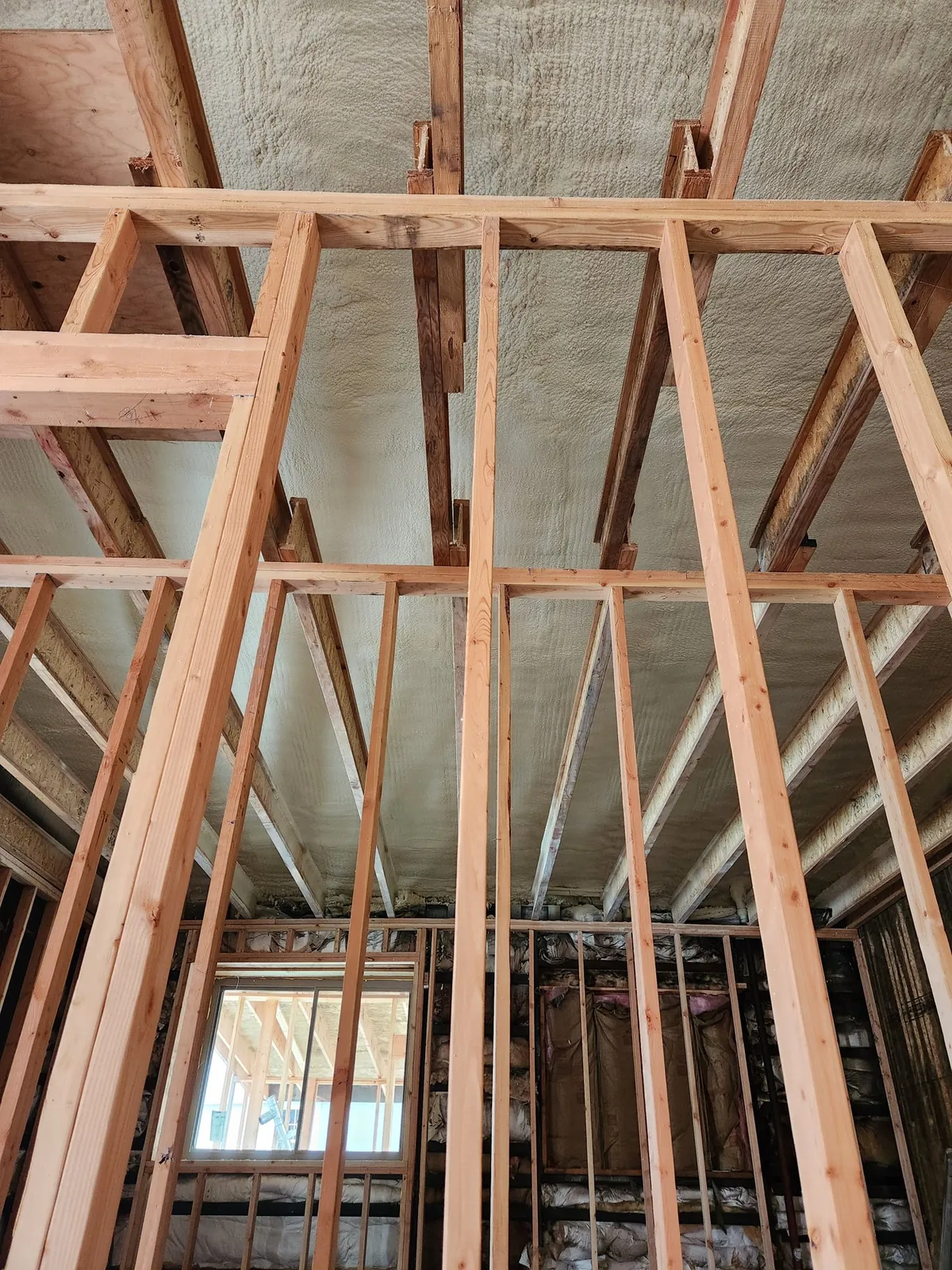
Example of the kalispell attic insulation work Peak Insulation provides for homes and shops across the Kalispell service area.
Moisture control
Attic Assemblies and Energy Use
Kalispell furnaces run from October through April, and an under-insulated, leaky attic is usually the largest single weak point in the envelope. Sealing the ceiling plane and getting the R-value up reduces that loss substantially, though the exact savings depend on the house, the fuel, and how it was performing before.
How the Assemblies Compare
- Sealed Ceiling Plane with Foam: Air barrier and insulation in one layer, with less depth needed for the same R-value.
- Unvented Roof Deck with Foam: Brings ductwork and the attic inside the envelope. Requires an approved covering where foam stays exposed.
- Vented Attic with Blown-In: Lower cost per square foot and workable where depth is plentiful, but it does not air seal on its own. We do not install it.
Air sealing plus a proper attic assembly usually shows up on the heating bill, but we do not quote a percentage, because the honest answer depends on duct location, windows, and thermostat habits. What owners describe most often is a furnace that cycles less and upstairs rooms that finally hold temperature through a cold week.
Code and design
Ice Dam Prevention Through Attic Assembly Design
Ice dams form when attic heat warms the roof deck, melting snow that refreezes at the cold eave. The fix is not more heat tape or bigger gutters. It is stopping the air leakage and heat loss that warm the deck in the first place. We have seen deeply insulated attics still build dams because recessed can lights and bath fan housings were never sealed, letting warm air bypass the insulation entirely.
When the air barrier is right and the roof deck stays cold, the dams stop forming. It is not flashy work, but it is the detail that holds up through Flathead winters.
Recent work
See the work we put our name on
Service Area
Serving Kalispell and Surrounding Flathead Valley Communities
As a residential insulation contractor, we work with homeowners and property managers throughout Kalispell and the surrounding Flathead Valley, including Columbia Falls and Whitefish, along with rural properties on the Highway 93 corridor. Attic work is one part of the home insulation services we provide, and scheduling is coordinated around your access and occupancy needs.
Service Area
- Homes and cabins across the greater Kalispell area.
- Columbia Falls and Whitefish projects on the same scope and spec.
- Rural properties along the Highway 93 corridor.
Scheduling stays flexible across Kalispell and neighboring communities to fit your timeline.
View Peak Insulation Co. on GoogleKalispell, MT Attic Insulation by Neighborhood
The areas we cover around Kalispell, the ZIP codes they fall in, the buildings we most often work on there, and the permitting and winter conditions that shape the assembly.
Area & Neighborhoods
Central Kalispell
Downtown, Courthouse District, Woodland Park
ZIP Codes
59901
Landmarks & Housing
Flathead County Courthouse, Woodland Park, Main Street / US-93
Older bungalows, Craftsman homes, Alley garages
Attic Focus & Code Notes
Access is the limiter on older bungalows, craftsman homes, alley garages: we stage from the gable or hatch and spray knee walls and roof decks, rim joists, basement walls.
Inside city limits, permits go through the City of Kalispell Building Department. Montana state-adopted residential code (IRC), administered locally; foam plastic needs a code-compliant thermal or ignition barrier (IRC R316).
Winter Conditions & Systems
Cold winters with inversion fog and steady snow load.
Knee walls and roof decks · Rim joists · Basement walls
Area & Neighborhoods
Evergreen & North Kalispell
Evergreen, Whitefish Stage, Reserve Drive
ZIP Codes
59901
Landmarks & Housing
Flathead River, Whitefish Stage Road
Ranch homes, Manufactured homes, Light commercial
Attic Focus & Code Notes
Knee walls and low-slope sections on ranch homes, manufactured homes, light commercial drive the scope more than attic square footage.
Outside city limits these parcels permit through Flathead County Planning and Zoning.
Winter Conditions & Systems
River-bottom humidity, freezing fog, hard frost.
Crawl space walls and liners · Rim joists · Shop buildings
Area & Neighborhoods
West Valley & Kila
West Valley, Kila, Smith Lake area
ZIP Codes
59901, 59920
Landmarks & Housing
Smith Lake, West Valley farmland
Farmhouses, Pole barns, Post-frame shops
Attic Focus & Code Notes
Most farmhouses, pole barns, post-frame shops in this area need bypasses at top plates and can lights closed before any foam goes down.
Flathead County permitting; agricultural buildings still need the IRC R316 covering where foam is exposed in occupied areas.
Winter Conditions & Systems
Open wind exposure with drifting snow.
Metal building panels · Purlin and girt cavities · Shop ceilings
Area & Neighborhoods
Somers & Lakeside
Somers, Lakeside, Angel Point
ZIP Codes
59932, 59922
Landmarks & Housing
Flathead Lake north shore, Somers Bay
Lake homes, Cabins, Guest quarters
Attic Focus & Code Notes
Most lake homes, cabins, guest quarters in this area need bypasses at top plates and can lights closed before any foam goes down.
Flathead County permitting; lakeshore protection review applies near Flathead Lake in addition to the building permit.
Winter Conditions & Systems
Lake moisture and wind, milder but damper winters.
Cathedral ceilings · Crawl space closed-cell · Rim joists
Area & Neighborhoods
Bigfork & Creston
Bigfork, Creston, Swan River corridor
ZIP Codes
59911, 59919
Landmarks & Housing
Swan River, Flathead Lake east shore, Jewel Basin trailheads
Custom homes, Cabins, Detached shops
Attic Focus & Code Notes
Vented attics over custom homes, cabins, detached shops are usually converted to a sealed deck using roof decks, wall cavities, crawl spaces and rim joists.
Flathead County permitting; high-performance custom builds often carry engineered assembly details in the plan set.
Winter Conditions & Systems
Cold valley nights with lake-driven humidity.
Roof decks · Wall cavities · Crawl spaces and rim joists
Not sure which assembly your Kalispell project needs?
Peak Insulation Co. works out of Libby, Montana and covers Northwest Montana & North Idaho. We do not publish a walk-in address, so quotes happen on site: we measure the assembly, check access, and give you a real number.
Pricing
What Attic Insulation Costs in Kalispell, MT
Closed-cell spray foam in Montana generally runs $4 to $9 per square foot installed for roughly R-21, and attic pricing moves with access, existing insulation removal, air sealing scope, and the thickness the assembly needs. An attic with vermiculite, heavy recessed-light retrofits, or difficult access sits at the higher end. The only accurate number is one written against your attic.
What Affects the Price in Kalispell
- Existing Insulation Removal: Pulling out old, compressed, or contaminated insulation adds labor and disposal before any foam goes in.
- Air Sealing Scope: Attics with many recessed lights, bath fans, or complex chase framing take more time to seal properly.
- Thickness and Access: Target thickness and how hard the attic is to move around in both drive the final number.
We give you an itemized quote that separates foam, air sealing, and any removal work. Most attic projects are a one to two day job depending on scope.
FAQ
Frequently Asked Questions
Keep exploring
More insulation services near Kalispell
Spray Foam Insulation in Kalispell, MT
Another Kalispell service we install year round. See scope, materials, and pricing detail.
Learn moreClosed-Cell Spray Foam in Kalispell, MT
Another Kalispell service we install year round. See scope, materials, and pricing detail.
Learn moreCrawl Space Insulation in Kalispell, MT
Another Kalispell service we install year round. See scope, materials, and pricing detail.
Learn moreAttic Insulation in Eureka, MT
Same crew, same spec, Eureka and the surrounding Tobacco Valley.
Learn moreAttic Spray Foam Insulation
Our full service page covering materials, assemblies, and what a typical install includes.
Learn moreSpray Foam Insulation in Kalispell, MT
The Kalispell hub page with every insulation service we install across Flathead County.
Learn moreSpray Foam Insulation Contractor Serving Kalispell, MT
Peak Insulation Co. serves Kalispell and the wider northwest Montana and north Idaho region.
Learn more
Schedule Your Kalispell Attic Assessment Before Winter
Cold-season comfort starts with a sealed, properly insulated attic. We will walk the attic, document what is there now, and give you a written scope and quote.