Kalispell, MT · Flathead County
Kalispell, MT Crawl Space Insulation Built for Cold-Climate Moisture Control
Peak Insulation Co. installs code-compliant crawl space insulation throughout Kalispell, meeting Montana's R-19 cavity and Class I vapor retarder requirements. Every project includes moisture assessment, sealed vent closure, and final inspection documentation.
- Zone 6 Compliance: R-19 cavity or R-15 continuous wall insulation per Montana energy code
- Vapor Barrier Installation: Class I retarder with sealed seams over all exposed earth
- Vent Sealing Protocol: Permanent closure and insulation of temporary foundation vents before final
- Flathead Valley Experience: Familiar with local moisture patterns and temperature swings year-round
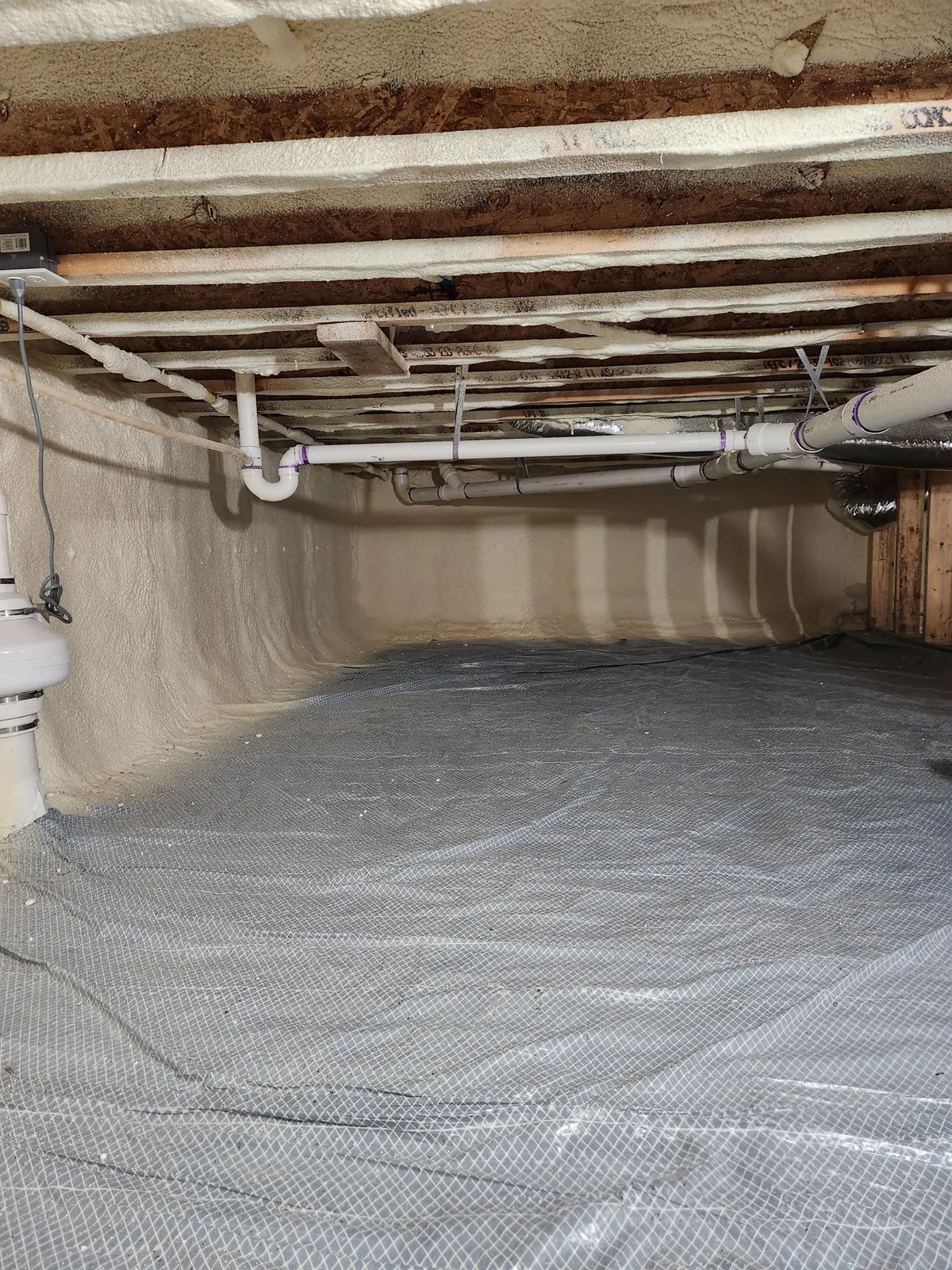
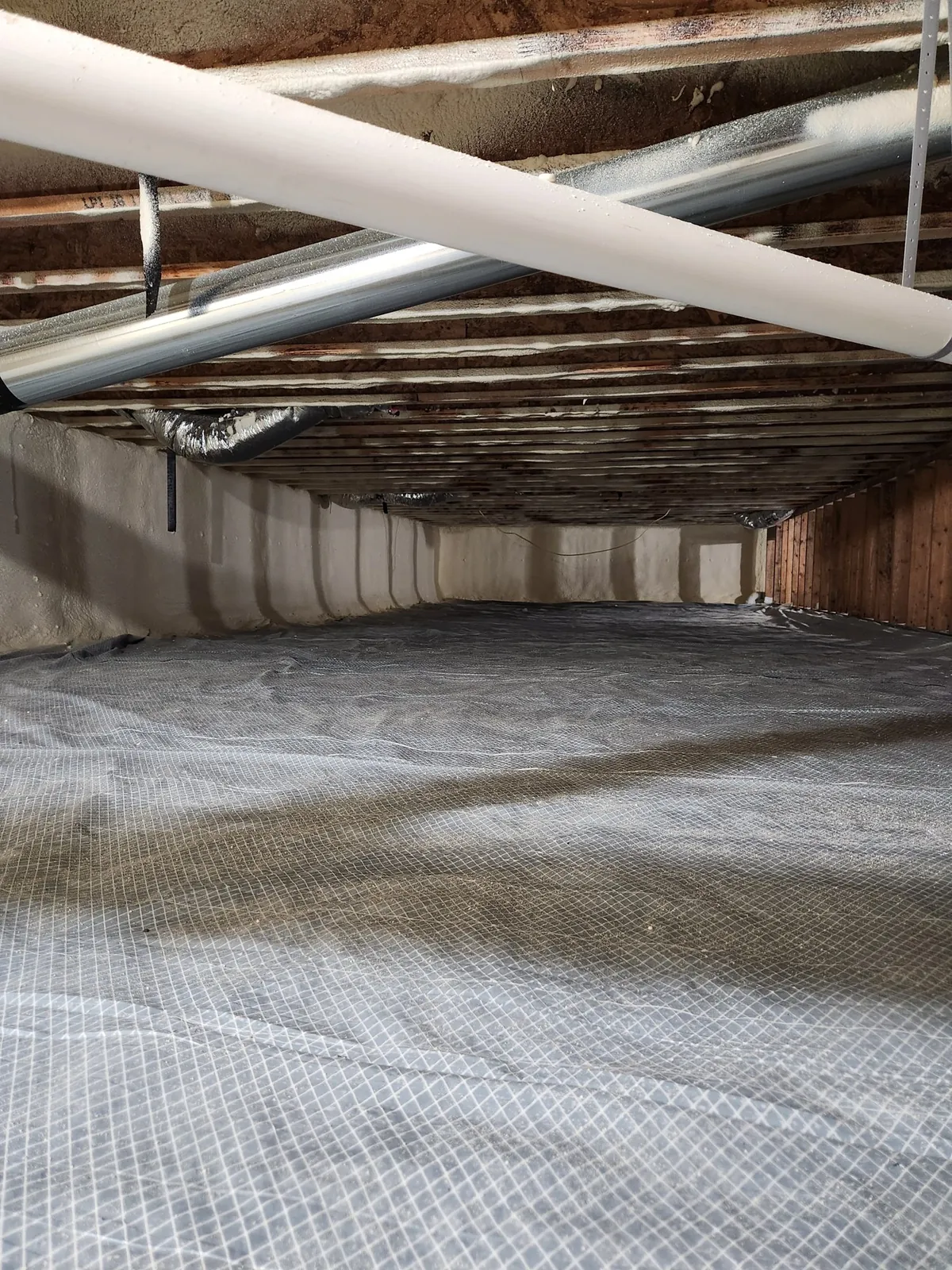
Example of the kalispell crawl space insulation work Peak Insulation provides for homes and shops across the Kalispell service area.
Cold-climate performance
Best Crawl Space Insulation Methods for Kalispell's Climate
Most older homes in the Flathead Valley have vented crawl spaces that were never designed for Montana's Zone 6 winters. Cold air leaks through the floor, ground moisture rises into the joists, and heating bills climb every season. The honest answer is that adding batt insulation between floor joists rarely solves the problem because it doesn't address air movement or vapor intrusion.
What Actually Works in Cold-Climate Crawl Spaces
- Unvented Wall Assembly: R-19 closed-cell foam or R-15 continuous board on foundation walls
- Ground Vapor Control: 12-mil reinforced barrier with overlapped seams and wall termination
- Vent Closure: All foundation vents sealed, insulated, and documented for inspection
- Rim Joist Sealing: Air gaps at the sill plate sealed with foam or caulk
From the field
A common pattern in older Flathead Valley split-levels: plenty of insulation under the floor, open rim joists, and open crawl vents pulling winter air straight across the subfloor. Adding more R-value under the floor does little in that situation. Sealing the perimeter and the band boards is what changes how the floor feels.
Google Reviews
What neighbors near Kalispell say
Rated 5.0 on Google by homeowners and contractors across Northwest Montana
“They are absolutely professional and timely. They do a phenomenal job and clean up. I definitely recommend to all. 5 stars”
“We use Peak Insulation exclusively for all of our homes. They do great work, with very competitive pricing.”
“Josiah with Peak Insulation was very professional to work with. I called him about insulating my dog house after the cold weather arrived. The day after I called he stopped by my house and sprayed it. Prompt, professional service.”
Our install process
How We Transition Vented Crawl Spaces to Code-Compliant Assemblies
- 1
Inspect Crawl Space Moisture Sources
We map ground water intrusion, check wood moisture content with pin meters, and log baseline humidity before any insulation work begins.
- 2
Install Code-Compliant Wall Insulation
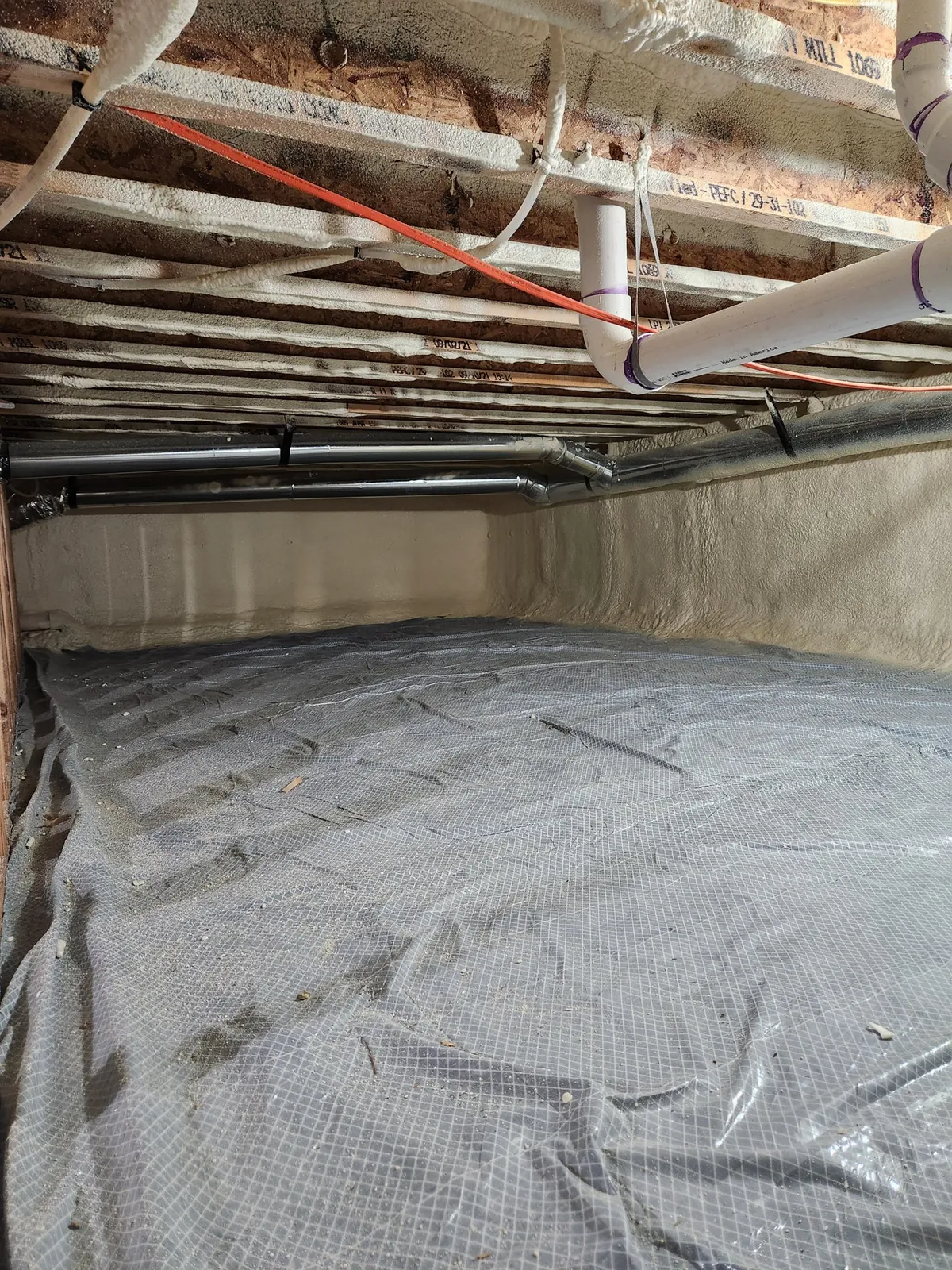
Closed-cell foam is applied to the foundation walls at the thickness the assembly and local code call for, with the rim joists sealed in the same pass.
- 3
Seal Vents and Ground Barrier
Foundation vents are closed with insulated panels, and a Class I vapor retarder covers all exposed earth with sealed seams and wall upturn.
What sets us apart
Why Unvented Assemblies Outperform Floor Insulation in Zone 6
Montana energy code allows two paths: R-30 floor insulation over a vented crawl space, or R-19 wall insulation in an unvented crawl space. The second option tends to perform better in cold climates because it treats the crawl space as semi-conditioned space rather than an outdoor buffer zone.
Air Sealing Advantage
Wall insulation shuts down the convective loops between the crawl space and the floor assembly. Vented crawl spaces pull cold outdoor air across the subfloor no matter how much batt insulation you add between joists.
Moisture Control
Unvented assemblies require a sealed vapor barrier over the ground, which stops capillary rise and reduces relative humidity. Vented crawl spaces in humid climates often see condensation on cool surfaces during summer months.
Pipe Freeze Protection
When the crawl space is semi-conditioned, plumbing lines stay above freezing even during January cold snaps. Vented crawl spaces expose pipes to outdoor temperatures, which can drop below 0°F in Kalispell.
Inspection Compliance
Kalispell's building department ties crawl space vent closure and vapor barrier installation to final inspection. Unvented assemblies meet that requirement; vented crawl spaces with floor insulation do not trigger the same inspection checkpoint.
Comfort and efficiency
Trusted Solutions for Moisture Control Below the Home
Crawl space moisture in northwest Montana comes from three directions: ground vapor, surface water intrusion, and condensation on cold surfaces. Most contractors address only one of those sources. We map all three during the initial assessment and sequence the work so that bulk water is controlled before any insulation or vapor barrier goes in.
How We Prevent Moisture Problems Long-Term
- Drainage Corrections First: Sump basins and perimeter drains installed before vapor barrier or insulation
- Wood Moisture Monitoring: Pin meter readings at joists and sill plates to verify drying
- Vapor Barrier Termination: 12-mil scrim-reinforced sheet turned up foundation walls and sealed with termination bar
- Dehumidifier Sizing: 70 to 120 pints per day based on crawl volume and leakage
In practice, this tends to mean that drainage work happens first, insulation second, and dehumidification last. Reversing that order leads to trapped moisture and mold growth on new insulation. One pattern we see consistently is contractors who install foam without checking for standing water, then blame the product when the crawl space smells worse six months later.
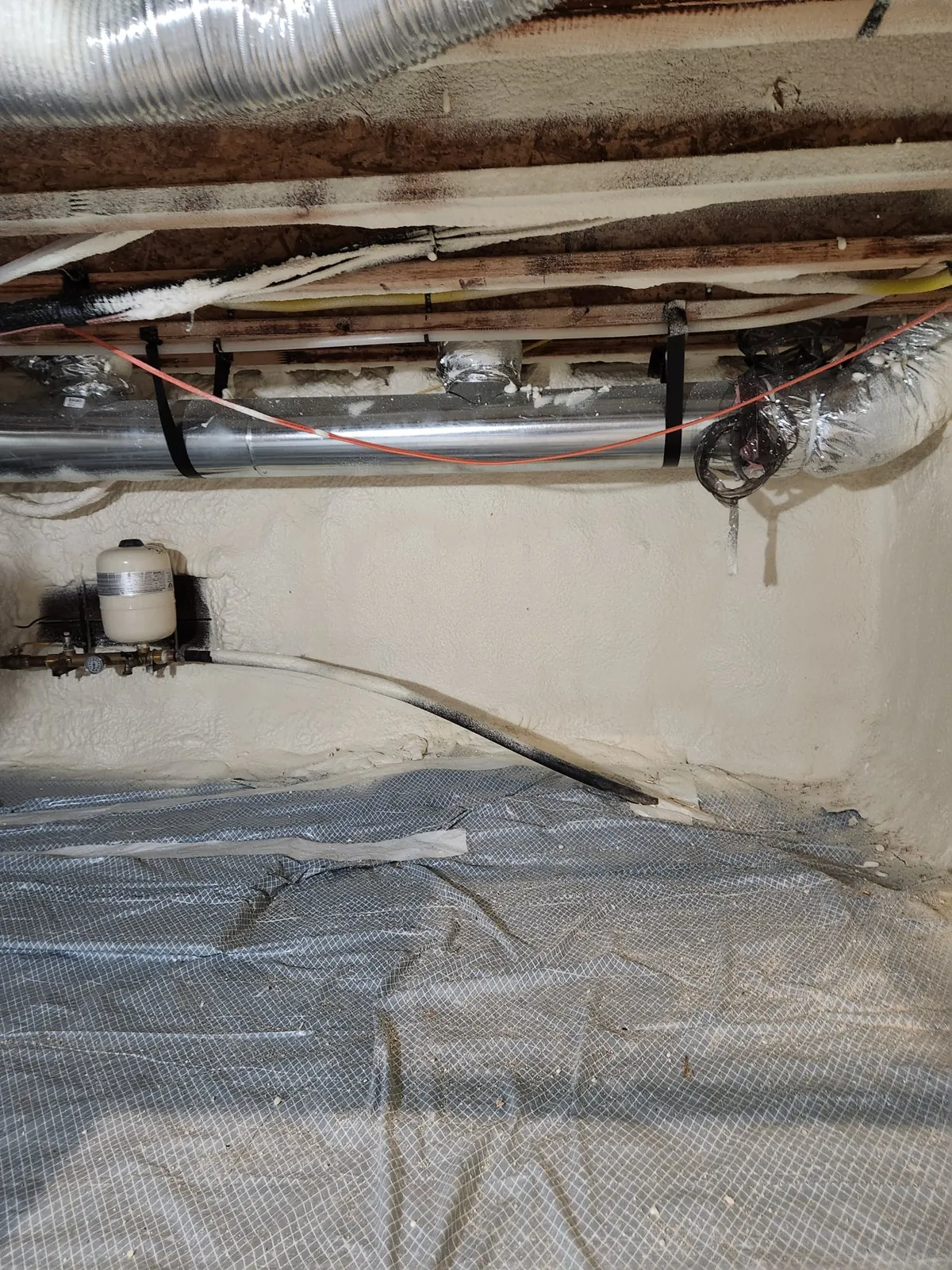
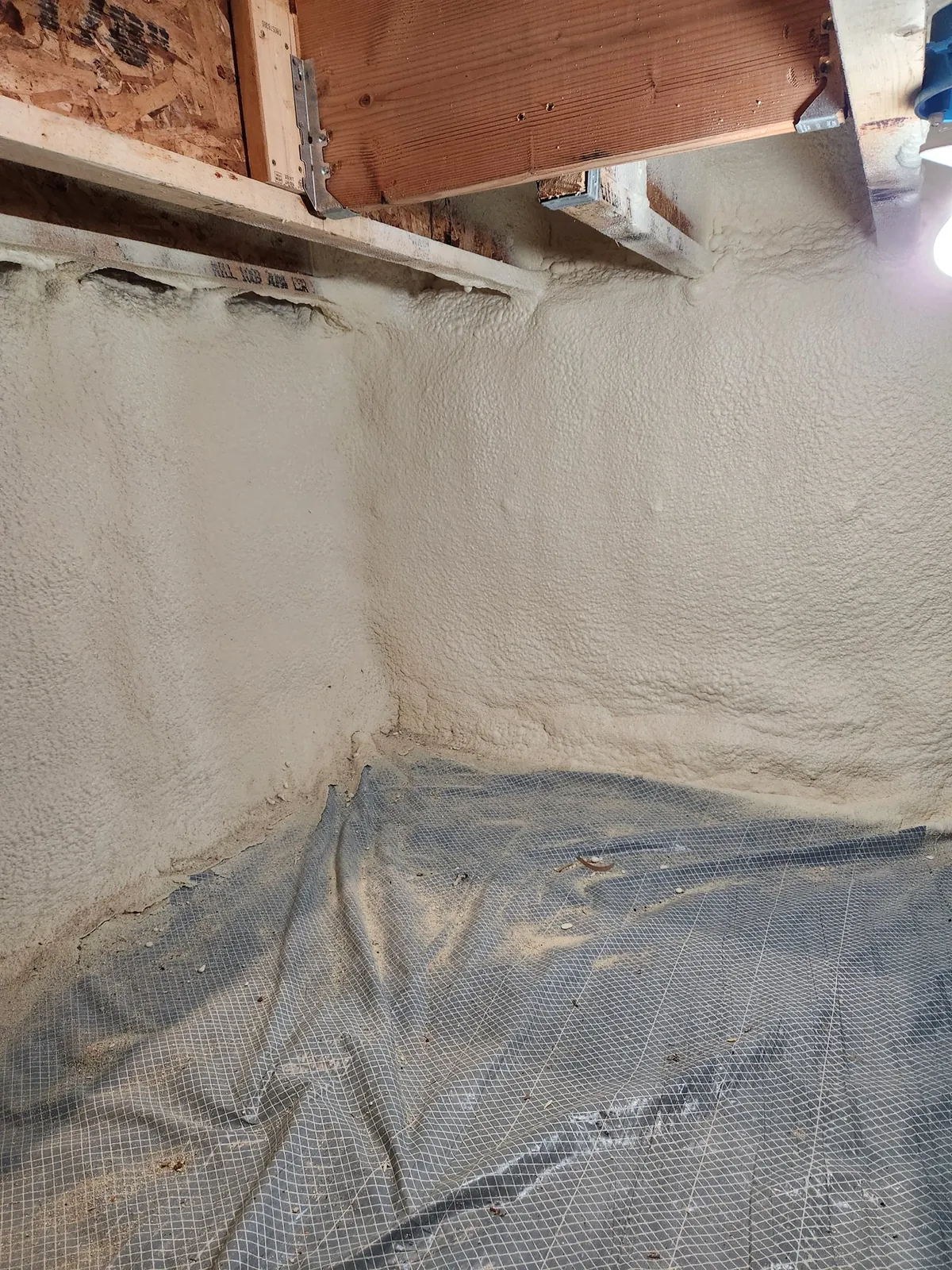
Example of the kalispell crawl space insulation work Peak Insulation provides for homes and shops across the Kalispell service area.
Moisture control
What Signs Show Crawl Space Insulation Needs Attention?
You open the access hatch and smell damp earth, or you notice cold spots on the floor above the crawl space during winter. Those are the obvious signals. Less obvious: higher heating bills without a clear cause, or condensation on ductwork running through the crawl space during summer. All of these point to inadequate insulation, missing vapor barriers, or vented assemblies that no longer make sense in Montana's climate.
Observable Symptoms in Flathead Valley Homes
- Cold Floor Surfaces: Surface temperatures 5 to 10°F below room temperature in winter
- Musty Odor: Persistent smell from crawl space access or floor registers above
- High Relative Humidity: RH readings above 60 percent in the crawl space year-round
Summer humidity in a vented crawl space is often the opposite problem from winter. Warm outdoor air enters through the vents and meets cool foundation walls, and moisture condenses on those surfaces. In that situation, insulating under the floor does not address the source. Closing the space off, laying a ground vapor barrier, and insulating the perimeter walls treats the crawl space as part of the house instead of as outdoor space with a lid on it.
Code and design
How Kalispell's Building Code Shapes Crawl Space Projects
The City of Kalispell requires that unvented crawl spaces have at least R-19 cavity insulation or R-10 foam on the walls, plus a Class I vapor retarder over all exposed earth. Temporary foundation vents must be closed, sealed, and insulated before final inspection. That means any encapsulation project triggers a permit and a final walkthrough, which is why documentation matters. Most contractors in the area are familiar with the requirement, but enforcement varies depending on whether the project is a new build or a retrofit.
We've completed dozens of encapsulation projects under this code, and the inspection process has become straightforward. Inspectors look for continuous vapor barrier coverage, sealed vents, and insulation that meets the R-value requirement. When the work is documented and sequenced correctly, final approval typically happens in one visit.
Recent work
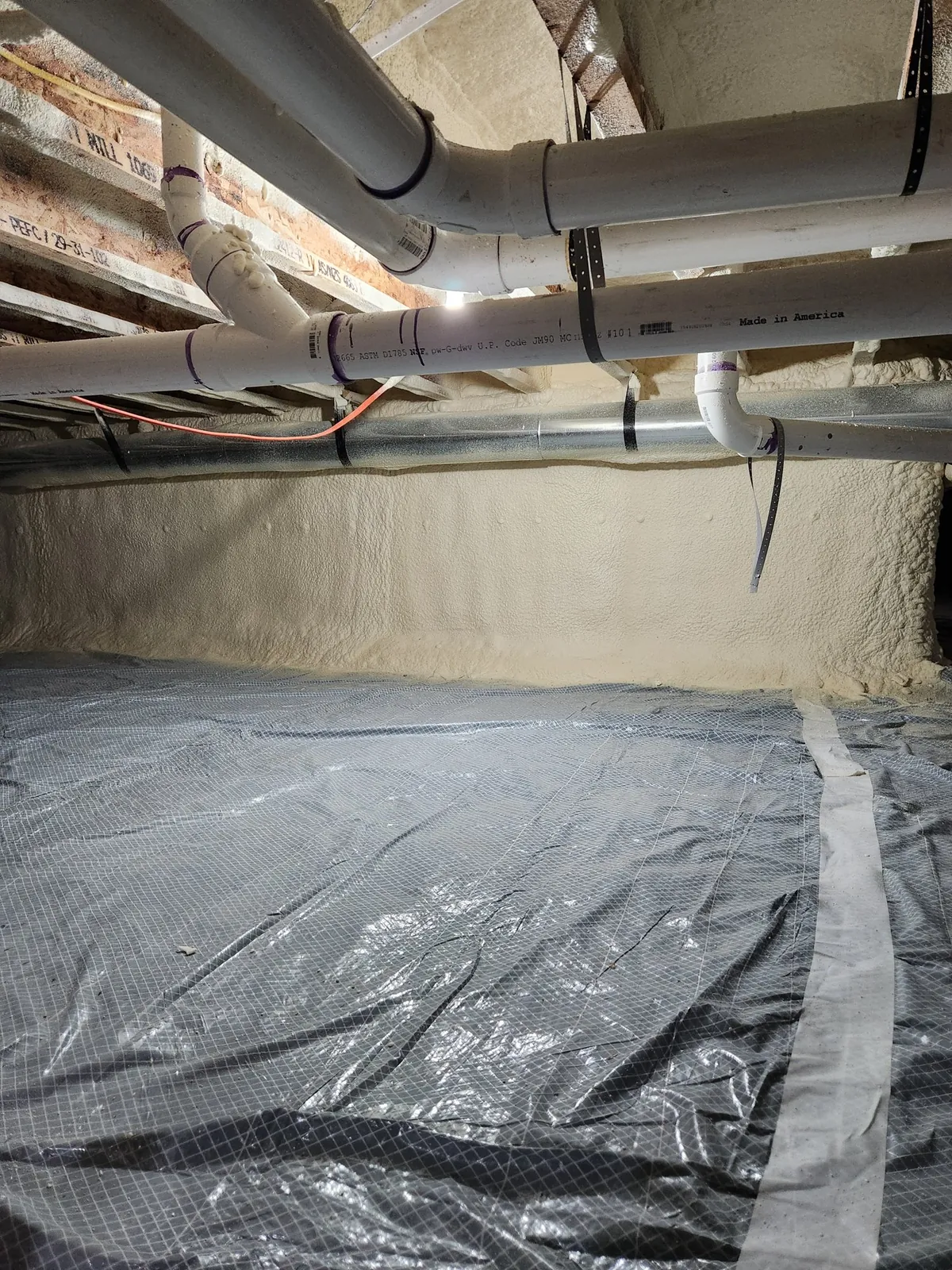
See the work we put our name on
Service Area
Serving Kalispell, MT and Surrounding Areas
Peak Insulation Co. provides residential insulation services for homeowners and property managers throughout Kalispell and the Flathead Valley. Our crew regularly works in Columbia Falls, Whitefish, and Bigfork, where crawl space moisture and cold-floor complaints are common. We schedule projects around your availability and provide written documentation for building department submittals when permits are required.
Service Area
- Projects completed in Evergreen, Lakeside, and Somers on a regular basis.
- Clients near Highway 93 North and the Columbia Falls corridor.
- Full coverage across the greater Kalispell metro and Flathead County.
We coordinate inspections and final walkthroughs with the City of Kalispell Building Department for all permitted encapsulation work.
View Peak Insulation Co. on GoogleKalispell, MT Crawl Space Insulation by Neighborhood
The areas we cover around Kalispell, the ZIP codes they fall in, the buildings we most often work on there, and the permitting and winter conditions that shape the assembly.
Area & Neighborhoods
Central Kalispell
Downtown, Courthouse District, Woodland Park
ZIP Codes
59901
Landmarks & Housing
Flathead County Courthouse, Woodland Park, Main Street / US-93
Older bungalows, Craftsman homes, Alley garages
Crawl Space Focus & Code Notes
Piers and skirted sections on older bungalows, craftsman homes, alley garages are detailed by hand, with knee walls and roof decks, rim joists, basement walls on the walls.
Inside city limits, permits go through the City of Kalispell Building Department. Montana state-adopted residential code (IRC), administered locally; foam plastic needs a code-compliant thermal or ignition barrier (IRC R316).
Winter Conditions & Systems
Cold winters with inversion fog and steady snow load.
Knee walls and roof decks · Rim joists · Basement walls
Area & Neighborhoods
Evergreen & North Kalispell
Evergreen, Whitefish Stage, Reserve Drive
ZIP Codes
59901
Landmarks & Housing
Flathead River, Whitefish Stage Road
Ranch homes, Manufactured homes, Light commercial
Crawl Space Focus & Code Notes
Low headroom under ranch homes, manufactured homes, light commercial sets the working method more than the footprint does.
Outside city limits these parcels permit through Flathead County Planning and Zoning.
Winter Conditions & Systems
River-bottom humidity, freezing fog, hard frost.
Crawl space walls and liners · Rim joists · Shop buildings
Area & Neighborhoods
West Valley & Kila
West Valley, Kila, Smith Lake area
ZIP Codes
59901, 59920
Landmarks & Housing
Smith Lake, West Valley farmland
Farmhouses, Pole barns, Post-frame shops
Crawl Space Focus & Code Notes
Standing moisture and open vents under farmhouses, pole barns, post-frame shops get addressed before the walls are foamed.
Flathead County permitting; agricultural buildings still need the IRC R316 covering where foam is exposed in occupied areas.
Winter Conditions & Systems
Open wind exposure with drifting snow.
Metal building panels · Purlin and girt cavities · Shop ceilings
Area & Neighborhoods
Somers & Lakeside
Somers, Lakeside, Angel Point
ZIP Codes
59932, 59922
Landmarks & Housing
Flathead Lake north shore, Somers Bay
Lake homes, Cabins, Guest quarters
Crawl Space Focus & Code Notes
Standing moisture and open vents under lake homes, cabins, guest quarters get addressed before the walls are foamed.
Flathead County permitting; lakeshore protection review applies near Flathead Lake in addition to the building permit.
Winter Conditions & Systems
Lake moisture and wind, milder but damper winters.
Cathedral ceilings · Crawl space closed-cell · Rim joists
Area & Neighborhoods
Bigfork & Creston
Bigfork, Creston, Swan River corridor
ZIP Codes
59911, 59919
Landmarks & Housing
Swan River, Flathead Lake east shore, Jewel Basin trailheads
Custom homes, Cabins, Detached shops
Crawl Space Focus & Code Notes
Rim joists take the first pass under custom homes, cabins, detached shops, then wall foam and roof decks, wall cavities, crawl spaces and rim joists.
Flathead County permitting; high-performance custom builds often carry engineered assembly details in the plan set.
Winter Conditions & Systems
Cold valley nights with lake-driven humidity.
Roof decks · Wall cavities · Crawl spaces and rim joists
Not sure which assembly your Kalispell project needs?
Peak Insulation Co. works out of Libby, Montana and covers Northwest Montana & North Idaho. We do not publish a walk-in address, so quotes happen on site: we measure the assembly, check access, and give you a real number.
Pricing
What Crawl Space Insulation Costs in Kalispell, MT
Crawl space insulation in Kalispell typically runs $2,800 to $6,500 for a standard 1,200-square-foot home, which is 15 to 30 percent higher than the national average. The premium reflects Montana's Zone 6 energy code requirements for R-19 wall insulation, Class I vapor barriers, and the labor involved in sealing foundation vents and installing termination bars in cold-weather conditions.
What Affects the Price in Kalispell, MT
- Crawl Space Access and Height: Low clearance under 24 inches increases labor time and material handling difficulty, raising costs by 20 to 40 percent.
- Drainage and Moisture Remediation: Sump pump installation, perimeter drains, or mold remediation add $1,200 to $3,500 depending on scope and existing conditions.
- Insulation Type and R-Value: Closed-cell spray foam costs more per square foot than board or batt materials, but it is also the air barrier, so separate air sealing is not a second line item.
Quotes vary by job scope, existing moisture issues, and whether drainage work is needed before insulation. We provide written estimates after the initial assessment and moisture mapping.
FAQ
Frequently Asked Questions
Keep exploring
More insulation services near Kalispell
Spray Foam Insulation in Kalispell, MT
Another Kalispell service we install year round. See scope, materials, and pricing detail.
Learn moreClosed-Cell Spray Foam in Kalispell, MT
Another Kalispell service we install year round. See scope, materials, and pricing detail.
Learn moreAttic Insulation in Kalispell, MT
Another Kalispell service we install year round. See scope, materials, and pricing detail.
Learn moreCrawl Space Insulation in Eureka, MT
Same crew, same spec, Eureka and the surrounding Tobacco Valley.
Learn moreCrawl Space Spray Foam Insulation
Our full service page covering materials, assemblies, and what a typical install includes.
Learn moreSpray Foam Insulation in Kalispell, MT
The Kalispell hub page with every insulation service we install across Flathead County.
Learn moreSpray Foam Insulation Contractor Serving Kalispell, MT
Peak Insulation Co. serves Kalispell and the wider northwest Montana and north Idaho region.
Learn more
Schedule a Crawl Space Moisture Assessment in Kalispell Today
Cold floors and musty odors don't fix themselves. We'll map moisture sources, check wood moisture content, and provide a written scope that meets Montana's Zone 6 energy code. Every project includes vapor barrier installation, vent sealing, and documentation for final inspection.