
Eureka, MT · Lincoln County
Eureka, MT Spray Foam Insulation for Cold-Climate Building Envelopes
Peak Insulation Co. installs spray foam insulation across Eureka, MT and the North Valley corridor. Every job includes substrate moisture testing, lift-thickness control, and thermal-barrier compliance for IECC CZ6.
- Climate Zone 6 Compliance: All assemblies meet Montana R-49 attic and R-20 wall targets.
- Moisture Assessment First: We check substrate conditions before foam to prevent trapped moisture.
- Closed-Cell SPF Only: One material, applied at the thickness the assembly and code requirements call for.
- Thermal Barrier Included: DC315 intumescent coating applied where code requires ignition protection.
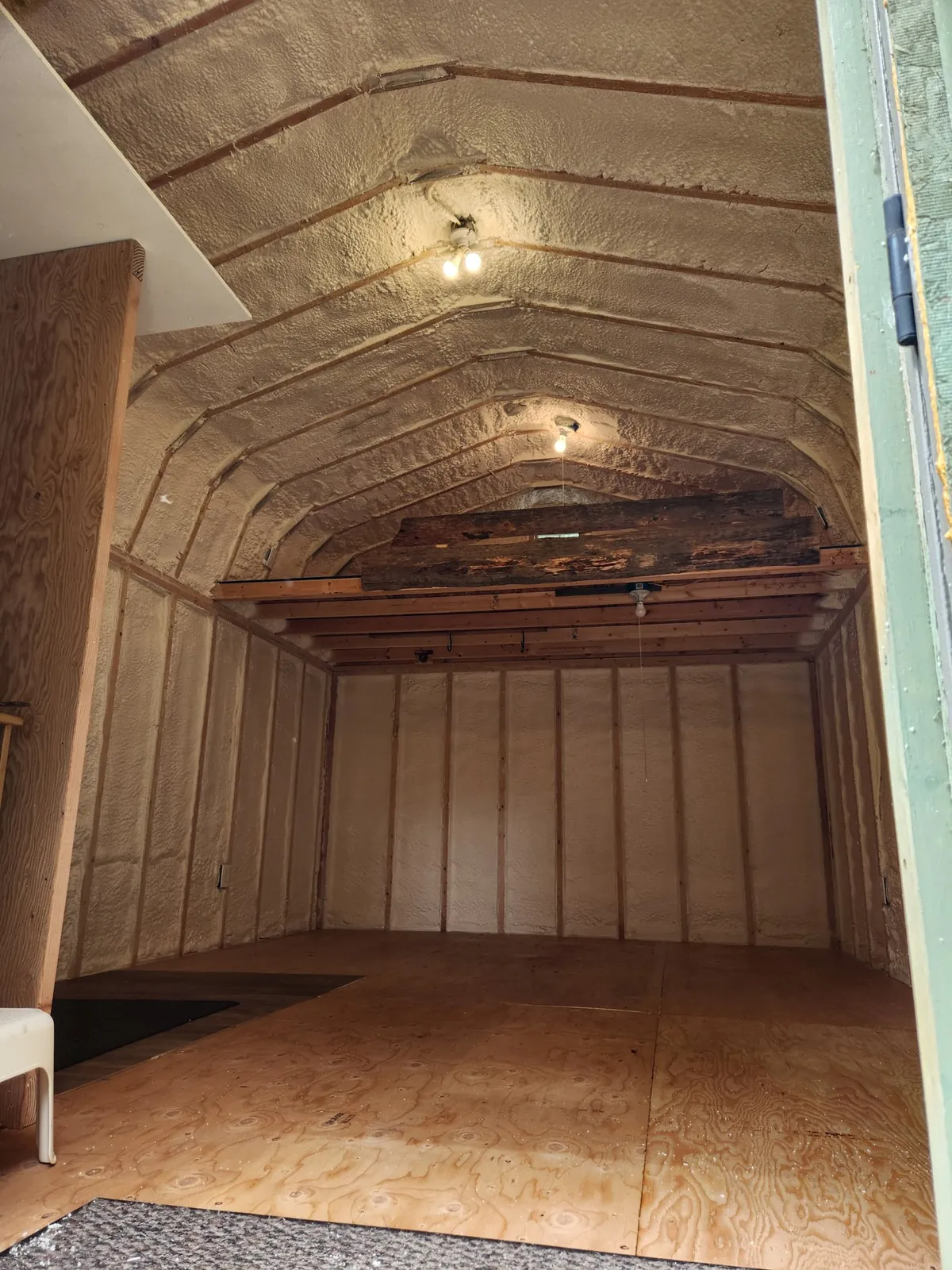
Example of the eureka spray foam insulation work Peak Insulation provides for homes and shops across the Eureka service area.
Cold-climate performance
Best Spray Foam Insulation for Eureka's Freezing Winters
Eureka sits in a humid continental climate where January lows hit 19°F and annual snowfall exceeds thirty inches. That combination makes air sealing as important as R-value. Most heat loss happens through rim joists, attic penetrations, and crawl-space band boards where fiberglass can't stop airflow.
Why Spray Foam Outperforms Traditional Insulation Here
- Air Barrier and Insulation: One application seals leaks and adds R-6 to R-7 per inch.
- Condensation Control: Closed-cell keeps sheathing above dew point in unvented roof assemblies.
- Irregular Framing Coverage: Foam expands into gaps fiberglass batts leave open around wiring and plumbing.
- Long Service Life: No settling, sagging, or moisture absorption over decades of freeze-thaw cycles.
From the field
Closed-cell foam costs more per square foot than fibrous insulation, and it is not the right answer for every cavity. Where air sealing, vapor control, and R-value per inch all matter in the same assembly, it does the work of several layers at once. That is why it is the only foam we install.
Google Reviews
What neighbors near Eureka say
Rated 5.0 on Google by homeowners and contractors across Northwest Montana
“They are absolutely professional and timely. They do a phenomenal job and clean up. I definitely recommend to all. 5 stars”
“We use Peak Insulation exclusively for all of our homes. They do great work, with very competitive pricing.”
“Josiah with Peak Insulation was very professional to work with. I called him about insulating my dog house after the cold weather arrived. The day after I called he stopped by my house and sprayed it. Prompt, professional service.”
Our install process
Our Four-Step Methodology for Every Installation
- 1
Inspect Building Envelope First
We photograph framing, check for hidden moisture with a pin meter, and document substrate temperature before scheduling foam.
- 2
Confirm Code and Moisture Conditions
Every assembly is cross-checked against IRC R806.5 unvented-roof rules and IECC CZ6 R-value targets for Lincoln County permits.
- 3
Apply Foam in Controlled Lifts
Closed-cell foam goes on in controlled lifts to manage heat during cure, with substrate temperature and moisture checked before each pass.
- 4
Verify Cure and Thermal Barrier
We trim excess, apply DC315 intumescent coating where required, and hand you thickness-mapping photos before final walkthrough.
What sets us apart
Comprehensive Foam Solutions for Residential and Commercial Buildings
We handle new construction, retrofits, metal buildings, and pole barns across the North Valley. Every project gets the same substrate prep, lift-thickness control, and thermal-barrier compliance.
Attic and Roofline Foam
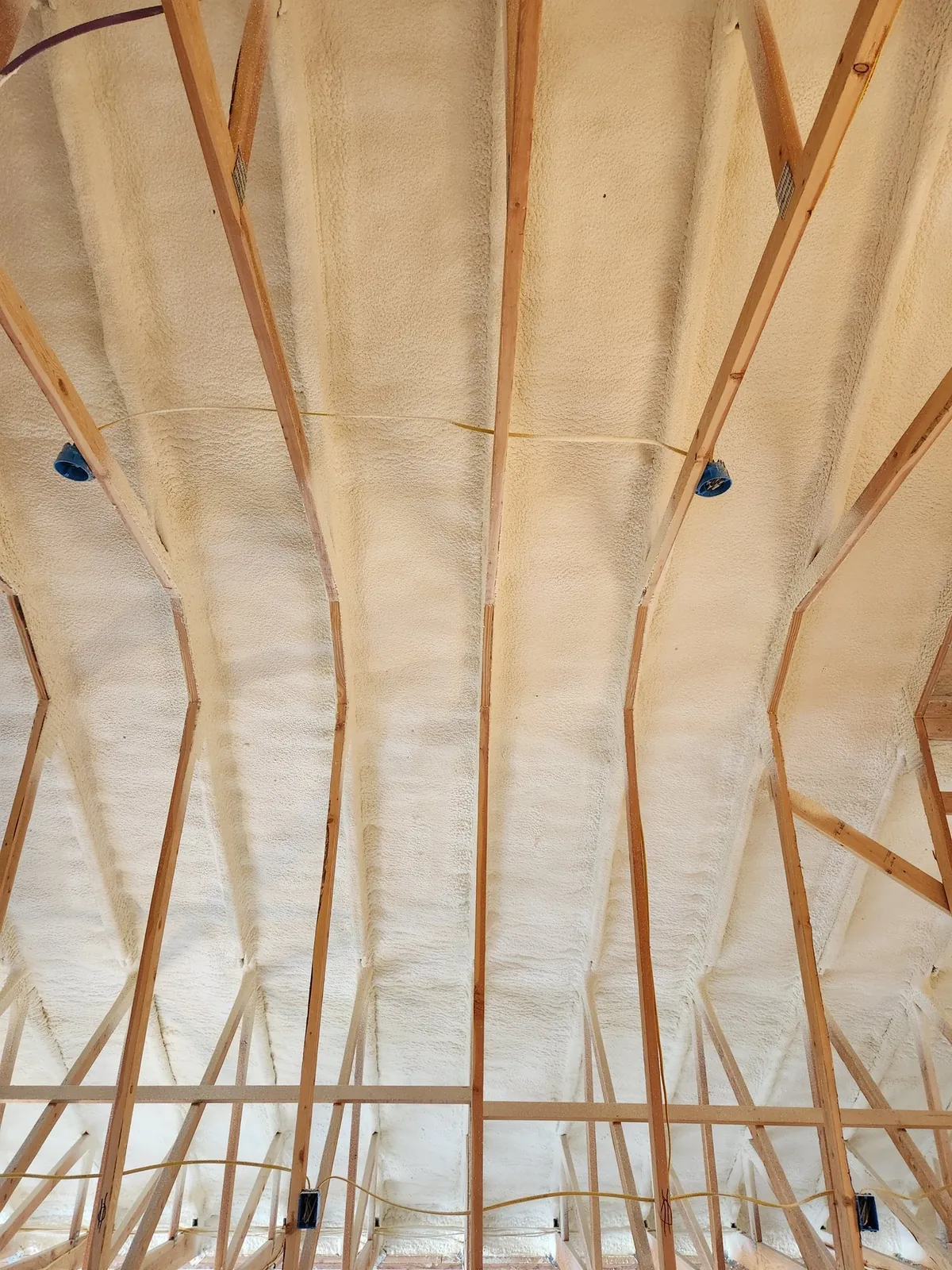
An unvented roof assembly with closed-cell foam keeps the sheathing warmer, which reduces the melt and refreeze cycle behind ice dams. Minimum thickness for dew point control is worked out before spraying.
Rim Joist and Crawl Space
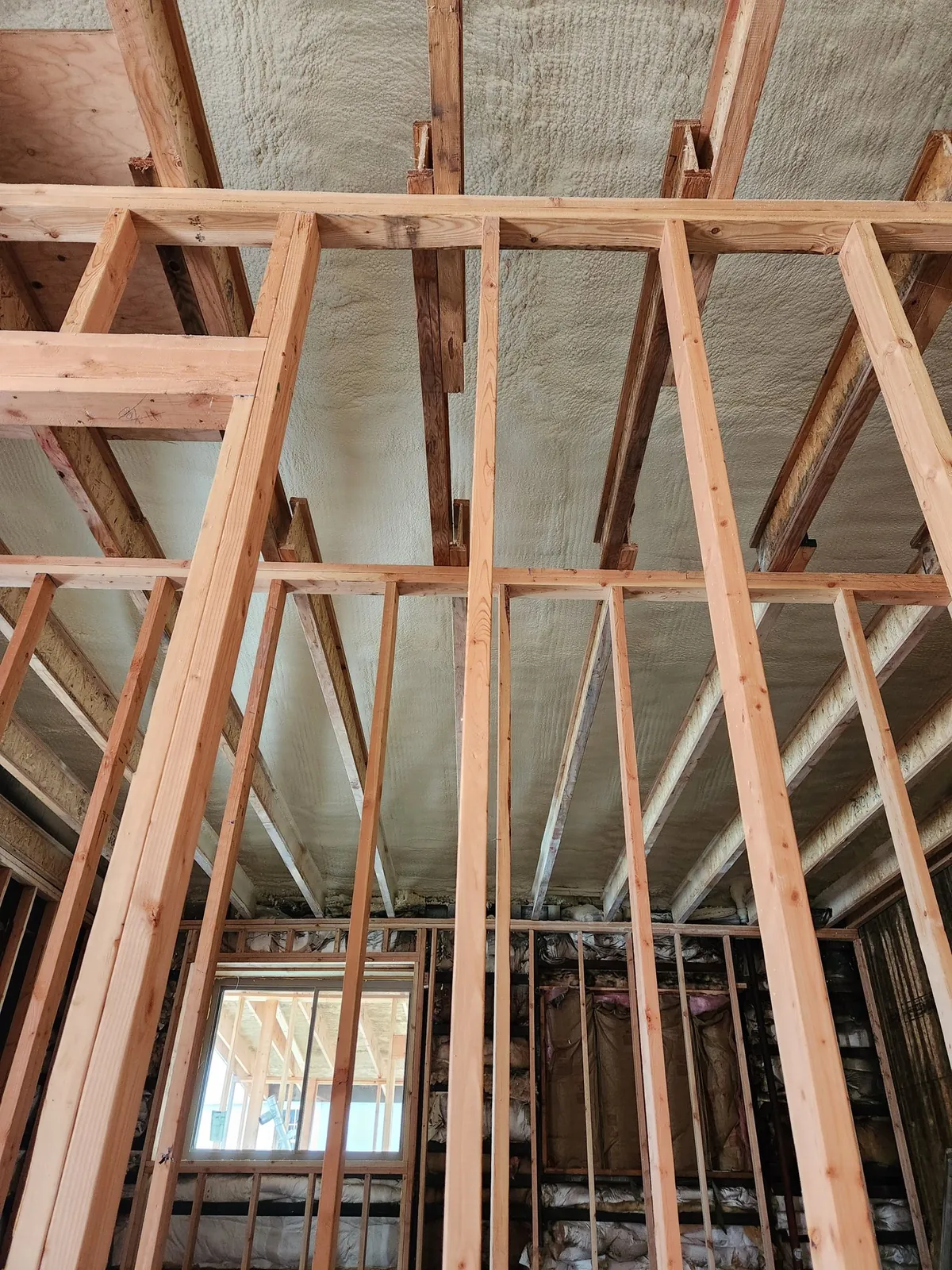
Closed-cell foam at rim joists cuts the stack-effect air leakage behind much of the winter heat loss. Crawl space walls get sealed to reduce frost and moisture risk.
Metal Building Insulation
Closed-cell foam on prepared steel panels controls condensation, stiffens the assembly, and reduces thermal bridging at purlins and girts. Common in shops, barns, and warehouses.
Wall Cavity Retrofit
Closed-cell foam fills and seals stud bays in older homes during remodels, adding R-value and an air barrier where the framing is irregular.
Comfort and efficiency
How Can Trusted Insulation Installers Improve Home Comfort?
You turn up the thermostat, but the bedroom stays cold and the furnace runs all night. That's usually not an insulation problem, it's an air-leakage problem. Spray foam addresses both at once by sealing gaps and adding thermal resistance in a single pass.
What Changes After Foam Installation
- Stable Indoor Temperatures: Rooms heat and cool evenly without hot or cold spots.
- Less Air Leakage: Sealing the leak paths we can reach reduces infiltration through rim joists, top plates, and penetrations. Any air-change figure would need a test to confirm.
- Reduced Furnace Runtime: Heating cycles shorten because the envelope holds conditioned air longer.
One caution worth stating plainly: insulation is an envelope fix, not a heating system. An uninsulated metal shop with a small heater will hold temperature far better once the walls and roof deck are sealed and insulated, but if the heater was undersized to begin with, it will still be undersized afterward. We will tell you when the limiting factor is mechanical rather than envelope.
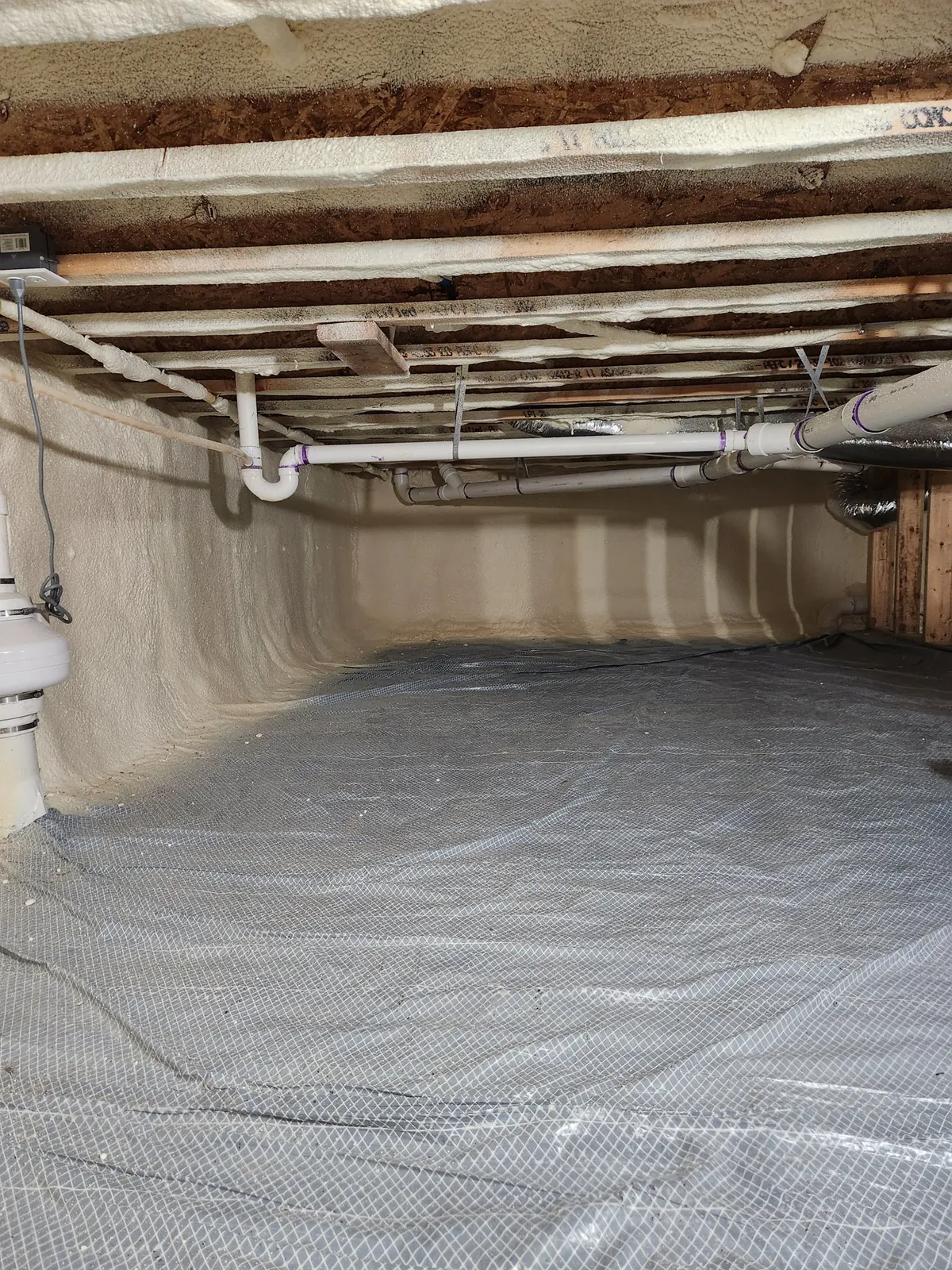
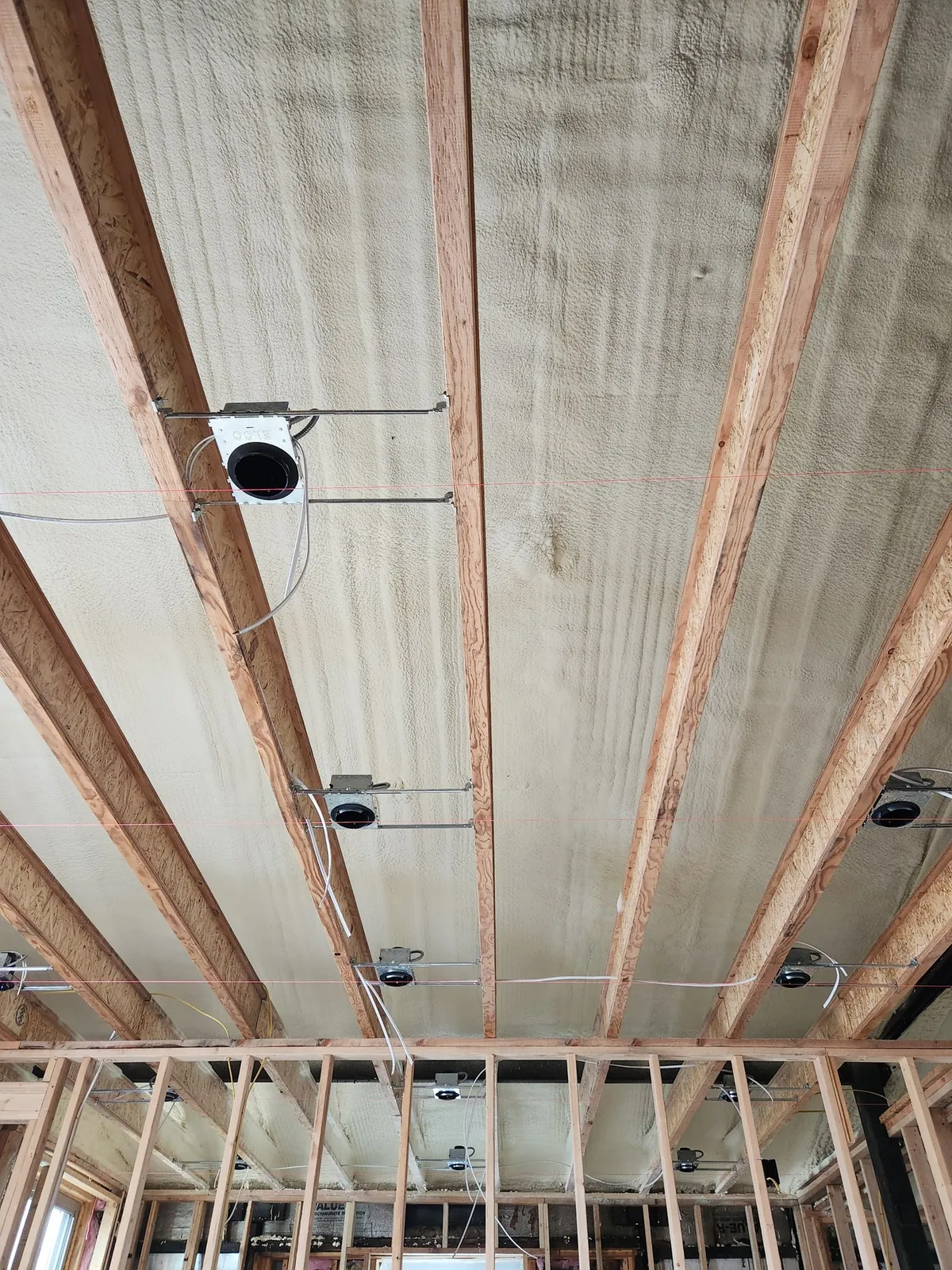
Example of the eureka spray foam insulation work Peak Insulation provides for homes and shops across the Eureka service area.
Moisture control
Spray Foam Applications for Attics, Walls, and Crawl Spaces
Different assemblies need different thicknesses. Attics in this climate often get closed-cell foam at the roofline to keep the sheathing warmer. Walls, crawl space walls, and rim joists get the thickness the assembly needs for both R-value and vapor control.
Common Applications We Handle
- Unvented Attic Assemblies: Closed-cell foam on roof deck, no soffit vents, conditioned attic space.
- Wall Cavities and Rim Joists: Closed-cell foam in open stud bays and band boards where air sealing and R-value are both needed.
- Pole Barn Envelopes: Closed-cell on metal siding and roof to stop condensation and thermal bridging.
Foam is not the whole answer in every space. A garage with a large gap under the overhead door, or a block wall with no exterior insulation, will still feel cold after the cavities are sealed, because the remaining heat loss is through the door and through the concrete itself. We point that out during the walkthrough so the scope matches the actual problem.
Code and design
Why Lincoln County Builders Specify Foam for New Construction
New homes in the valley often use spray foam at the roofline to create conditioned attic space and simplify HVAC duct runs. That approach requires careful attention to minimum foam thickness for dew-point control and thermal-barrier coatings where code mandates ignition protection. We coordinate with framers and HVAC contractors to sequence the work so foam goes on after rough-in but before drywall, and we provide the documentation inspectors need for permit closeout.
Good sequencing matters more than most people expect. When framers leave rim joists accessible and the foam crew is scheduled before the drywall hangers, we can apply controlled lifts, document thicknesses, and give the inspector what they need without a callback. It is not flashy work, but it keeps a build on schedule and keeps a foam job out of trouble.
Recent work
See the work we put our name on
Service Area
Serving Eureka, MT and Surrounding Areas
Peak Insulation Co. serves homeowners, builders, and commercial property owners throughout Eureka and the North Valley. Our crew regularly travels to Trego, Fortine, and the Canadian border corridor for residential retrofits, new construction, and metal-building projects. We schedule around your timeline and coordinate with other trades to keep the job moving.
Service Area
- Frequent projects in Rexford and along the Tobacco River drainage.
- Commercial and agricultural buildings near the Roosville border crossing.
- Full coverage across Lincoln County's northern communities.
We book installations across the region and work with your permit and inspection schedule.
View Peak Insulation Co. on GoogleEureka Neighborhood Insulation & Building Code Reference
The areas we cover around Eureka, the ZIP codes they fall in, the buildings we most often work on there, and the permitting and winter conditions that shape the assembly.
Area & Neighborhoods
Tobacco Valley Core
Downtown Eureka, US-93 corridor, Tobacco River flats
ZIP Codes
59917
Landmarks & Housing
Tobacco Valley Historical Village, Tobacco River, Riverwalk
In-town homes, New builds, Shops and garages
Local Scope & Code Notes
in-town homes, new builds, shops and garages are usually handled in stages, starting with roof deck closed-cell, wall cavities, rim joist air sealing.
Lincoln County Planning permitting for most Tobacco Valley parcels. Montana state-adopted residential code (IRC), administered locally; foam plastic needs a code-compliant thermal or ignition barrier (IRC R316).
Winter Conditions & Systems
Cold, dry winters with strong valley temperature swings.
Roof deck closed-cell · Wall cavities · Rim joist air sealing
Area & Neighborhoods
Lake Koocanusa & Rexford
Rexford, Koocanusa Bridge area, Rexford Bench
ZIP Codes
59930, 59917
Landmarks & Housing
Lake Koocanusa, Koocanusa Bridge
Lake cabins, Second homes, Storage buildings
Local Scope & Code Notes
lake cabins, second homes, storage buildings are usually handled in stages, starting with crawl space walls and liners, roof decks, seasonal cabin envelopes.
Lincoln County permitting; lakeside setback and septic review runs alongside the building permit.
Winter Conditions & Systems
Reservoir humidity, wind exposure, cold winter nights.
Crawl space walls and liners · Roof decks · Seasonal cabin envelopes
Area & Neighborhoods
Fortine & Trego
Fortine, Trego, Deep Creek
ZIP Codes
59918, 59934
Landmarks & Housing
Stillwater State Forest, Fortine Creek
Farmsteads, Cabins, Pole barns
Local Scope & Code Notes
Envelope work on farmsteads, cabins, pole barns here centers on post-frame shop walls, roof decks, under-floor foam.
Lincoln County permitting; ag buildings still need IRC R316 coverings where foam is exposed in occupied space.
Winter Conditions & Systems
Heavier snowpack and colder mornings than the valley floor.
Post-frame shop walls · Roof decks · Under-floor foam
Area & Neighborhoods
Glen Lake & Sophie Lake
Glen Lake, Sophie Lake, Therriault Lakes area
ZIP Codes
59917
Landmarks & Housing
Glen Lake, Sophie Lake, Ten Lakes Scenic Area
Lake homes, Cabins, Detached shops
Local Scope & Code Notes
Older framing and additions on lake homes, cabins, detached shops shape the scope more than the plan size.
Lincoln County permitting; shoreline parcels carry separate setback review. Montana state-adopted residential code (IRC), administered locally.
Winter Conditions & Systems
Lake moisture with cold air settling in winter.
Crawl space closed-cell · Cathedral ceilings · Rim joists
Area & Neighborhoods
Stryker & Olney Corridor
Stryker, Olney, Dickey Lake area
ZIP Codes
59933, 59927
Landmarks & Housing
Dickey Lake, Stillwater State Forest
Rural homes, Cabins, Equipment sheds
Local Scope & Code Notes
Seasonal and part-time use of rural homes, cabins, equipment sheds changes where the sealed boundary belongs.
Lincoln and Flathead county lines both run through this corridor, so confirm the permitting office before framing inspection.
Winter Conditions & Systems
Higher elevation, longer snow season, cold clear nights.
Roof decks · Shop building panels · Crawl space walls
Not sure which assembly your Eureka project needs?
Peak Insulation Co. works out of Libby, Montana and covers Northwest Montana & North Idaho. We do not publish a walk-in address, so quotes happen on site: we measure the assembly, check access, and give you a real number.
Residential insulation
Residential Insulation Contractor Serving Eureka, MT
Peak Insulation Co. provides residential insulation services for Eureka homes, cabins, garages, crawl spaces, attics, roof decks, walls, and new construction. We specialize in closed-cell spray foam, so the air control layer and the insulation go on in the same pass instead of being handled as two separate steps by two different trades.
Most calls we take in the Tobacco Valley start with a symptom rather than a product: a cold bedroom over the crawl space, frost on the inside of a shop wall, ice dams forming every February, or a remodel where the walls are open and the owner wants it done right while access is easy. We walk the assembly, check substrate condition, and recommend the thickness the space actually needs.
If your project is better served by a material we do not install, we will say so rather than spraying foam where it does not belong.
Home Insulation Work We Handle in Eureka
- Attic and roof deck insulation: Foam at the roofline or ceiling plane, with top plate and penetration sealing handled first.
- Crawl space and rim joist insulation: Perimeter walls and band boards sealed to slow the cold air that chills floors above.
- Wall and retrofit insulation: Open stud bays during a remodel or addition, where access makes a continuous layer practical.
- New construction insulation: Scheduled after rough-in and before drywall so thicknesses can be documented for inspection.
Pricing
What Spray Foam Insulation Costs in Eureka, MT
Closed-cell spray foam in Montana typically runs $4 to $9 per square foot installed for roughly R-21. The spread is wide because assemblies are not comparable: square footage, access, thickness, and prep drive the number more than anything else.
What Affects the Price in Eureka, MT
- Thickness and Square Footage: Closed-cell is the only material we install, so depth and area drive most of the number.
- Access and Prep Work: Tight crawl spaces, steep rooflines, and masking around mechanicals add labor time.
- Thermal Barrier Requirements: Intumescent coatings or gypsum board add material and labor to meet fire code.
Every job is different. We provide itemized quotes that break out material, labor, and any required coatings or prep work so you know exactly what you're paying for.
FAQ
Frequently Asked Questions
Keep exploring
More insulation services near Eureka
Closed-Cell Spray Foam in Eureka, MT
Another Eureka service we install year round. See scope, materials, and pricing detail.
Learn moreAttic Insulation in Eureka, MT
Another Eureka service we install year round. See scope, materials, and pricing detail.
Learn moreCrawl Space Insulation in Eureka, MT
Closed-cell foam, sealed liners, and rim joist air sealing for Tobacco Valley crawl spaces.
Learn moreSpray Foam Insulation in Kalispell, MT
Same crew, same spec, Kalispell and the surrounding Flathead Valley.
Learn moreResidential Spray Foam Insulation
Our full service page covering materials, assemblies, and what a typical install includes.
Learn moreSpray Foam Insulation in Eureka, MT
The Eureka hub page with every insulation service we install across Lincoln County.
Learn moreSpray Foam Insulation Contractor Serving Eureka, MT
Peak Insulation Co. serves Eureka and the wider northwest Montana and north Idaho region.
Learn more
Ready to Stop Heat Loss and Lower Your Energy Bills?
Peak Insulation Co. will assess your building envelope, recommend the closed-cell thickness the assembly needs, and provide a detailed quote with no pressure. Call today to schedule a site visit and get answers to your insulation questions.