
Eureka, MT · Lincoln County
Eureka, MT Closed-Cell Spray Foam for Cold-Climate Envelope Control
Peak Insulation Co. installs closed-cell spray foam across Eureka, MT and Lincoln County. We hold Montana contractor registration and follow IRC R316 thermal barrier requirements on every project.
- HFO Low-GWP Formulations: All foam uses EPA-approved zero ozone-depleting blowing agents.
- Code-Compliant Fire Barriers: DC315 intumescent coatings applied where IRC R316 requires thermal barriers.
- Substrate Moisture Assessment: Pre-installation checks prevent delamination in mountain retrofit conditions.
- Density Verification Logs: Core samples document on-ratio texture and 2.0 lb/ft³ density.
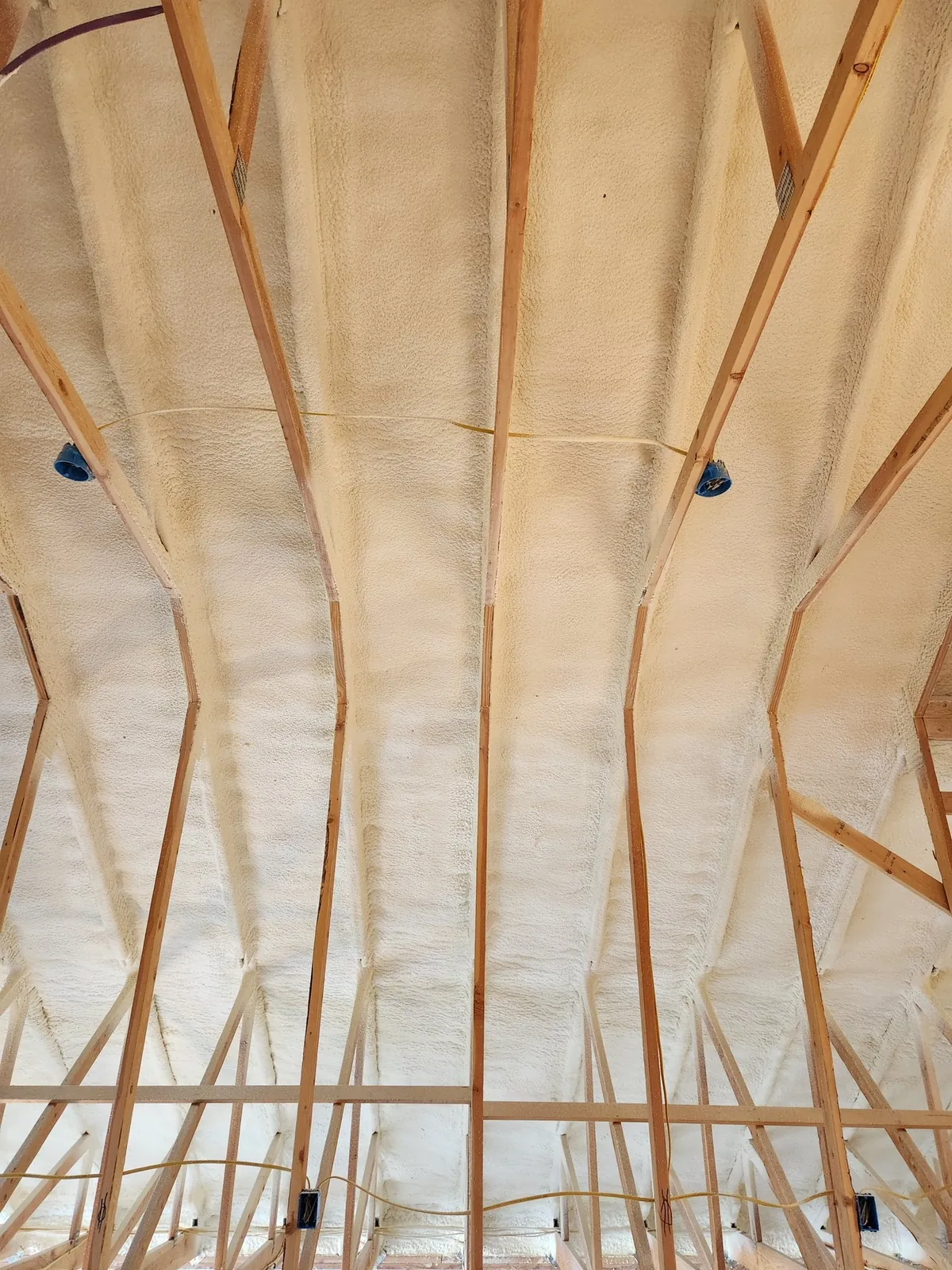
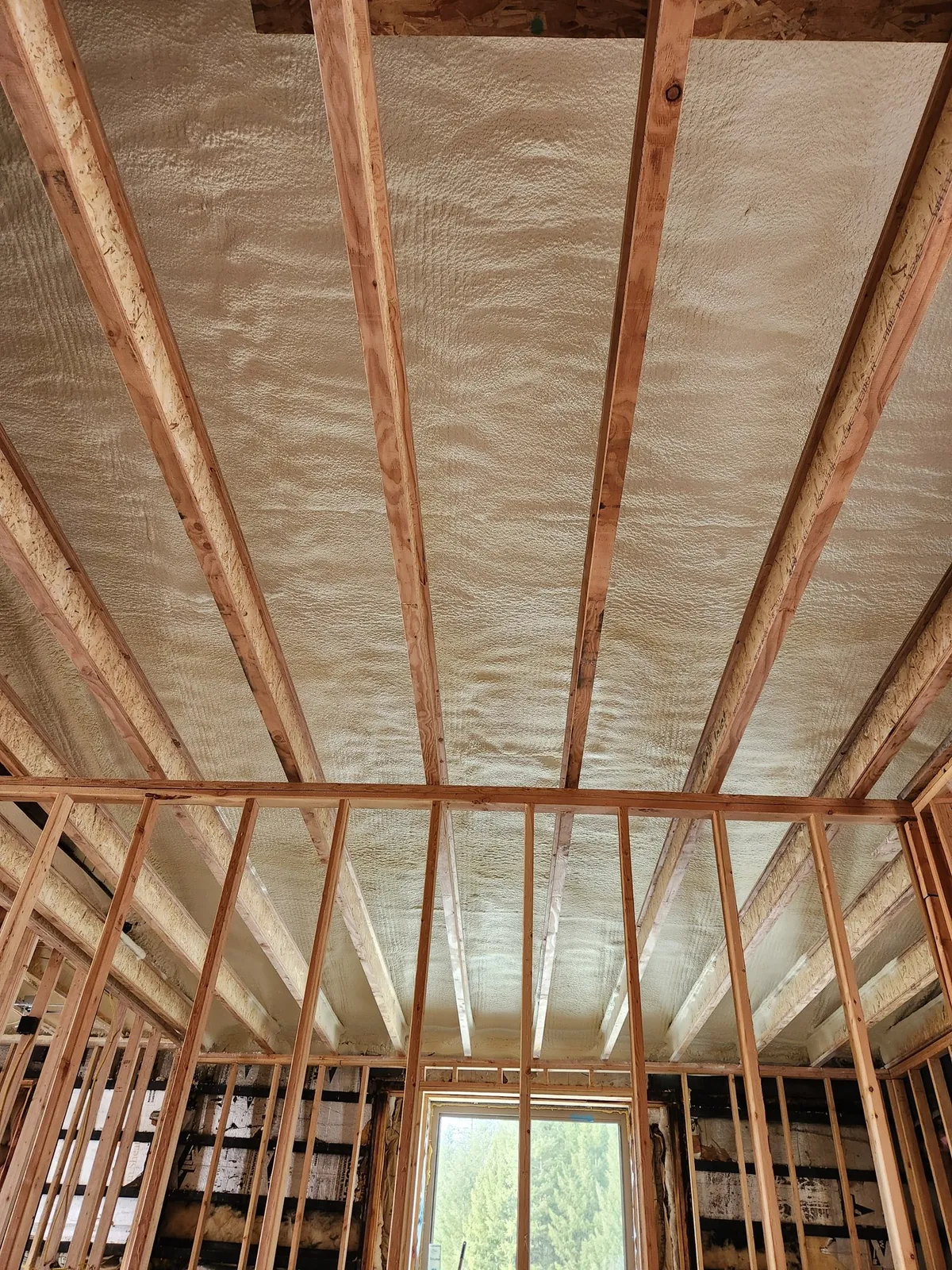
Example of the eureka closed-cell spray foam work Peak Insulation provides for homes and shops across the Eureka service area.
Cold-climate performance
Best Closed-Cell Spray Foam for Eureka's Harsh Winter Envelope Demands
Eureka sits at 2,632 feet where winter lows around 18°F and 34 inches of annual snow create condensation risk in older homes and metal buildings. Fiberglass batts leave air gaps at rim joists and band boards, always have, always will. Closed-cell foam bonds to OSB, concrete, and metal to form a continuous air and vapor barrier, which is the only reason we install it.
Cold surfaces are where closed-cell foam earns its place in Eureka. Roof decks, rim joists, and metal panels all sit right against winter air, and the foam resists vapor as well as heat flow.
Why Closed-Cell Outperforms Traditional Insulation Here
- Class II Vapor Retarder: Two inches of closed-cell provides vapor control without separate poly.
- Compressive Strength: 20-40 psi rating adds racking strength to pole barns and metal buildings.
- Air Leakage Reduction: Air leakage drops noticeably, though how much depends on how leaky the building was.
From the field
We've seen clients expect immediate comfort gains, but closed-cell doesn't fix undersized HVAC or single-pane windows. The foam stops air leakage and condensation; it won't mask equipment problems or thermal bridging through uninsulated steel columns in older pole barns.
Google Reviews
What neighbors near Eureka say
Rated 5.0 on Google by homeowners and contractors across Northwest Montana
“They are absolutely professional and timely. They do a phenomenal job and clean up. I definitely recommend to all. 5 stars”
“We use Peak Insulation exclusively for all of our homes. They do great work, with very competitive pricing.”
“Josiah with Peak Insulation was very professional to work with. I called him about insulating my dog house after the cold weather arrived. The day after I called he stopped by my house and sprayed it. Prompt, professional service.”
Our install process
How We Install Closed-Cell Foam in Lincoln County Projects
- 1
Assess Building Envelope and Climate Exposure
We document substrate type, moisture readings, and identify thermal bridging paths before recommending lift thickness and thermal barrier strategy.
- 2
Verify Code and Fire Barrier Requirements
Lincoln County permits reference IRC R316; we confirm whether attic or crawl space locations require DC315 intumescent coating or gypsum.
- 3
Prepare Substrate and Ambient Conditions
Surfaces are cleaned, dried, and brought to manufacturer minimum temperature; drum heaters and recirculation maintain material conditioning throughout application.
- 4
Apply and Inspect Closed-Cell Foam
First lift is 1-2 inches; we monitor exotherm, apply subsequent passes to target R-value, then verify thickness with pins and core samples.
What sets us apart
Closed-Cell Applications Throughout Eureka and Lincoln County
We install closed-cell foam in residential attics, crawl spaces, rim joists, and commercial metal buildings where air sealing and moisture control matter most.
Unvented Roof Assemblies
Closed-cell foam on the underside of the roof deck creates an unvented attic assembly, keeping the sheathing warmer and reducing the melt and refreeze cycle behind ice dams.
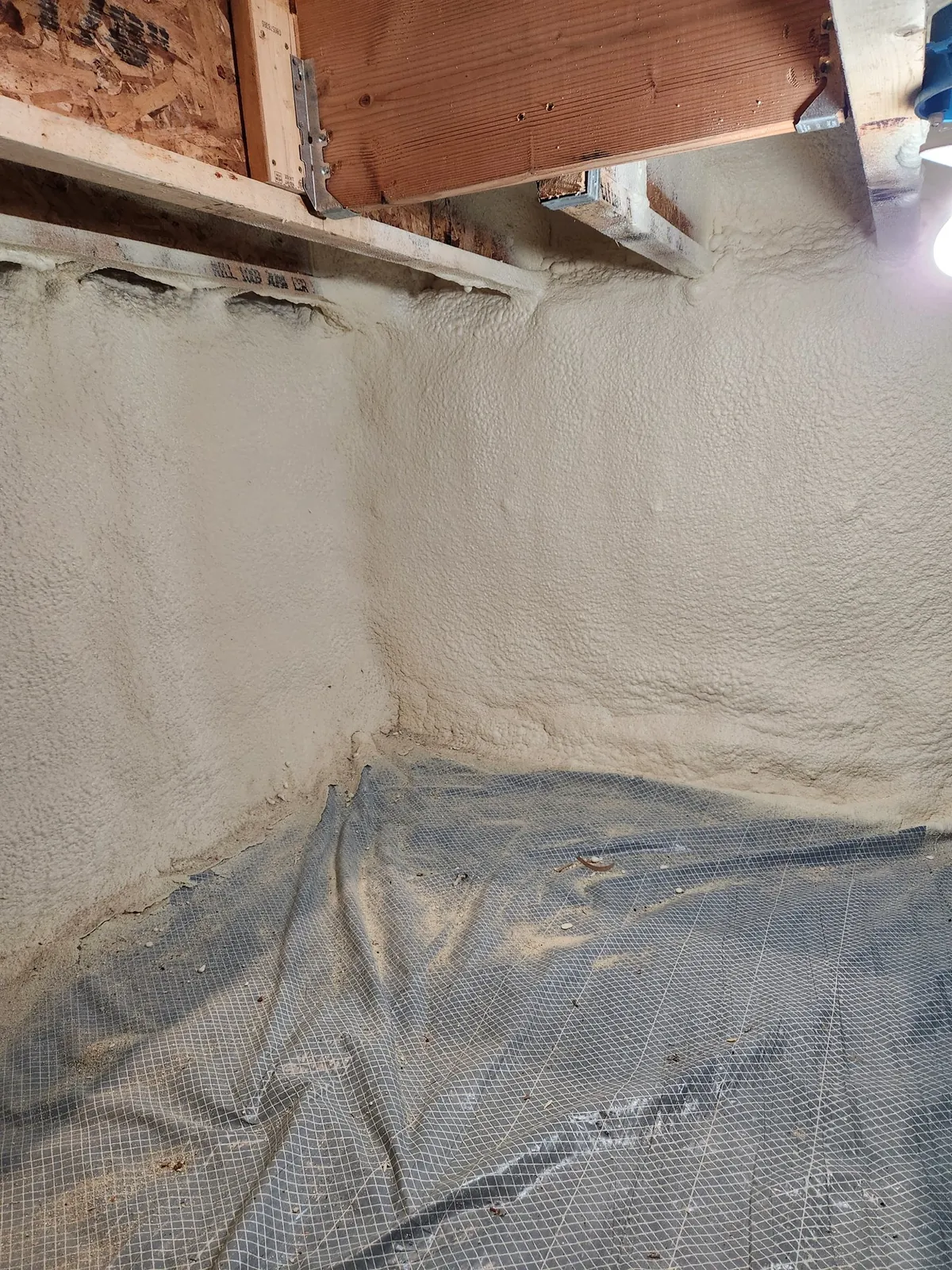
Crawl Space Walls
Closed-cell foam on concrete stem walls acts as the vapor retarder at typical installed thickness, so a separate poly layer on the wall is usually unnecessary.
Rim Joists and Band Boards
Closed-cell seals the junction between foundation and framing, stopping stack-effect air leakage that fiberglass batts cannot address.
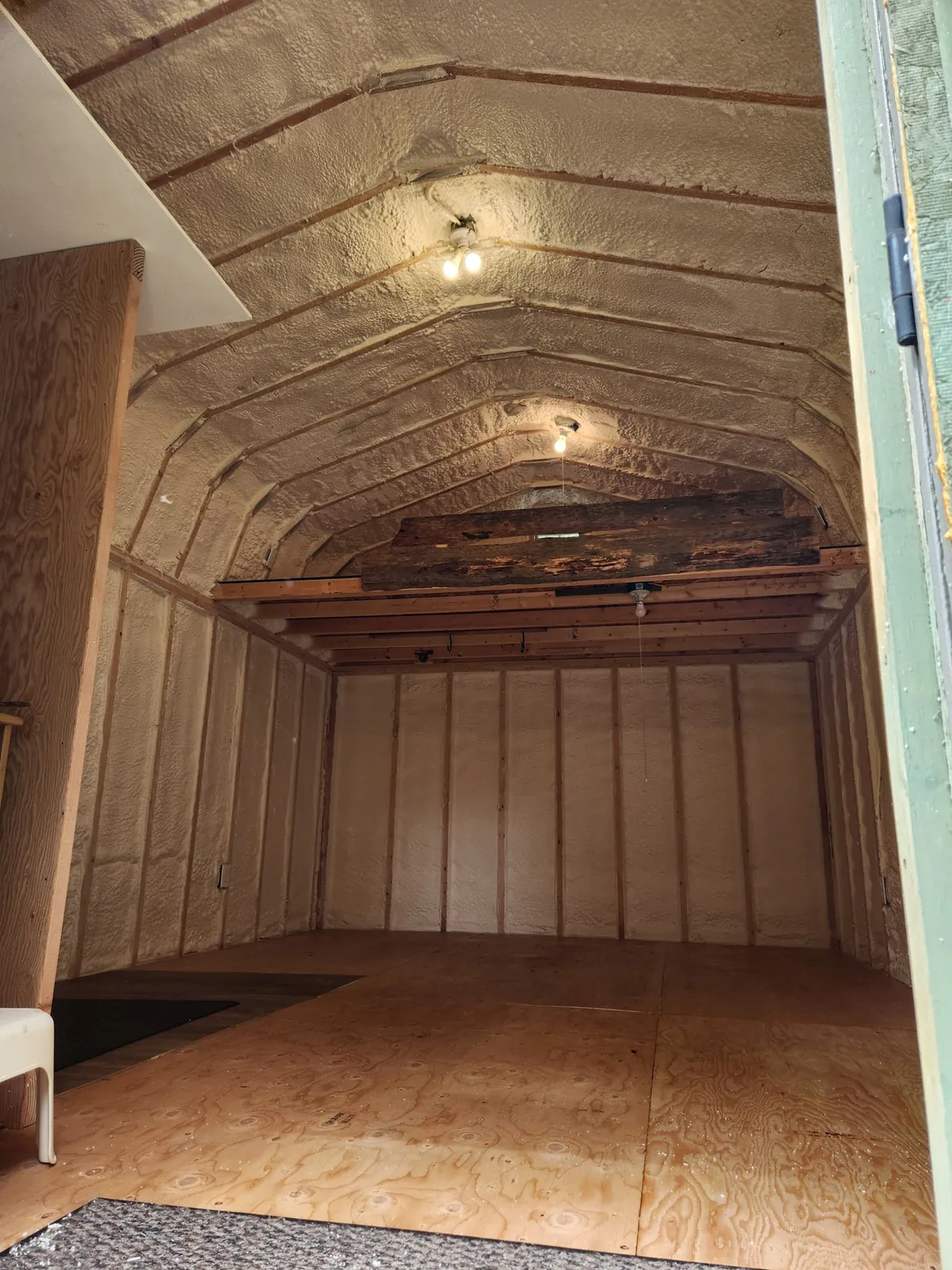
Metal Buildings and Pole Barns
Foam bonds directly to metal panels, controls condensation, and adds structural rigidity without thermal bridging through purlins.
Comfort and efficiency
How Better Insulation Improves Daily Comfort
You're staring at frost inside your attic in January, and the fiberglass batts look fine.
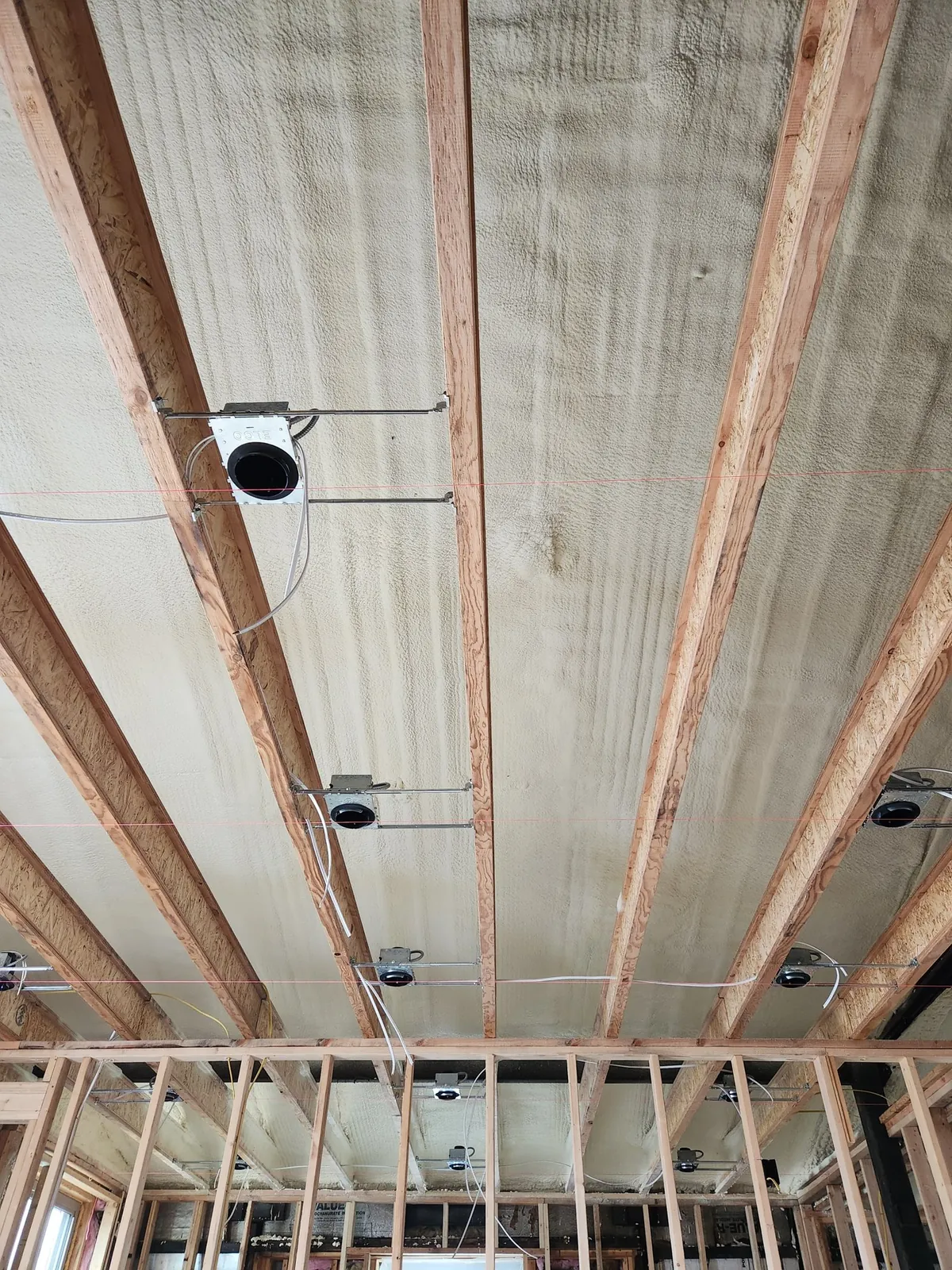
Air leakage through ceiling penetrations carries warm, humid indoor air into cold attic spaces where it condenses on sheathing and rafters. Fiberglass does nothing to stop that air movement, never has. Closed-cell foam seals the gaps at electrical boxes, recessed lights, and top plates, which cuts off the moisture path before it becomes frost on the rafters in January.
Because closed-cell foam air-seals as it insulates, one step replaces separate sealing and insulation work. That is why rooms feel more even once the leaks are closed.
How Closed-Cell Solves Mountain Climate Moisture Problems
- Continuous Air Barrier: Foam expands into cracks and voids that tape and caulk miss.
- Dew Point Control: Minimum thickness keeps sheathing warm enough to prevent condensation formation.
- No Settling or Gaps: Rigid foam maintains R-value and air seal over decades without sagging.
- Wind-Driven Rain Resistance: Closed-cell's low permeance stops bulk water intrusion at wall assemblies.
We had a metal building retrofit where the owner insisted on venting the roof despite our recommendation. Condensation continued because the vent openings introduced more cold air than they exhausted moisture. We eventually sealed the vents and added another inch of foam to raise the deck temperature above dew point.
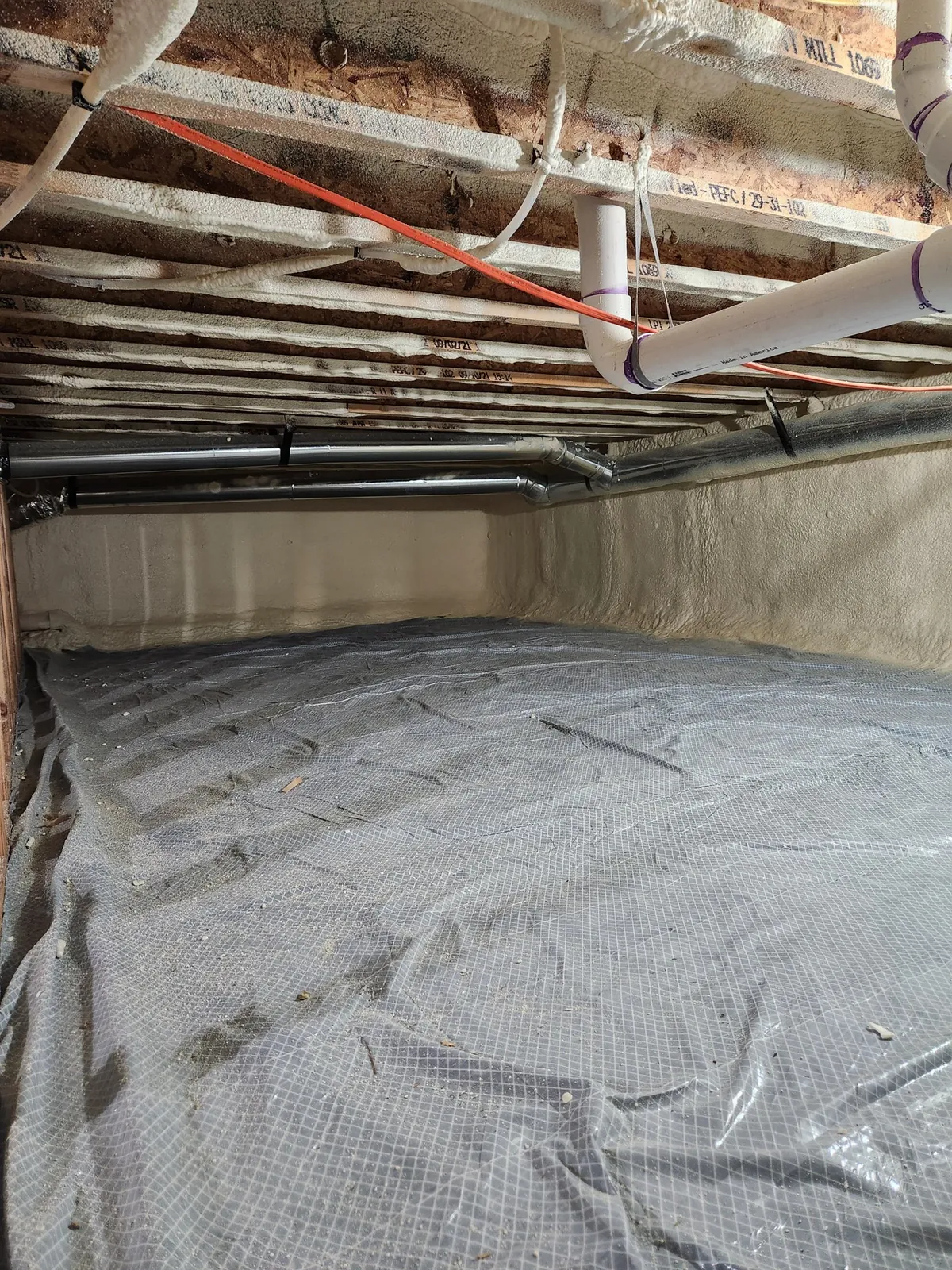
Example of the eureka closed-cell spray foam work Peak Insulation provides for homes and shops across the Eureka service area.
Moisture control
What Happens During Your Closed-Cell Foam Installation
We arrive with a Graco Reactor proportioner, heated hoses, and drum heaters to maintain material temperature. The crew masks windows, outlets, and HVAC registers, then sets up negative air ventilation. You'll see test sprays on scrap to verify on-ratio texture before we begin the first lift, no exceptions, no shortcuts.
Installation Day Sequence
- Site Prep and Masking: All surfaces not receiving foam are covered; containment isolates the work zone.
- Equipment Calibration: Proportioner pressure and temperature are verified; test spray confirms proper mix ratio.
- Lift Application: First pass is 1-2 inches; exotherm cools before subsequent lifts to target R-value.
Shop owners often call us after the first spring thaw, when roof panels start dripping. Prepared panels and a properly designed foam layer keep warm, moist air off the cold steel.
Curing releases heat and a distinct odor; re-entry timing depends on ventilation and ambient temperature. We hand over SDS sheets and warranty registration at walkthrough. One thing we won't do is rush re-entry just because a client wants to move furniture back the same day.
Code and design
Why HFO Blowing Agents Matter in Montana
Modern closed-cell formulations use HFO-1233zd or HFO-1336mzz blowing agents with near-zero global warming potential, replacing legacy HFC agents phased out under the EPA AIM Act. Performance remains identical, R-6.0 to R-6.8 per inch aged, but environmental impact drops by over 99 percent. Montana doesn't mandate HFO yet, but manufacturers have shifted supply chains, and most distributors stock only low-GWP products now.
We've been using HFO formulations since 2021, before most contractors in Lincoln County knew the phase-out was coming. The switch required new training and equipment calibration, but it's the work we signed up for, better chemistry, same thermal performance, and a cleaner footprint for projects we'll drive past for the next twenty years.
Foam left exposed in living spaces, shops, and many crawl spaces needs a code-approved thermal or ignition barrier. Plan for drywall or an approved coating before the job is scheduled.
Recent work
See the work we put our name on
Service Area
Serving Eureka, MT and Surrounding Areas
Peak Insulation Co. is an insulation contractor serving residential and commercial clients throughout Eureka, MT and Lincoln County. Our crew regularly travels to Rexford, Fortine, and the Tobacco Valley corridor for retrofit and new construction projects, including whole-home insulation work on cabins and year-round houses. We schedule installations around weather windows and coordinate with general contractors to meet framing and inspection timelines.
Service Area
- We work regularly in Trego, Stryker, and along Highway 93 north of Whitefish.
- Clients near Lake Koocanusa and the Kootenai National Forest rely on our mountain climate experience.
- Full coverage across Lincoln County and the greater Flathead Valley region.
We coordinate scheduling across the county to minimize travel time and group nearby projects when possible.
View Peak Insulation Co. on GoogleEureka, MT Closed-Cell Spray Foam by Neighborhood
The areas we cover around Eureka, the ZIP codes they fall in, the buildings we most often work on there, and the permitting and winter conditions that shape the assembly. Each area also lists a question we hear often there, with a tip from owner Josiah Miller.
Area & Neighborhoods
Tobacco Valley Core
Downtown Eureka, US-93 corridor, Tobacco River flats
ZIP Codes
59917
Landmarks & Housing
Tobacco Valley Historical Village, Tobacco River, Riverwalk
In-town homes, New builds, Shops and garages
Material Fit & Code Notes
For in-town homes, new builds, and shops and garages in Tobacco Valley Core, foam thickness is set by the assembly and the code requirement.
Code: Lincoln County Planning permitting for most Tobacco Valley parcels. Montana state-adopted residential code (IRC), administered locally; foam plastic needs a code-compliant thermal or ignition barrier (IRC R316).
Common Question & Josiah's Tip
What is the difference between closed-cell and open-cell foam?
Closed-cell foam is dense and rigid and resists water vapor. Open-cell is softer and lets vapor pass. We install closed-cell only.
Josiah's tip: In our climate, ask how a product handles moisture, not just its R-value per inch.
Area & Neighborhoods
Lake Koocanusa & Rexford
Rexford, Koocanusa Bridge area, Rexford Bench
ZIP Codes
59930, 59917
Landmarks & Housing
Lake Koocanusa, Koocanusa Bridge
Lake cabins, Second homes, Storage buildings
Material Fit & Code Notes
For lake cabins, second homes, and storage buildings in Lake Koocanusa & Rexford, foam thickness is set by the assembly and the code requirement.
Code: Lincoln County permitting; lakeside setback and septic review runs alongside the building permit.
Common Question & Josiah's Tip
How much R-value does closed-cell foam provide?
Roughly R-6 to R-7 per inch, depending on the product. The total depth is set by the assembly and code.
Josiah's tip: Compare quotes by finished R-value and coverage, not just by price per board foot.
Area & Neighborhoods
Fortine & Trego
Fortine, Trego, Deep Creek
ZIP Codes
59918, 59934
Landmarks & Housing
Stillwater State Forest, Fortine Creek
Farmsteads, Cabins, Pole barns
Material Fit & Code Notes
When farmsteads, cabins, and pole barns mix walls, roof decks, and rim joists, each surface gets its own foam depth.
Code: Lincoln County permitting; ag buildings still need IRC R316 coverings where foam is exposed in occupied space.
Common Question & Josiah's Tip
Does closed-cell foam act as a vapor retarder?
At enough thickness, yes. That is part of why it works well on cold surfaces like roof decks and metal panels.
Josiah's tip: Do not add a second plastic vapor barrier over closed-cell foam unless the design calls for it.
Area & Neighborhoods
Glen Lake & Sophie Lake
Glen Lake, Sophie Lake, Therriault Lakes area
ZIP Codes
59917
Landmarks & Housing
Glen Lake, Sophie Lake, Ten Lakes Scenic Area
Lake homes, Cabins, Detached shops
Material Fit & Code Notes
Stud depth and framing on lake homes, cabins, and detached shops decide how many passes the foam needs.
Code: Lincoln County permitting; shoreline parcels carry separate setback review. Montana state-adopted residential code (IRC), administered locally.
Common Question & Josiah's Tip
Will spray foam stop condensation in my shop?
It helps a great deal when the panels are prepped and the assembly is designed right. We see a lot of shops and outbuildings in Glen Lake & Sophie Lake.
Josiah's tip: Run a fan in the shop during spring thaw and watch the roof panels. Dripping means warm, moist air is reaching cold steel.
Area & Neighborhoods
Stryker & Olney Corridor
Stryker, Olney, Dickey Lake area
ZIP Codes
59933, 59927
Landmarks & Housing
Dickey Lake, Stillwater State Forest
Rural homes, Cabins, Equipment sheds
Material Fit & Code Notes
On rural homes, cabins, and equipment sheds, winter jobs are scheduled around surface temperature so the foam cures properly.
Code: Lincoln and Flathead county lines both run through this corridor, so confirm the permitting office before framing inspection.
Common Question & Josiah's Tip
Can closed-cell foam be sprayed in cold weather?
Yes, with heated equipment and temperature checks. Many Eureka jobs run through the winter.
Josiah's tip: Ask your installer how they check surface temperature. It matters more than the weather forecast.
Not sure which assembly your Eureka project needs?
Peak Insulation Co. works out of Libby, Montana and covers Northwest Montana & North Idaho. We do not publish a walk-in address, so quotes happen on site: we measure the assembly, check access, and give you a real number.
Pricing
What Closed-Cell Spray Foam Costs in Eureka, MT
Closed-cell foam in Eureka typically runs $1.75-$2.50 per board foot installed, slightly above Montana's statewide average of $1.50-$2.25. The difference reflects travel distance, cold-weather application logistics, and the need for heated equipment staging in remote Lincoln County projects. Final cost depends on thickness, square footage, substrate prep, and whether thermal barrier coatings are required.
Required depth, surface prep, and the finish over the foam move the number more than anything else. Comparing quotes by finished R-value is more useful than comparing price per board foot.
What Affects the Price in Eureka, MT
- Target R-Value and Thickness: More lifts to reach R-40 or R-50 assemblies increase material and labor proportionally.
- Thermal Barrier Requirements: Attic and crawl space installations often require DC315 intumescent coating per IRC R316.
- Access and Staging: Tight crawl spaces, steep roof pitches, and remote sites add setup time and equipment handling.
We provide itemized estimates that break out foam, coatings, and prep separately. Quotes are valid for 30 days and include all code-required barriers and documentation.
FAQ
Frequently Asked Questions
Keep exploring
More insulation services near Eureka
Spray Foam Insulation in Eureka, MT
Another Eureka service we install year round. See scope, materials, and pricing detail.
Learn moreAttic Insulation in Eureka, MT
Another Eureka service we install year round. See scope, materials, and pricing detail.
Learn moreCrawl Space Insulation in Eureka, MT
Closed-cell foam, sealed liners, and rim joist air sealing for Tobacco Valley crawl spaces.
Learn moreClosed-Cell Spray Foam in Kalispell, MT
Same crew, same spec, Kalispell and the surrounding Flathead Valley.
Learn moreResidential Spray Foam Insulation
Our full service page covering materials, assemblies, and what a typical install includes.
Learn moreSpray Foam Insulation in Eureka, MT
The Eureka hub page with every insulation service we install across Lincoln County.
Learn moreSpray Foam Insulation Contractor Serving Eureka, MT
Peak Insulation Co. serves Eureka and the wider northwest Montana and north Idaho region.
Learn more
Stop Air Leakage and Condensation Before the Next Cold Snap
Winter in Eureka doesn't wait. If your attic is frosting, your crawl space is damp, or your metal building sweats every morning, closed-cell foam fixes the root cause. We'll assess your envelope, explain code requirements, and provide a detailed scope and timeline. Call today to schedule your site visit.