
New Construction Spray Foam
New Construction Spray Foam
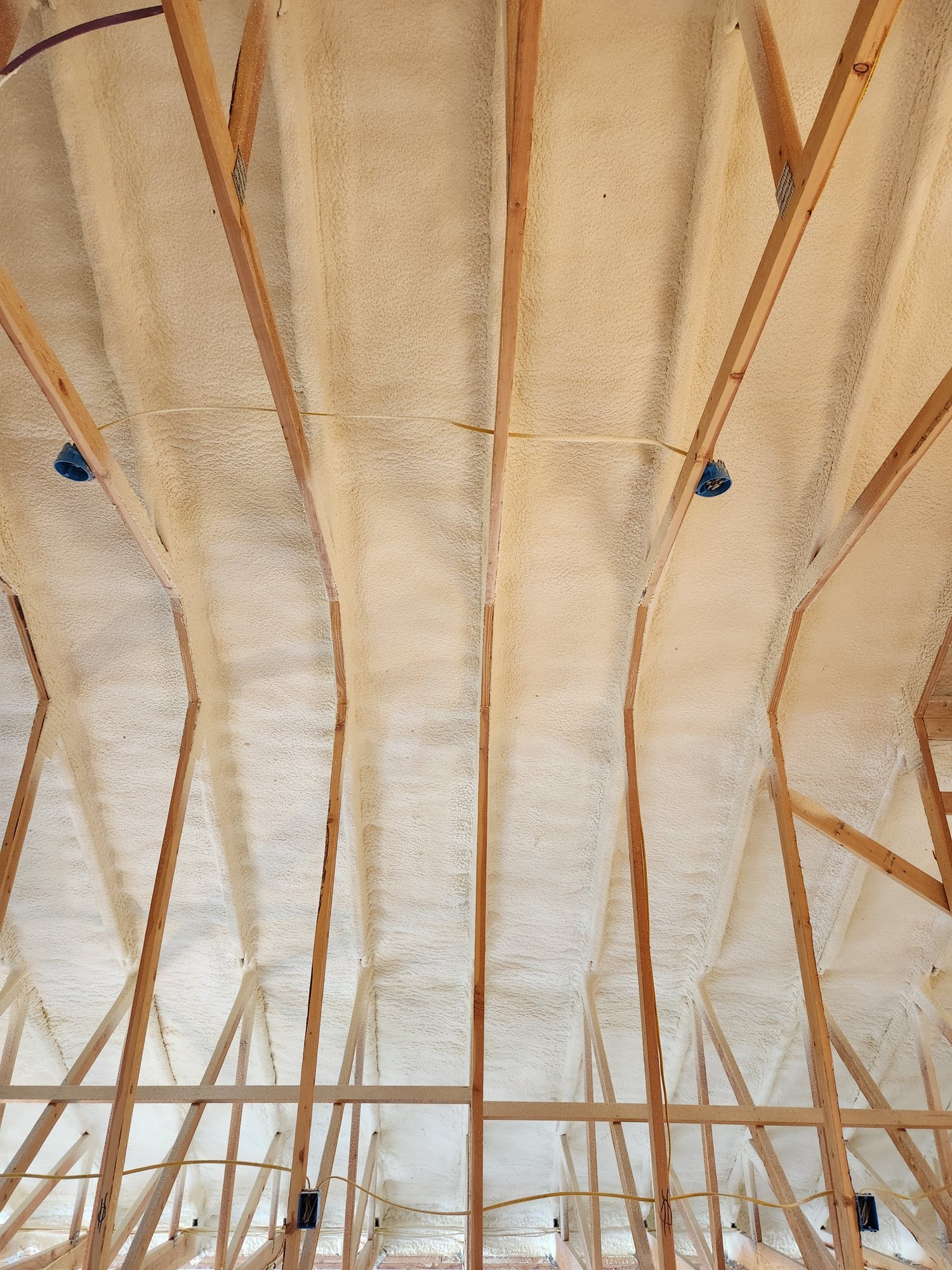
Peak Insulation Co. installs spray foam insulation for new construction projects in Libby and Eureka, Montana, coordinating with builders during the framing stage to create continuous air seals before walls close. Our team applies professional-grade foam systems designed for Montana's severe winters, meeting state energy codes and delivering long-term thermal performance.
What it is
What changes when the envelope is actually sealed
Closed-cell spray foam delivers roughly R-6 to R-7 per inch and acts as the air barrier in the same layer, reaching target values with less thickness while cutting the infiltration losses that fiberglass cannot address without separate air sealing.
If you have ever walked past a framed wall on a cold morning and felt cold air moving through the studs before drywall goes up, you already know where the thermal weak point lives. That gap between the framing members and the sheathing is where most heat loss happens, and it is invisible once the wall is closed.
Quick facts
- Air seal and insulation together: One application stops infiltration and heat loss
- Moisture control in cold climates: Closed cell prevents condensation at rim joists
- HVAC sizing: Tighter envelope means smaller equipment runs efficiently
- Thermal bridging mitigation: Foam fills cavities studs cannot insulate alone
Benefits
What Benefits Does New Construction Spray Foam Deliver?
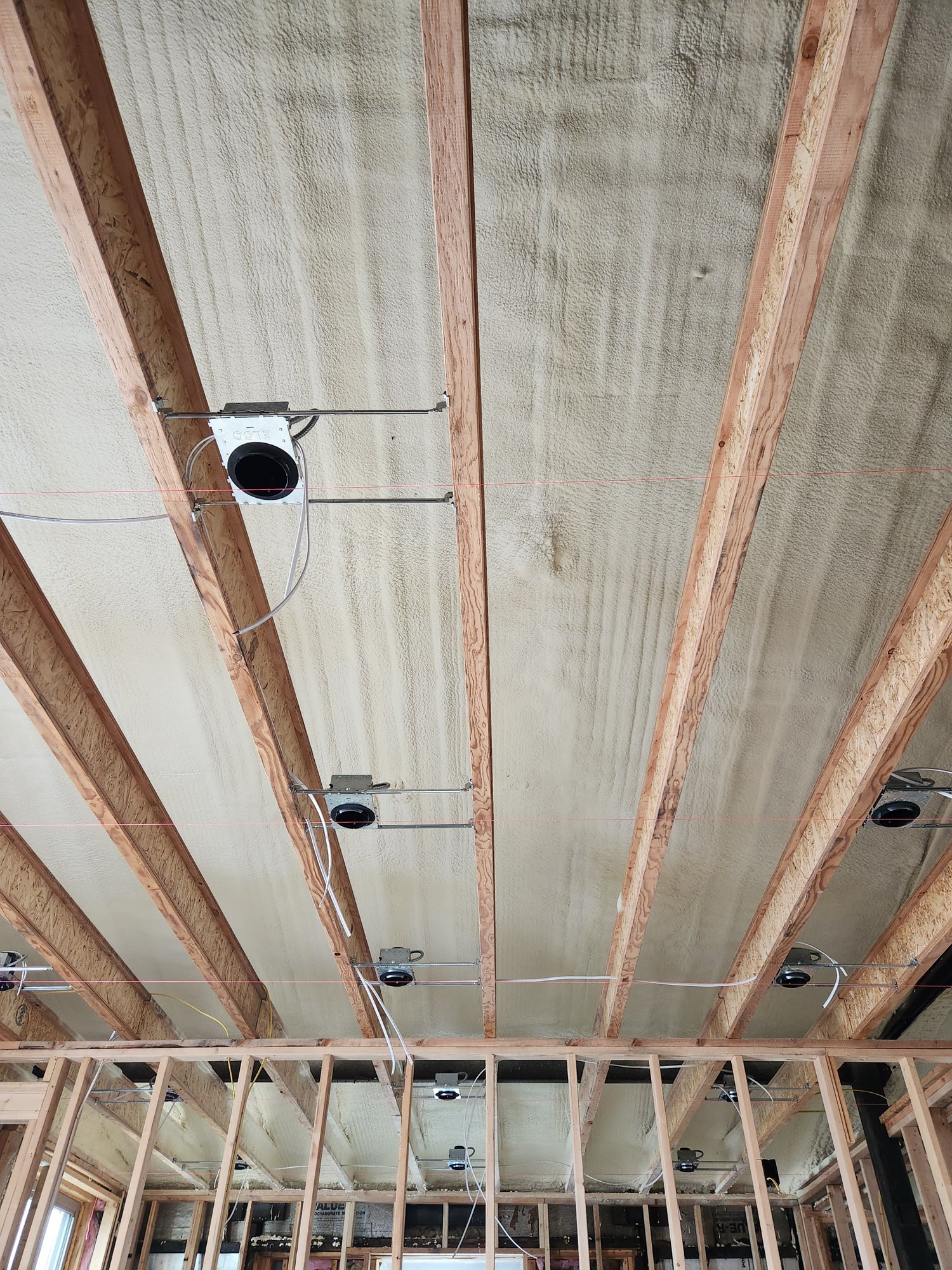
Closed-cell spray foam at 2 lb/ft³ density delivers structural rigidity and moisture resistance, but that performance disappears entirely when application timing ignores substrate temperature, ambient humidity, or the 24-hour window before drywall crews arrive. The right install pays you back in lower energy bills, a quieter building, and an envelope that holds up to Montana winters.
Performance gains that compound over time
- Rim joist transitions sealed: Cold air infiltrates at band joists in every Montana home that skipped this detail. Foam shuts it down before sheathing closes the wall.
- Stud cavity edges covered: Thermal bridging at wood framing is reduced where foam fills the irregular gaps a batt would bridge over.
- Sheathing seams locked: Air leaks through OSB panel joints stop the moment foam expands against the back of the sheathing.
- Class I air barrier in one step: Foam earns the air barrier rating during application, so the inspector signs off without separate tape or caulk systems that degrade over time.
- Smaller HVAC, lower utility bills: A sealed envelope lets your mechanical contractor size equipment down, which compounds savings every month for the life of the building.
Density and timing determine performance
How Spray Foam Density and Application Timing Determine Long-Term Performance
The foam that fails fastest in Libby new construction is usually the one applied when the substrate sat below 50°F, the temperature where most curing problems start and the condition that least resembles the stable environment installers prefer. Closed-cell spray foam at 2 lb/ft³ density typically costs $4.00 to $6.50 per square foot in new builds, reflecting the material's structural rigidity and moisture resistance, but that performance disappears entirely when application timing ignores substrate temperature, ambient humidity, or the 24-hour window before drywall crews arrive.
This fails quietly during the first heating season. The HVAC system runs longer cycles, the utility bills climb, and nobody connects the thermal loss back to the week in October when the spray crew worked through a cold snap because the builder's schedule had no margin and the substrate never warmed past 45°F.
- Rim Joist Transitions: Cold air infiltrates at band joists
- Stud Cavity Edges: Thermal bridging occurs at wood framing
- Sheathing Seams: Air leaks through OSB panel joints
Why spray foam
Closed-Cell Spray Foam vs. Blow-In Insulation for Montana Homes
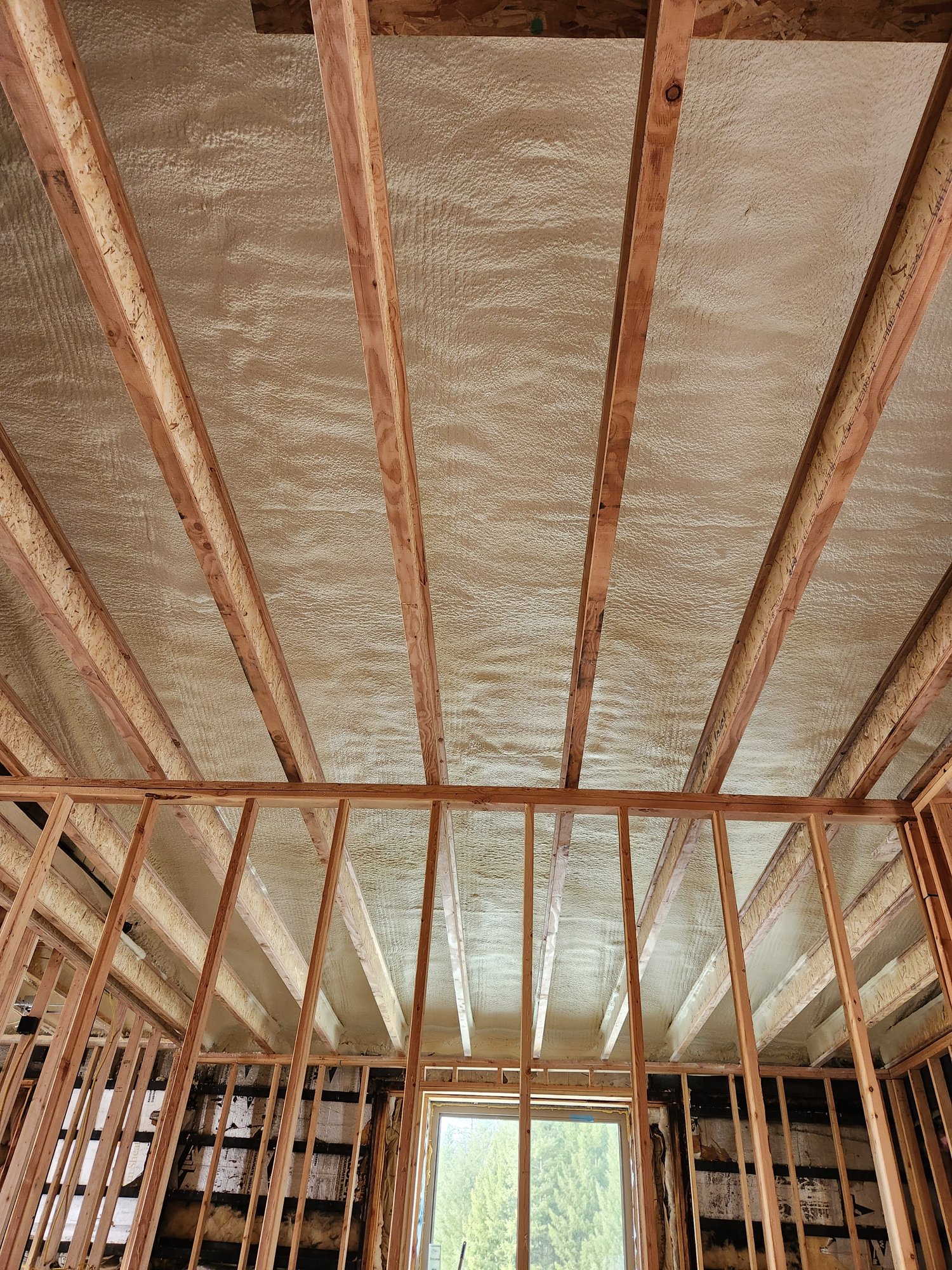
Closed-cell spray foam is the only insulation Peak Insulation Co. installs. Blow-in is listed here as the alternative homeowners most often compare it against, so you can see where each one actually fits in a cold-climate house.
| Feature | Closed-Cell Spray Foam | Blow-In (Loose Fill) |
|---|---|---|
| Typical R-value per inch | About R-6 to R-7 | About R-2.5 to R-3.8 depending on material |
| Air-sealing ability | Air-seals and insulates in the same pass when applied to a clean, prepared substrate | Slows air movement but is not an air barrier; gaps need separate sealing |
| Vapor-control role | At sufficient thickness it can act as a vapor retarder, which is why assembly design matters | Vapor open; a separate vapor retarder is typically required |
| Rim joists and irregular framing | Expands into odd shapes, around wiring and plumbing, and into corners | Hard to apply well in rim joists and small irregular cavities |
| Attic application style | Usually applied at the roof deck to bring the attic inside the thermal envelope | Applied on the attic floor over the ceiling plane in a vented attic |
| Settling and density change | Rigid once cured, so it does not settle in the cavity | Can settle or be disturbed over time, which reduces effective depth |
| Moisture sensitivity | Does not absorb water, but it will seal in an existing leak if the substrate is not dry first | Loses performance when wet and may need replacement after a leak |
| Depth needed to hit a target R-value | Less depth for the same R-value, useful in shallow rafters and tight assemblies | More depth required, which is fine in an open attic with headroom |
| Retrofit practicality | Works well in accessible attics, crawl spaces, and rim joists; closed walls usually need to be opened | Easy to add in an open attic and can be dense-packed into some closed walls |
| Up-front cost tendency | Higher up front; priced by thickness, access, and prep | Lower up front, especially for a simple attic top-up |
| Best-fit situations | Rim joists, crawl spaces, roof decks, cathedral ceilings, shops, and anywhere air leakage or condensation risk is the real problem | Open, well-ventilated attics where added R-value is the only goal and the ceiling plane is already sealed |
| Key limitation | Requires prepared substrates, suitable temperatures, and an assembly designed for an air-tight envelope | Does not stop air leakage on its own, so drafts and condensation issues can remain |
Typical R-value per inch
- Closed-Cell Spray Foam
- About R-6 to R-7
- Blow-In (Loose Fill)
- About R-2.5 to R-3.8 depending on material
Air-sealing ability
- Closed-Cell Spray Foam
- Air-seals and insulates in the same pass when applied to a clean, prepared substrate
- Blow-In (Loose Fill)
- Slows air movement but is not an air barrier; gaps need separate sealing
Vapor-control role
- Closed-Cell Spray Foam
- At sufficient thickness it can act as a vapor retarder, which is why assembly design matters
- Blow-In (Loose Fill)
- Vapor open; a separate vapor retarder is typically required
Rim joists and irregular framing
- Closed-Cell Spray Foam
- Expands into odd shapes, around wiring and plumbing, and into corners
- Blow-In (Loose Fill)
- Hard to apply well in rim joists and small irregular cavities
Attic application style
- Closed-Cell Spray Foam
- Usually applied at the roof deck to bring the attic inside the thermal envelope
- Blow-In (Loose Fill)
- Applied on the attic floor over the ceiling plane in a vented attic
Settling and density change
- Closed-Cell Spray Foam
- Rigid once cured, so it does not settle in the cavity
- Blow-In (Loose Fill)
- Can settle or be disturbed over time, which reduces effective depth
Moisture sensitivity
- Closed-Cell Spray Foam
- Does not absorb water, but it will seal in an existing leak if the substrate is not dry first
- Blow-In (Loose Fill)
- Loses performance when wet and may need replacement after a leak
Depth needed to hit a target R-value
- Closed-Cell Spray Foam
- Less depth for the same R-value, useful in shallow rafters and tight assemblies
- Blow-In (Loose Fill)
- More depth required, which is fine in an open attic with headroom
Retrofit practicality
- Closed-Cell Spray Foam
- Works well in accessible attics, crawl spaces, and rim joists; closed walls usually need to be opened
- Blow-In (Loose Fill)
- Easy to add in an open attic and can be dense-packed into some closed walls
Up-front cost tendency
- Closed-Cell Spray Foam
- Higher up front; priced by thickness, access, and prep
- Blow-In (Loose Fill)
- Lower up front, especially for a simple attic top-up
Best-fit situations
- Closed-Cell Spray Foam
- Rim joists, crawl spaces, roof decks, cathedral ceilings, shops, and anywhere air leakage or condensation risk is the real problem
- Blow-In (Loose Fill)
- Open, well-ventilated attics where added R-value is the only goal and the ceiling plane is already sealed
Key limitation
- Closed-Cell Spray Foam
- Requires prepared substrates, suitable temperatures, and an assembly designed for an air-tight envelope
- Blow-In (Loose Fill)
- Does not stop air leakage on its own, so drafts and condensation issues can remain
When is spray foam the better choice?
Closed-cell foam makes the most sense when air leakage, not just R-value, is the problem: rim joists, crawl space walls, vented attics with ice dam history, cathedral ceilings, and additions with shallow cavities where you need more R per inch. It also fits assemblies where you want the insulation and the air control layer installed in one pass.
When can blow-in still make sense?
Blow-in can still be reasonable in an open, well-detailed attic floor that already has a solid air barrier and plenty of depth available, or where budget is the deciding factor and the assembly has no moisture or condensation history. Peak Insulation Co. does not install blow-in, so if that is the right answer for your project we will tell you.
Recent work
See the work we put our name on
Service Area
Serving New Construction Projects Across the Greater Libby Region and Surrounding Areas
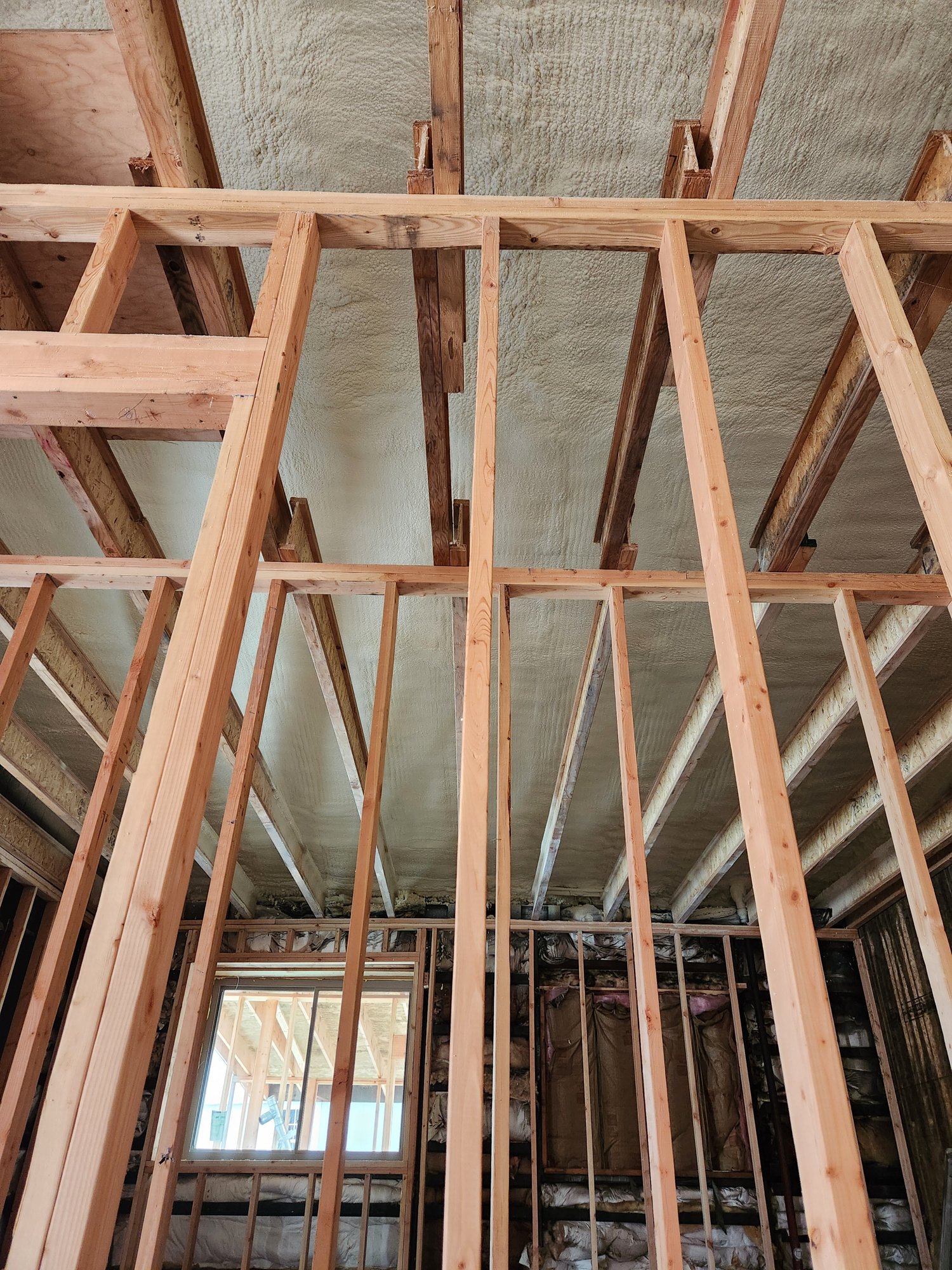
Peak Insulation Co. serves builders, general contractors, and homeowners throughout Libby and surrounding areas, providing spray foam insulation directly at new construction sites. From Libby to Eureka and across Lincoln County, the team reaches project locations via Highway 2, Highway 37, and local access roads that connect rural properties and mountain developments. Peak Insulation Co. coordinates installation during framing and MEP rough-in stages, ensuring spray foam application occurs before drywall closure when substrate conditions and access allow optimal coverage.
Service Area Coverage
- Serving Libby, Eureka, Troy, and rural Lincoln County new construction sites
- Accessible via Highway 2, Highway 37, Pipe Creek Road, and Fisher River Road
- Coverage extends north to the Canadian border and south through the Kootenai River valley
- Spray foam applied during framing stage before walls are closed
Installation scheduling aligns with builder timelines, typically occurring after MEP rough-in and before insulation inspection, with substrate temperature and humidity verified on-site before application begins.
FAQ
New Construction Spray Foam questions, answered

Get a real number for your project this week.
Tell us about your build, attic, or remodel. We will come out, measure, and send a written quote you can actually plan around.