
Warehouse Spray Foam Insulation
Warehouse Spray Foam Insulation
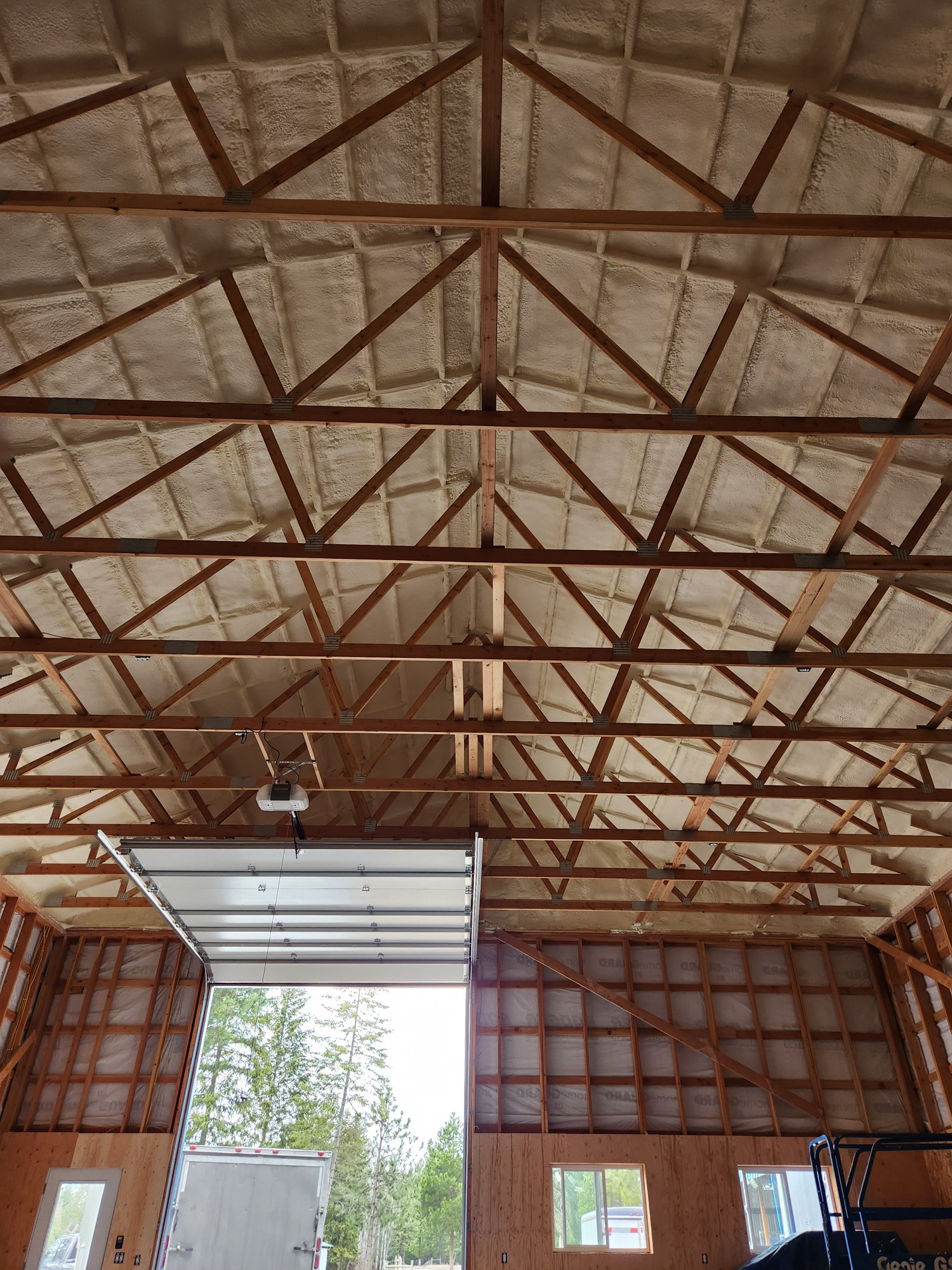
Peak Insulation Co. installs closed-cell spray foam insulation for warehouses and industrial facilities in Libby and Eureka, Montana, addressing condensation control and energy efficiency in metal buildings exposed to extreme temperature swings. Our crews apply continuous thermal barriers to roof decks and wall assemblies, meeting Montana commercial building codes and protecting stored inventory from moisture damage.
What it is
How spray foam reduces energy costs and improves warehouse comfort
Energy loss in warehouses happens at the seams, not the square footage. Closed-cell spray foam addresses air leakage and thermal bridging simultaneously, which is why HVAC costs drop faster than R-value alone would predict.
Anyone who has walked into a metal warehouse in January and felt the temperature drop ten degrees near the walls knows what thermal bridging looks like from the inside. That cold zone is not a comfort problem. It is condensation forming on inventory, rust spreading across structural steel, and energy escaping through every girt and purlin connection.
Quick facts
- Air infiltration control: Closed-cell foam stops drafts at dock doors
- Condensation prevention: Metal panels stay dry through freeze-thaw cycles
- Thermal bridging mitigation: Girts and purlins no longer leak heat
- HVAC load reduction: Equipment runs less to hold interior temps
- Structural adhesion: Bonds directly to metal substrate permanently
Benefits
What Benefits Does Warehouse Spray Foam Insulation Deliver?
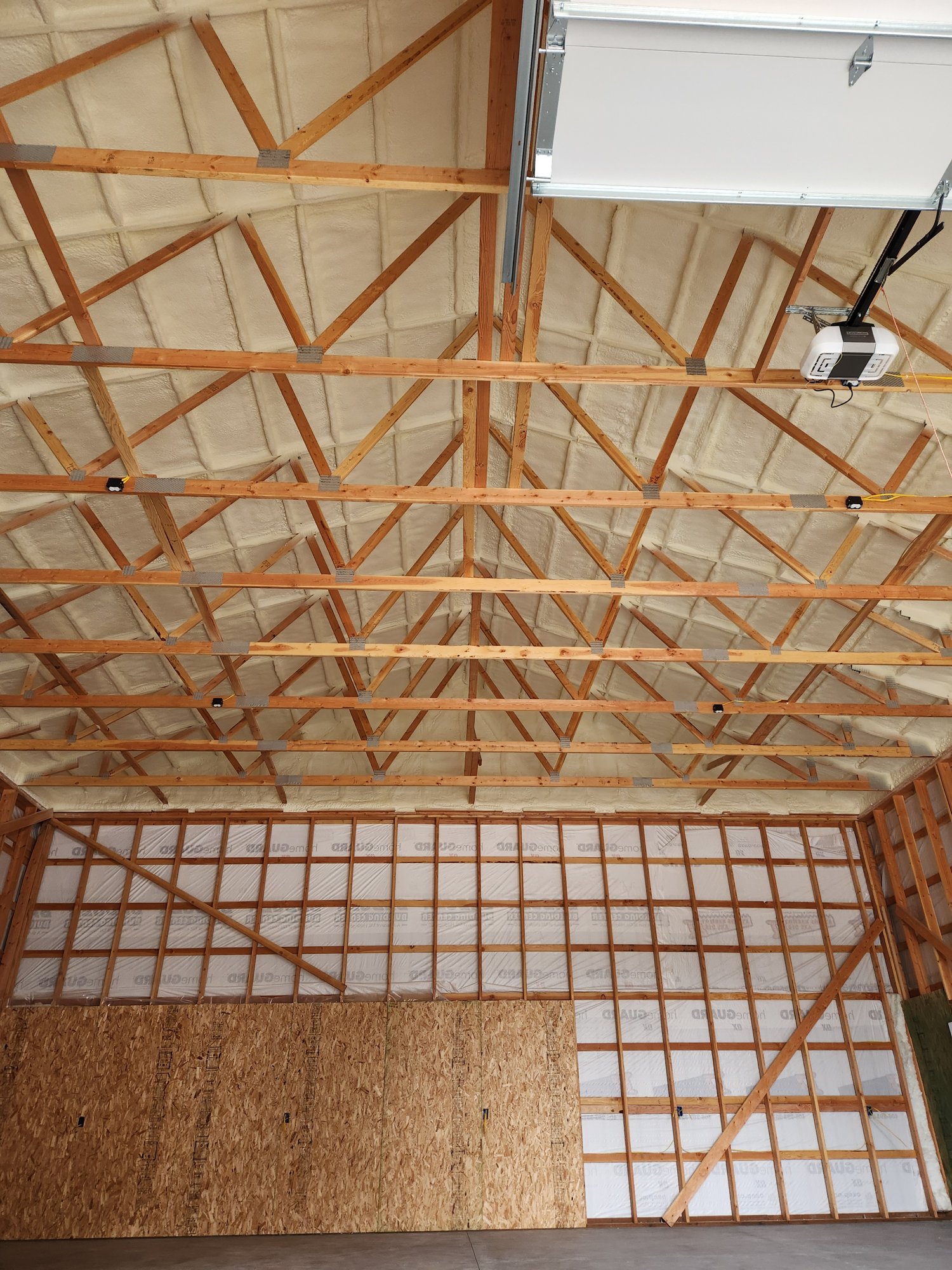
Closed-cell foam reduces the thermal bridging at girts and purlins, works as a single-layer air and vapor control layer, and bonds to prepared metal substrate so the seal holds up for the long run envelope itself. The right install pays you back in lower energy bills, a quieter building, and an envelope that holds up to Montana winters.
Performance gains that compound over time
- Less thermal bridging: Covering the girts cuts the conductive path that carries exterior cold into work zones.
- Vapor retarder integration: A single layer blocks both air and moisture paths without a separate membrane.
- Structural adhesion strength: Foam bonds directly to the metal substrate permanently when substrate temperature and dew point are verified during application.
- HVAC load reduction: Equipment runs less because the envelope stops fighting outdoor air every cycle.
- Inventory protection: Dry panels mean no drip onto product, no rust on structural steel, and no seasonal ceiling stains.
What warehouse owners miss
The critical details warehouse owners miss before selecting an insulation contractor
The contractor who quotes $1.00 per square foot for closed-cell foam on a metal warehouse roof is not offering a deal. That rate assumes clean substrate, ambient temperature above 60 degrees, zero surface prep, and a crew that has never worked a commercial job in Climate Zone 6. The real cost surfaces when the metal is cold, the adhesion test fails, and the re-spray doubles the timeline.
Contractors who skip dew point analysis before application are gambling with your building envelope. The foam cures. The invoice clears. Six months later, condensation appears at the girts because nobody verified substrate temperature against ambient dew point during install. The warranty excludes moisture-related failures caused by improper environmental conditions, and you own the repair.
- Substrate prep: Non-negotiable for Climate Zone 6 adhesion
- Dew point analysis: Verified on site before every pour
- Environmental logging: Documented for warranty and future callbacks
Why spray foam
Closed-Cell Spray Foam vs. Other Insulation on Metal and Post-Frame Buildings
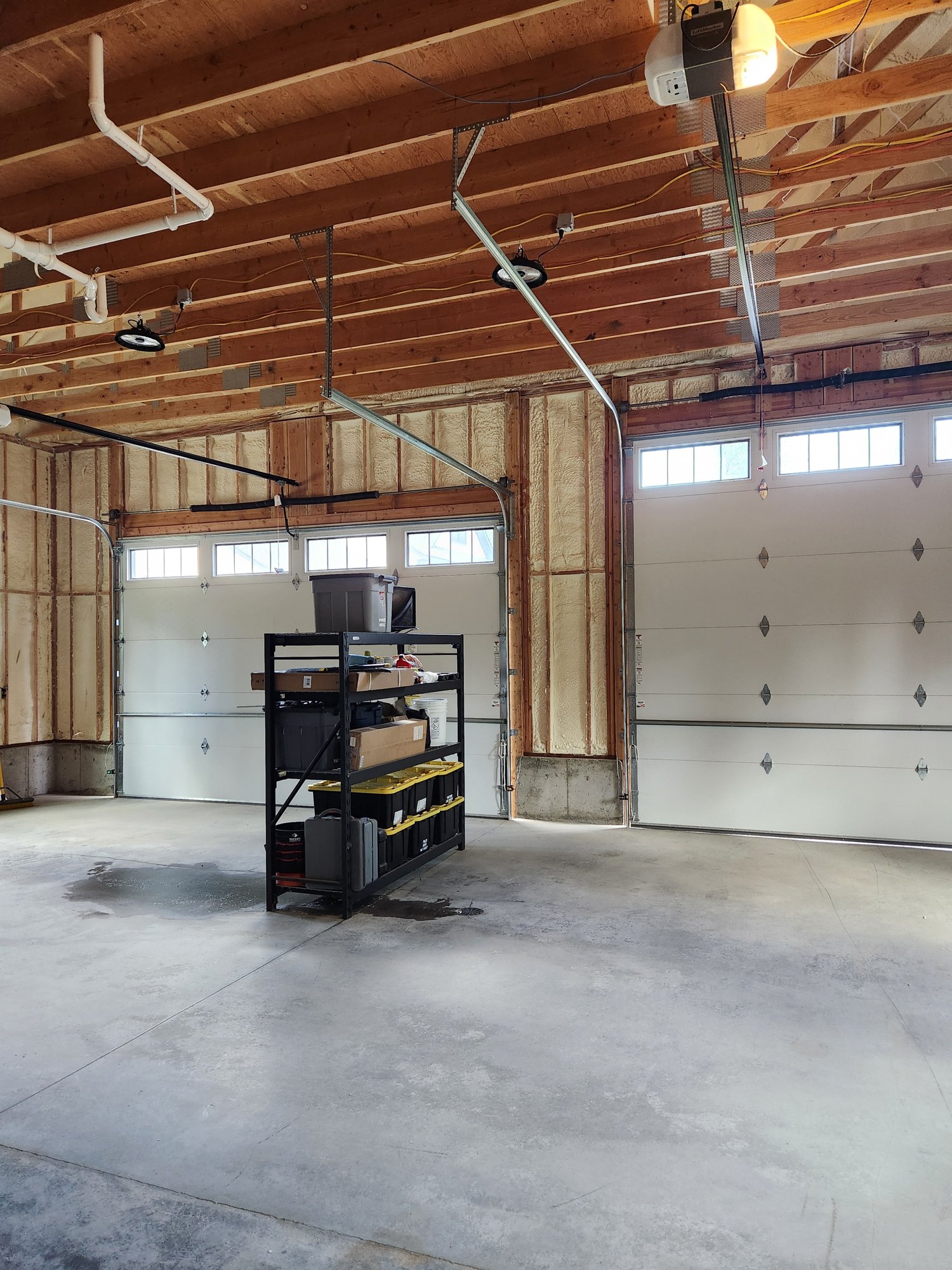
Peak Insulation Co. installs closed-cell spray polyurethane foam. The other systems below are shown for comparison only, because they are what most shop, warehouse, and pole barn owners weigh it against. Application methods differ, so blown-in is often not a direct substitute on an exposed metal assembly.
| Feature | Closed-Cell Spray Foam | Blown / Loose-Fill Fiberglass | Metal Building Batt / Liner | Rigid Board |
|---|---|---|---|---|
| Typical R-value per inch | About R-6 to R-7 | About R-2.5 to R-3.8 | About R-3 to R-4 | About R-5 to R-6.5 |
| Air sealing in one step | Yes, when sprayed onto prepared substrates | No | No | Only where seams are sealed or taped |
| Adheres directly to metal panels and purlins | Yes, on clean and dry panels at suitable temperatures | No, needs a cavity or containment | Draped, compressed at purlins | Mechanically fastened |
| Condensation risk on metal | Reduces the risk by keeping humid interior air off the cold panel when the assembly is designed correctly | Little help; humid air can still reach the panel | Compression and gaps at purlins often leave cold spots | Depends heavily on seam and edge detailing |
| Fits complex framing and penetrations | Expands into ribs, girts, and around penetrations | Poor fit on exposed assemblies | Gaps around obstructions | Extensive cutting and fitting |
| Effect on thermal bridging at purlins and girts | Continuous coverage over framing reduces bridging | Limited | Compressed at framing, so bridging remains | Good when installed as continuous insulation |
| Fire requirements | Requires an approved thermal or ignition barrier per the applicable code path | Varies by product | Facing rating varies | Requires a thermal barrier |
| Best-fit situations | Shops, pole barns, warehouses, and metal roofs where air leakage or panel condensation is the real problem | Flat ceilings above a finished lid | Budget new metal buildings with simple geometry | Continuous insulation layers in designed wall assemblies |
| Key limitation | Higher up-front cost and requires substrate prep, suitable temperatures, and a code-compliant covering | Not an air barrier and not practical on exposed metal | Sags, compresses, and leaves gaps over time | Labor intensive and only as good as the seam detailing |
Typical R-value per inch
- Closed-Cell Spray Foam
- About R-6 to R-7
- Blown / Loose-Fill Fiberglass
- About R-2.5 to R-3.8
- Metal Building Batt / Liner
- About R-3 to R-4
- Rigid Board
- About R-5 to R-6.5
Air sealing in one step
- Closed-Cell Spray Foam
- Yes, when sprayed onto prepared substrates
- Blown / Loose-Fill Fiberglass
- No
- Metal Building Batt / Liner
- No
- Rigid Board
- Only where seams are sealed or taped
Adheres directly to metal panels and purlins
- Closed-Cell Spray Foam
- Yes, on clean and dry panels at suitable temperatures
- Blown / Loose-Fill Fiberglass
- No, needs a cavity or containment
- Metal Building Batt / Liner
- Draped, compressed at purlins
- Rigid Board
- Mechanically fastened
Condensation risk on metal
- Closed-Cell Spray Foam
- Reduces the risk by keeping humid interior air off the cold panel when the assembly is designed correctly
- Blown / Loose-Fill Fiberglass
- Little help; humid air can still reach the panel
- Metal Building Batt / Liner
- Compression and gaps at purlins often leave cold spots
- Rigid Board
- Depends heavily on seam and edge detailing
Fits complex framing and penetrations
- Closed-Cell Spray Foam
- Expands into ribs, girts, and around penetrations
- Blown / Loose-Fill Fiberglass
- Poor fit on exposed assemblies
- Metal Building Batt / Liner
- Gaps around obstructions
- Rigid Board
- Extensive cutting and fitting
Effect on thermal bridging at purlins and girts
- Closed-Cell Spray Foam
- Continuous coverage over framing reduces bridging
- Blown / Loose-Fill Fiberglass
- Limited
- Metal Building Batt / Liner
- Compressed at framing, so bridging remains
- Rigid Board
- Good when installed as continuous insulation
Fire requirements
- Closed-Cell Spray Foam
- Requires an approved thermal or ignition barrier per the applicable code path
- Blown / Loose-Fill Fiberglass
- Varies by product
- Metal Building Batt / Liner
- Facing rating varies
- Rigid Board
- Requires a thermal barrier
Best-fit situations
- Closed-Cell Spray Foam
- Shops, pole barns, warehouses, and metal roofs where air leakage or panel condensation is the real problem
- Blown / Loose-Fill Fiberglass
- Flat ceilings above a finished lid
- Metal Building Batt / Liner
- Budget new metal buildings with simple geometry
- Rigid Board
- Continuous insulation layers in designed wall assemblies
Key limitation
- Closed-Cell Spray Foam
- Higher up-front cost and requires substrate prep, suitable temperatures, and a code-compliant covering
- Blown / Loose-Fill Fiberglass
- Not an air barrier and not practical on exposed metal
- Metal Building Batt / Liner
- Sags, compresses, and leaves gaps over time
- Rigid Board
- Labor intensive and only as good as the seam detailing
When is spray foam the better choice?
On metal and post-frame buildings, closed-cell foam is usually the better fit when condensation on the underside of steel panels is the real issue, when purlins and girts create thermal bridging, or when the building needs insulation and an air barrier applied directly to an irregular surface without a separate framed cavity.
When can blow-in still make sense?
Blown or loose-fill products can work in a flat ceiling assembly with a finished deck above a conditioned space, where there is a defined cavity to fill and no exposed metal for moist air to reach. On an open metal skin it is generally not a direct substitute. Peak Insulation Co. installs closed-cell foam only.
Recent work
See the work we put our name on
Service Area
Convenient access for warehouse facilities across the greater Libby region
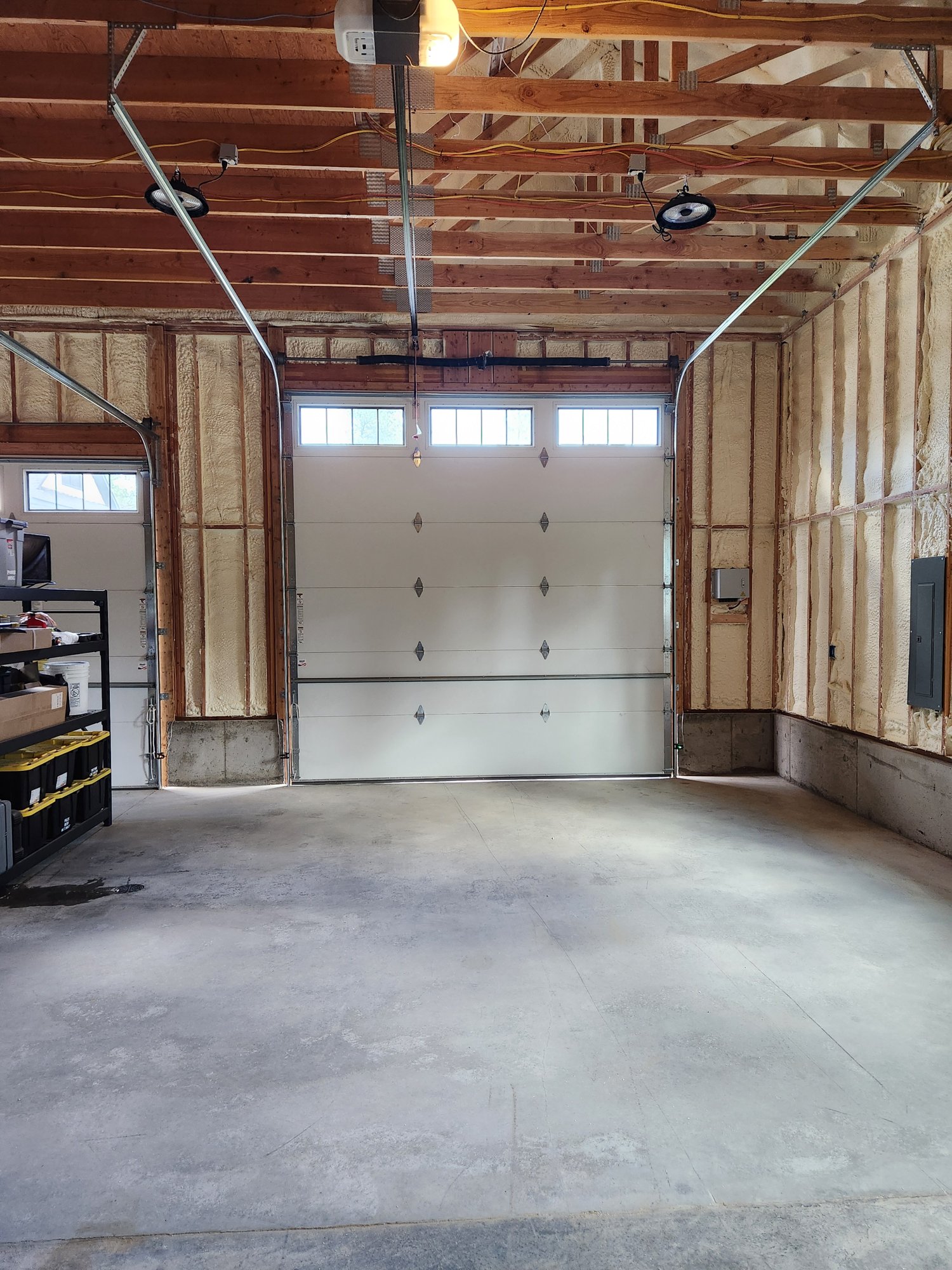
Peak Insulation Co. serves warehouse operators and commercial property managers throughout Libby and Eureka, delivering closed-cell spray foam insulation directly at facility sites. From downtown Libby to the Canadian border near Eureka, the team reaches industrial properties along Highway 2 and Highway 37, covering Lincoln County's timber, mining, and agricultural storage facilities. Installations are coordinated around active warehouse operations to minimize downtime while maintaining ASTM C1029 application standards for metal building substrates.
Service Area Coverage
- Serving Libby, Eureka, and Lincoln County warehouse districts
- Accessible via US Highway 2, Montana Highway 37, and Pipe Creek Road
- Coverage extends north to the Canadian border and south through Kootenai National Forest zones
- Spray foam application completed on-site at warehouse roof decks and wall assemblies
Installation crews arrive with heated spray equipment capable of maintaining substrate temperature requirements even during Montana's coldest months, ensuring proper adhesion and cure quality year-round.
FAQ
Warehouse Spray Foam Insulation questions, answered

Get a real number for your project this week.
Tell us about your build, attic, or remodel. We will come out, measure, and send a written quote you can actually plan around.