
Residential Insulation Contractor
Residential Insulation Contractor for Montana Homes
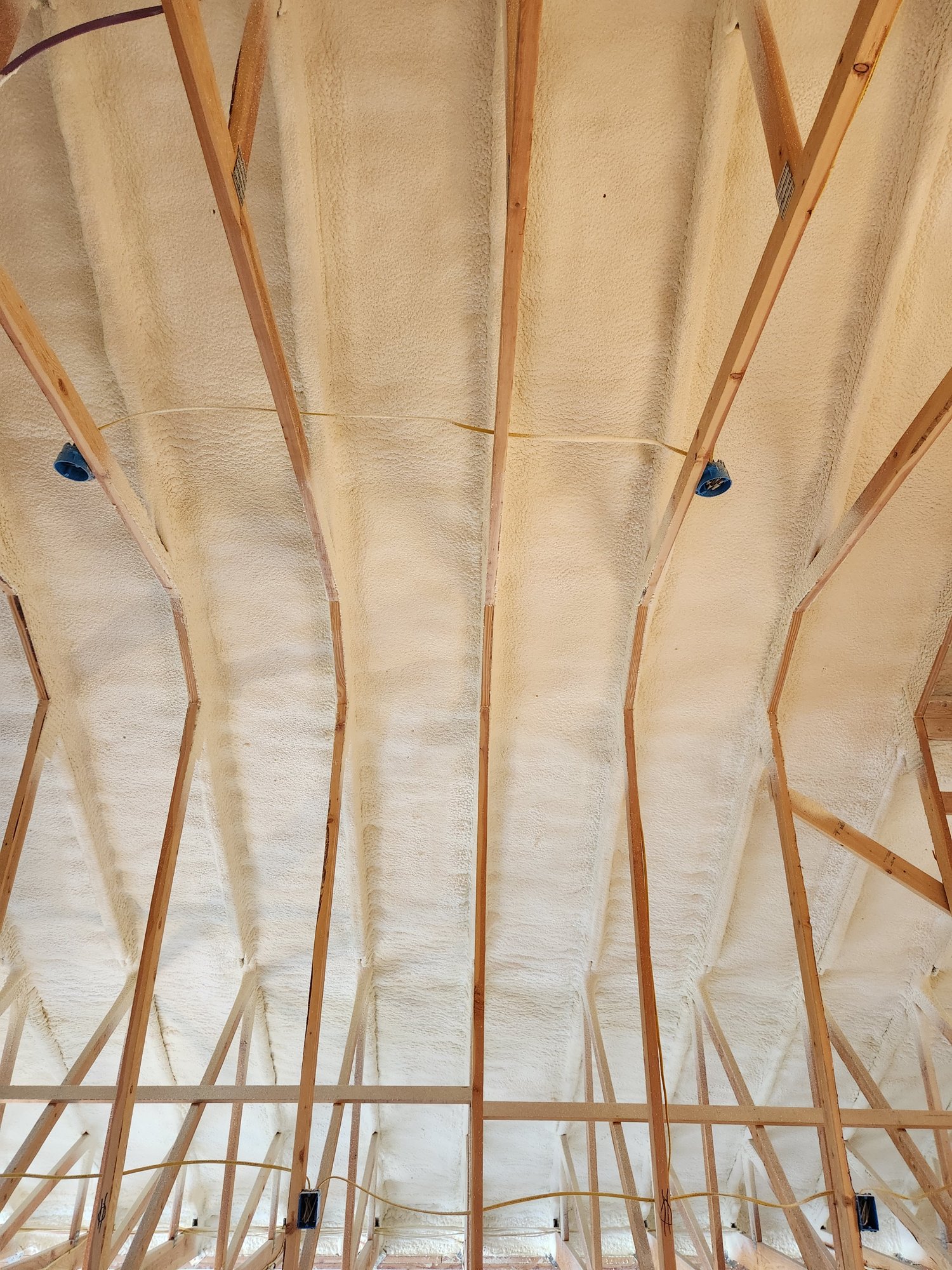
Peak Insulation Co. is a residential insulation contractor serving Northwest Montana and North Idaho. We specialize in closed-cell spray foam insulation for homes, cabins, garages, crawl spaces, attics, roof decks, walls, rim joists, additions, and new construction, so the air barrier and the insulation go in as one layer.

What it is
What does a residential insulation contractor actually fix in a cold-climate house?
Cold rooms, drafts along the floor, condensation on windows, and a furnace that runs long into the night are usually air leakage problems as much as R-value problems. Air movement through rim joists, top plates, attic hatches, and penetrations pulls heated air out of the house while the thermostat reads the same number all evening.
As a home insulation contractor, our job is to look at the whole assembly first: where the air control layer is supposed to be, whether the substrate is dry, and what the space is used for. Peak Insulation Co. specializes in closed-cell spray foam insulation, which goes on as a liquid, expands into the cavity, and cures into a layer that insulates and air seals in the same pass.
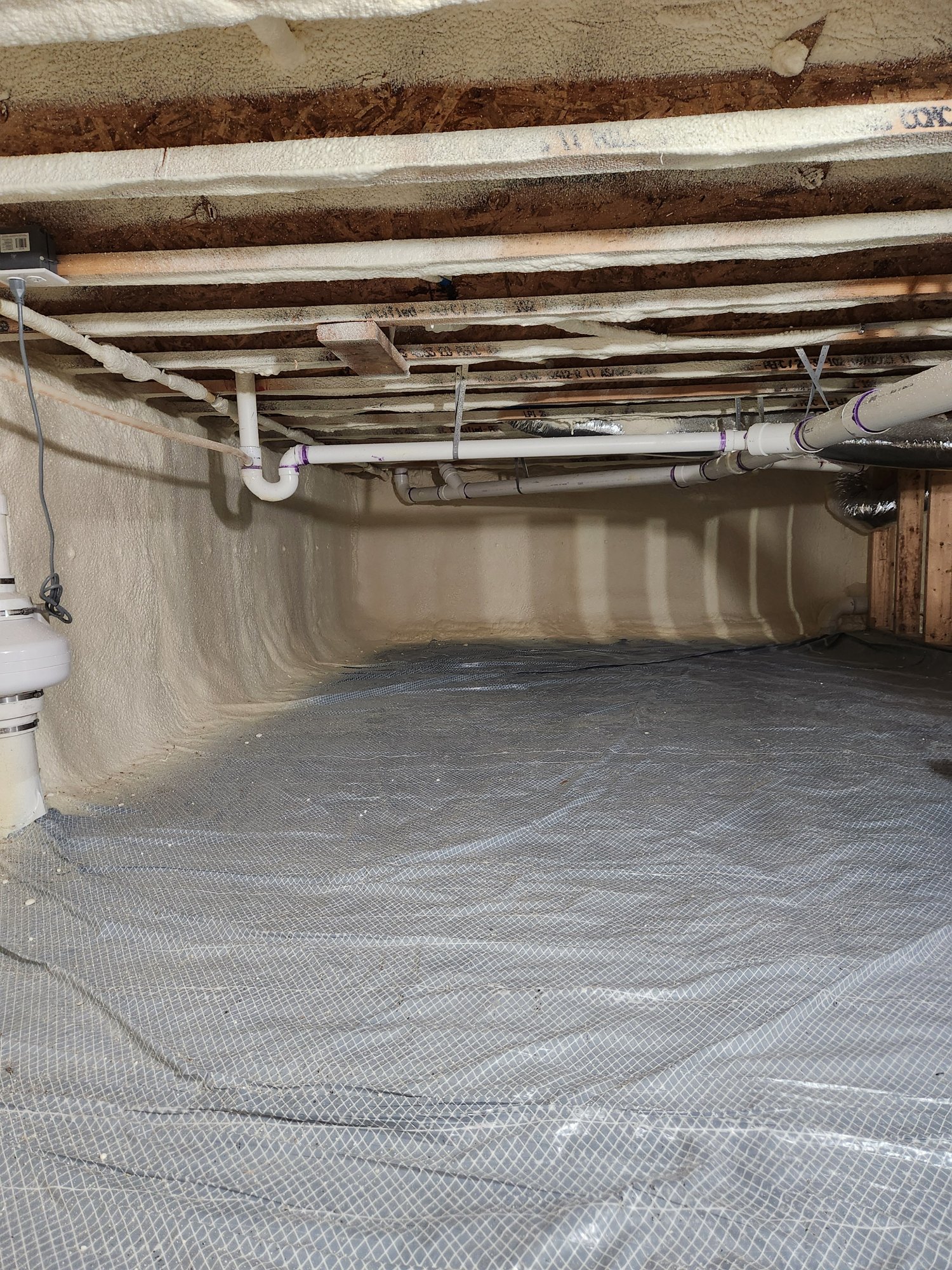
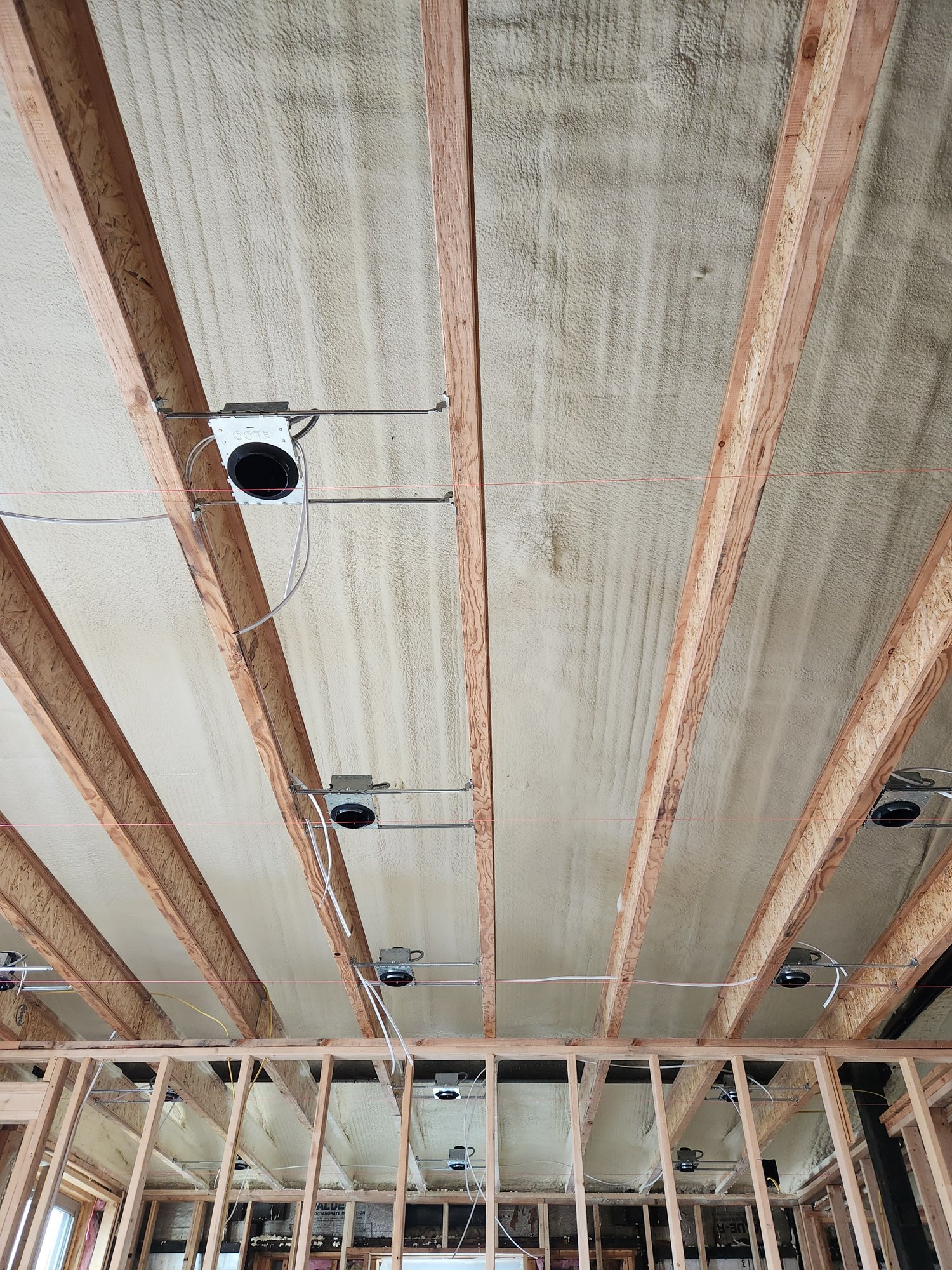
We install that material as residential insulation services across attic and roof deck assemblies, crawl space walls and rim joists, wall cavities during remodels, garages and shops, additions, and new construction throughout Lincoln County, the Flathead Valley, and the Idaho panhandle.
Quick facts
- Infiltration control: Air sealing at rim joists, top plates, and penetrations
- R-value per inch: Roughly R-6 to R-7 per inch depending on product
- Where it goes: Attics, roof decks, walls, crawl spaces, rim joists, garages
- Project types: Retrofit insulation, remodels, additions, and new construction
Benefits
What Benefits Does Residential Insulation Deliver?
At sufficient product-tested thickness, closed-cell foam acts as a vapor retarder and slows the air movement that carries moisture into an assembly, which helps keep sheathing warmer and reduces condensation risk. The right install pays you back in lower energy bills, a quieter building, and an envelope that holds up to Montana winters.
Performance gains that compound over time
- Vapor permeance control: A low-permeance layer slows vapor diffusion through the assembly, which lowers the chance of condensation forming inside the wall.
- Dew point management: Enough foam on the cold side of the assembly helps hold sheathing temperatures above the dew point through Lincoln County winters.
- Structural protection: Drier framing is less likely to see the chronic dampness that shortens the life of a wall or roof assembly.
- Continuous air seal: Foam expands into gaps as it cures, so the air control layer and the insulation go in together rather than in two separate steps.
- High R-value per inch: Roughly R-6 to R-7 per inch depending on product, so you keep ceiling height and usable space in shallow rafters and tight assemblies.
Why spray foam
Closed-Cell Spray Foam vs. Blow-In Insulation for Montana Homes
Closed-cell spray foam is the only insulation Peak Insulation Co. installs. Blow-in is listed here as the alternative homeowners most often compare it against, so you can see where each one actually fits in a cold-climate house.
| Feature | Closed-Cell Spray Foam | Blow-In (Loose Fill) |
|---|---|---|
| Typical R-value per inch | About R-6 to R-7 | About R-2.5 to R-3.8 depending on material |
| Air-sealing ability | Air-seals and insulates in the same pass when applied to a clean, prepared substrate | Slows air movement but is not an air barrier; gaps need separate sealing |
| Vapor-control role | At sufficient thickness it can act as a vapor retarder, which is why assembly design matters | Vapor open; a separate vapor retarder is typically required |
| Rim joists and irregular framing | Expands into odd shapes, around wiring and plumbing, and into corners | Hard to apply well in rim joists and small irregular cavities |
| Attic application style | Usually applied at the roof deck to bring the attic inside the thermal envelope | Applied on the attic floor over the ceiling plane in a vented attic |
| Settling and density change | Rigid once cured, so it does not settle in the cavity | Can settle or be disturbed over time, which reduces effective depth |
| Moisture sensitivity | Does not absorb water, but it will seal in an existing leak if the substrate is not dry first | Loses performance when wet and may need replacement after a leak |
| Depth needed to hit a target R-value | Less depth for the same R-value, useful in shallow rafters and tight assemblies | More depth required, which is fine in an open attic with headroom |
| Retrofit practicality | Works well in accessible attics, crawl spaces, and rim joists; closed walls usually need to be opened | Easy to add in an open attic and can be dense-packed into some closed walls |
| Up-front cost tendency | Higher up front; priced by thickness, access, and prep | Lower up front, especially for a simple attic top-up |
| Best-fit situations | Rim joists, crawl spaces, roof decks, cathedral ceilings, shops, and anywhere air leakage or condensation risk is the real problem | Open, well-ventilated attics where added R-value is the only goal and the ceiling plane is already sealed |
| Key limitation | Requires prepared substrates, suitable temperatures, and an assembly designed for an air-tight envelope | Does not stop air leakage on its own, so drafts and condensation issues can remain |
Typical R-value per inch
- Closed-Cell Spray Foam
- About R-6 to R-7
- Blow-In (Loose Fill)
- About R-2.5 to R-3.8 depending on material
Air-sealing ability
- Closed-Cell Spray Foam
- Air-seals and insulates in the same pass when applied to a clean, prepared substrate
- Blow-In (Loose Fill)
- Slows air movement but is not an air barrier; gaps need separate sealing
Vapor-control role
- Closed-Cell Spray Foam
- At sufficient thickness it can act as a vapor retarder, which is why assembly design matters
- Blow-In (Loose Fill)
- Vapor open; a separate vapor retarder is typically required
Rim joists and irregular framing
- Closed-Cell Spray Foam
- Expands into odd shapes, around wiring and plumbing, and into corners
- Blow-In (Loose Fill)
- Hard to apply well in rim joists and small irregular cavities
Attic application style
- Closed-Cell Spray Foam
- Usually applied at the roof deck to bring the attic inside the thermal envelope
- Blow-In (Loose Fill)
- Applied on the attic floor over the ceiling plane in a vented attic
Settling and density change
- Closed-Cell Spray Foam
- Rigid once cured, so it does not settle in the cavity
- Blow-In (Loose Fill)
- Can settle or be disturbed over time, which reduces effective depth
Moisture sensitivity
- Closed-Cell Spray Foam
- Does not absorb water, but it will seal in an existing leak if the substrate is not dry first
- Blow-In (Loose Fill)
- Loses performance when wet and may need replacement after a leak
Depth needed to hit a target R-value
- Closed-Cell Spray Foam
- Less depth for the same R-value, useful in shallow rafters and tight assemblies
- Blow-In (Loose Fill)
- More depth required, which is fine in an open attic with headroom
Retrofit practicality
- Closed-Cell Spray Foam
- Works well in accessible attics, crawl spaces, and rim joists; closed walls usually need to be opened
- Blow-In (Loose Fill)
- Easy to add in an open attic and can be dense-packed into some closed walls
Up-front cost tendency
- Closed-Cell Spray Foam
- Higher up front; priced by thickness, access, and prep
- Blow-In (Loose Fill)
- Lower up front, especially for a simple attic top-up
Best-fit situations
- Closed-Cell Spray Foam
- Rim joists, crawl spaces, roof decks, cathedral ceilings, shops, and anywhere air leakage or condensation risk is the real problem
- Blow-In (Loose Fill)
- Open, well-ventilated attics where added R-value is the only goal and the ceiling plane is already sealed
Key limitation
- Closed-Cell Spray Foam
- Requires prepared substrates, suitable temperatures, and an assembly designed for an air-tight envelope
- Blow-In (Loose Fill)
- Does not stop air leakage on its own, so drafts and condensation issues can remain
When is spray foam the better choice?
Closed-cell foam makes the most sense when air leakage, not just R-value, is the problem: rim joists, crawl space walls, vented attics with ice dam history, cathedral ceilings, and additions with shallow cavities where you need more R per inch. It also fits assemblies where you want the insulation and the air control layer installed in one pass.
When can blow-in still make sense?
Blow-in can still be reasonable in an open, well-detailed attic floor that already has a solid air barrier and plenty of depth available, or where budget is the deciding factor and the assembly has no moisture or condensation history. Peak Insulation Co. does not install blow-in, so if that is the right answer for your project we will tell you.
Materials we install
What Type of Home Insulation Does Peak Install?
Peak Insulation Co. is a residential insulation contractor that specializes in closed-cell spray foam. We do not try to install every insulation product on the market, so here is a straight answer on what we do and do not spray.
| Insulation Type | Does Peak Install It? | Where It Is Commonly Used | What To Know |
|---|---|---|---|
| Closed-cell spray foam | Yes, this is what we specialize in | Attics and roof decks, crawl space walls, rim joists, wall cavities, garages, shops, additions, and new construction | Roughly R-6 to R-7 per inch depending on product, air seals and insulates in the same pass, and can act as a vapor retarder at sufficient product-tested thickness |
| Fiberglass batts | No | Open stud bays, floor joists, and interior walls in new construction | Lower R-value per inch and not an air barrier, so gaps, compression, and penetrations still need separate sealing |
| Blown-in fiberglass | No | Open attic floors with plenty of headroom above the ceiling plane | Adds depth-based R-value but does not stop air movement on its own, and can be disturbed or displaced over time |
| Cellulose | No | Attic floors and some dense-packed closed wall cavities | Vapor open and can settle, so a separate air control layer and vapor strategy are typically still required |
| Open-cell spray foam | No | Interior assemblies in milder climates and sound-control applications | Lighter and more vapor open than closed-cell, which is why we stay with closed-cell for cold-climate Montana assemblies |
Closed-cell spray foam
- Does Peak Install It?
- Yes, this is what we specialize in
- Where It Is Commonly Used
- Attics and roof decks, crawl space walls, rim joists, wall cavities, garages, shops, additions, and new construction
- What To Know
- Roughly R-6 to R-7 per inch depending on product, air seals and insulates in the same pass, and can act as a vapor retarder at sufficient product-tested thickness
Fiberglass batts
- Does Peak Install It?
- No
- Where It Is Commonly Used
- Open stud bays, floor joists, and interior walls in new construction
- What To Know
- Lower R-value per inch and not an air barrier, so gaps, compression, and penetrations still need separate sealing
Blown-in fiberglass
- Does Peak Install It?
- No
- Where It Is Commonly Used
- Open attic floors with plenty of headroom above the ceiling plane
- What To Know
- Adds depth-based R-value but does not stop air movement on its own, and can be disturbed or displaced over time
Cellulose
- Does Peak Install It?
- No
- Where It Is Commonly Used
- Attic floors and some dense-packed closed wall cavities
- What To Know
- Vapor open and can settle, so a separate air control layer and vapor strategy are typically still required
Open-cell spray foam
- Does Peak Install It?
- No
- Where It Is Commonly Used
- Interior assemblies in milder climates and sound-control applications
- What To Know
- Lighter and more vapor open than closed-cell, which is why we stay with closed-cell for cold-climate Montana assemblies
Why does Peak specialize instead of installing everything?
Closed-cell spray foam is useful where air sealing, moisture and vapor control, and higher R-value per inch all matter in the same assembly, which describes most of the attic, crawl space, rim joist, and roof deck work we are called for in Northwest Montana. Staying with one material means our crew knows its substrate prep, lift thickness, and cure behavior well. It does not mean closed-cell is the right answer for every project.
What if my project is better served by another material?
Some jobs genuinely fit a different product. An open, well-ventilated attic floor with an existing air barrier and plenty of depth may be a reasonable blown-in or batt project. We will tell you when that is the case rather than selling you foam you do not need, and we will explain what the assembly actually requires.
Recent work
See the work we put our name on
Service Area
Serving Libby and Surrounding Areas with On-Site Installation and Quick Response Times
Libby and Eureka sit at opposite ends of a service corridor where winter arrives early and stays late. Most foam contractors schedule projects weeks out, which means a homeowner who discovers ice dams in November waits until December to fix the attic that caused them. We are based in the service corridor and keep equipment staged locally, so scheduling does not depend on a crew mobilizing from out of the area. If you have ever called three insulation companies, received two callbacks, and booked the one who showed up first, you already understand what the scheduling problem actually is. Speed closes more jobs than price in Lincoln County, because the homeowner dealing with frozen pipes or a furnace running nonstop is not comparison shopping anymore. They are solving a problem today, and the contractor who answers that urgency books the work.
Service Area Coverage
- Serving Libby, Eureka, and surrounding Lincoln County communities
- Accessible via Highway 2, Highway 37, and Pipe Creek Road
- Coverage extends north toward the Canadian border and south toward Troy
- On-site spray foam application for attics, crawl spaces, and rim joists
Substrate temperature and humidity readings determine same-day installation feasibility, with most residential projects scheduled during shoulder seasons when ambient conditions support proper foam adhesion and curing.
Explore residential services
Which home insulation service does your project need?
Attic and Roof Deck Insulation
Foam at the roofline keeps sheathing warmer and evens out roof temperatures, which reduces the melt and refreeze cycle behind ice dams in Lincoln County winters.
Learn moreCrawl Space and Rim Joist Insulation
Sealing rim joists and crawl space walls slows cold air infiltration, which lowers frozen pipe risk and steadies floor temperatures above the space.
Learn moreNew Construction Insulation
Foam goes on during framing so the insulation and the air barrier are one pass, at the thickness the project-specific code and assembly requirements call for.
Learn moreRetrofit Insulation and Remodels
We work around existing structures to air seal wall cavities and attics, addressing drafts without a full tear-out in older Libby and Flathead Valley homes.
Learn moreFAQ
Residential Insulation questions, answered

Get a real number for your project this week.
Tell us about your build, attic, or remodel. We will come out, measure, and send a written quote you can actually plan around.