
Crawl Space Spray Foam Insulation
Crawl Space Spray Foam Insulation
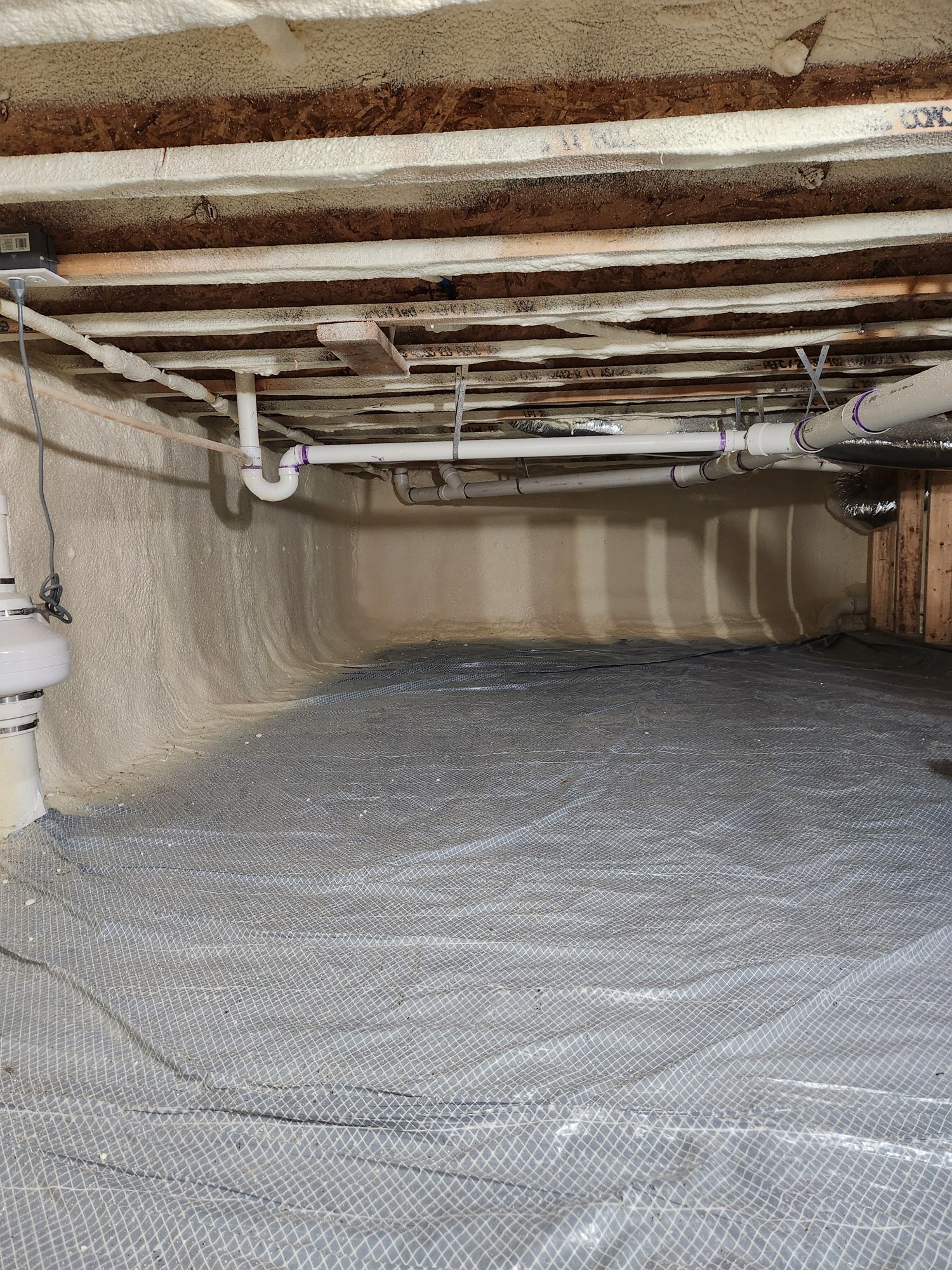
Peak Insulation Co. provides crawl space spray foam insulation for homes in Libby, Montana, sealing out moisture, pests, and cold air with a continuous thermal barrier. Our team applies closed-cell foam to foundation walls and rim joists, creating an air-tight envelope that protects against frozen pipes and reduces heating costs in Lincoln County's harsh winters.
What it is
What closed-cell foam actually does below your floor
Closed-cell SPF on crawl walls controls moisture by creating an air barrier and shifting the dew point away from wood framing. Most crawl space problems start at the rim joist, not the ground.
If you have ever walked into a crawl space in Libby and felt the damp cold radiating through the floor joists, you already know what uncontrolled moisture does before anyone explains condensation or vapor permeability. Air moving freely through vented openings meets cold foundation surfaces, deposits water vapor as liquid condensation, and starts a cycle that rots wood and feeds mold long before the damage becomes visible upstairs.
Quick facts
- Air barrier continuity: Seals rim joists and foundation walls completely
- Dew point control: Keeps interior foam surface above condensation
- Vapor permeance class: Blocks moisture migration at the foundation
- Thermal bridging: Reduces cold spots where floor meets foundation
Benefits
What Benefits Does Crawl Space Spray Foam Insulation Deliver?
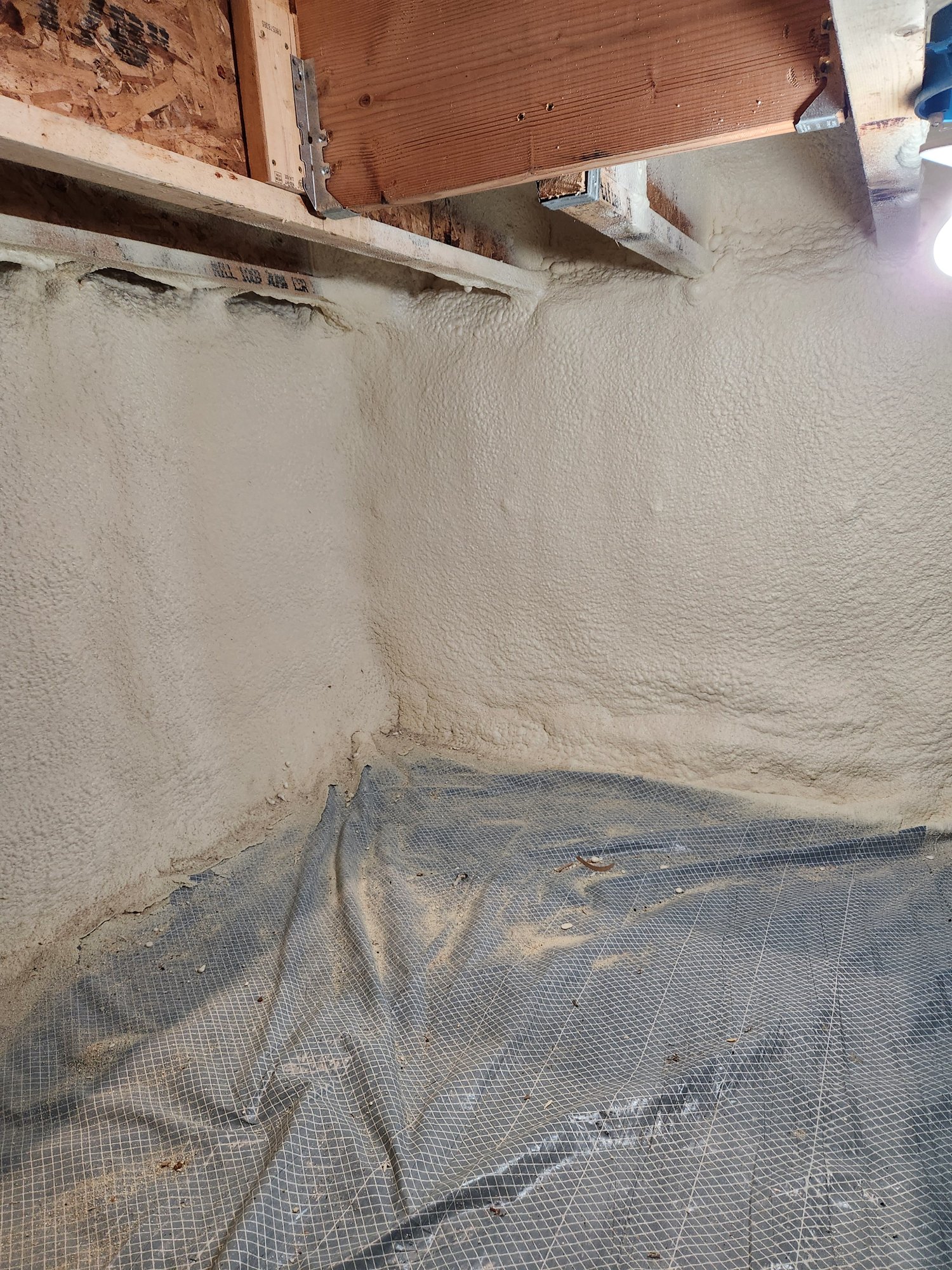
Fiberglass batts in floor joists do not air seal. They insulate the cavity they fill, but cold air still moves through rim joists, sill plates, and every penetration the batt cannot reach. Closed-cell spray foam does two jobs in one pass: thermal resistance and complete air barrier continuity from foundation wall to subfloor. The right install pays you back in lower energy bills, a quieter building, and an envelope that holds up to Montana winters.
Performance gains that compound over time
- Rim joist condensation stopped: The cold band where foundation meets warm interior air no longer collects condensation behind your insulation.
- Foundation wall wicking blocked: Concrete pulls groundwater upward continuously, and closed-cell foam stops that moisture before it reaches the framing.
- No more damp fiberglass: Fiberglass traps humidity against wood subflooring. Foam stays rigid and dry through every freeze-thaw cycle.
- Convective loops shut down: Batts allow cold air to circulate through band joists and drop floor temperatures ten degrees below thermostat settings. Foam stops the loop at the source.
- Frozen pipe risk reduced: A sealed, conditioned crawl space holds temperature around water lines so pipes stay above freezing through January cold snaps.
Why spray foam outperforms traditional materials
Why Spray Foam Outperforms Traditional Materials in Crawl Space Temperature Control and Air Sealing
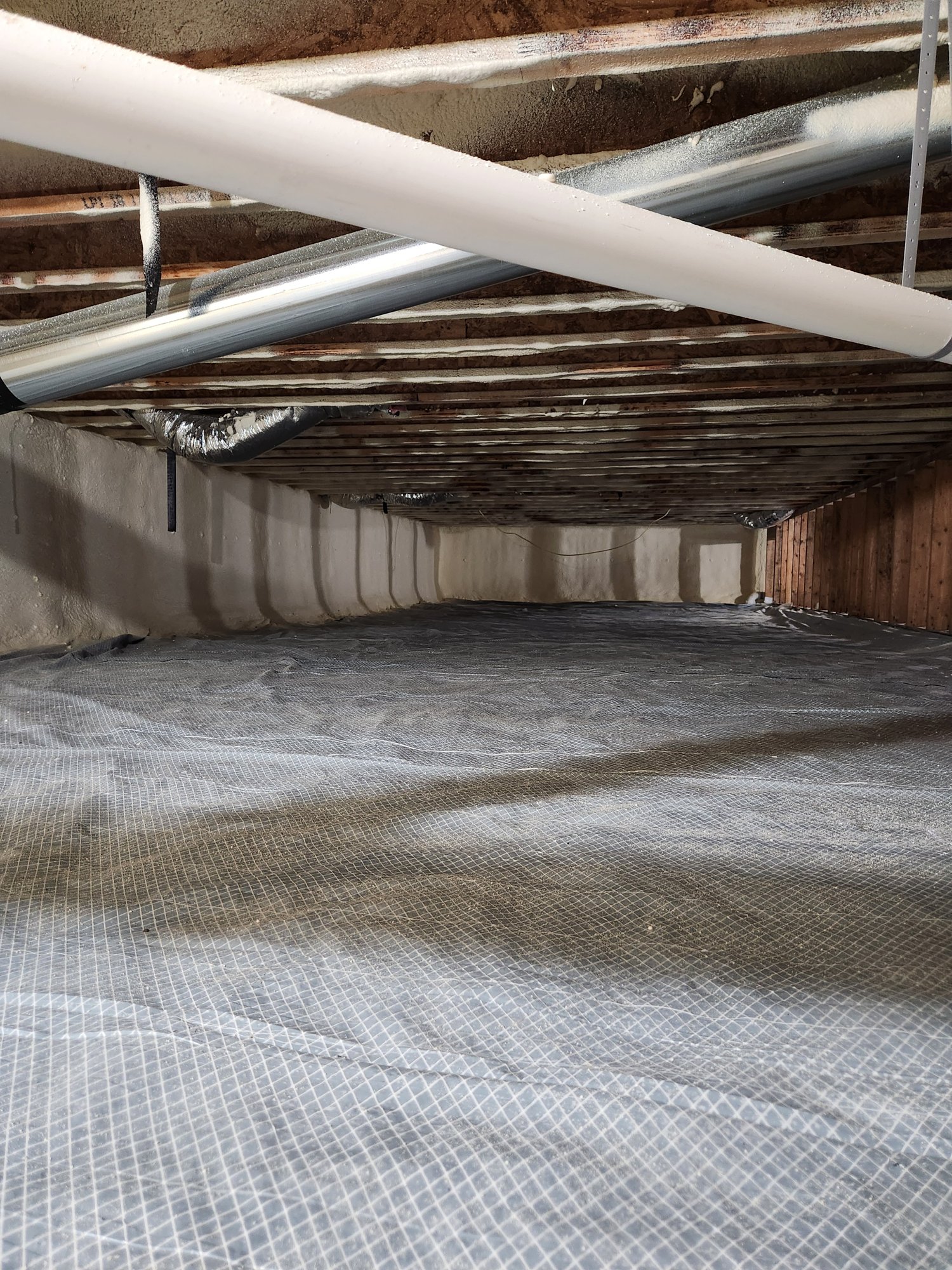
Before committing to this, one thing is worth saying plainly: fiberglass batts in floor joists do not air seal. They insulate the cavity they fill, but cold air still moves through rim joists, sill plates, and every penetration the batt cannot reach. Closed-cell spray foam at $2.50 to $4.50 per square foot costs more upfront because it does two jobs in one pass: thermal resistance and complete air barrier continuity from foundation wall to subfloor.
The callback rate on crawl space insulation splits cleanly at one variable: whether the material stopped air movement or just slowed heat transfer. Batts that look intact after five Montana winters still allow convective loops that pull cold air through band joists and drop floor temperatures ten degrees below thermostat settings. Spray foam stops the loop at the source.
- Rim Joist Condensation: Cold band meets warm interior air
- Foundation Wall Wicking: Concrete pulls groundwater upward continuously
- Floor Deck Underside: Fiberglass traps humidity against wood subflooring
Why spray foam
Closed-Cell Spray Foam vs. Blow-In Insulation for Montana Homes
Closed-cell spray foam is the only insulation Peak Insulation Co. installs. Blow-in is listed here as the alternative homeowners most often compare it against, so you can see where each one actually fits in a cold-climate house.
| Feature | Closed-Cell Spray Foam | Blow-In (Loose Fill) |
|---|---|---|
| Typical R-value per inch | About R-6 to R-7 | About R-2.5 to R-3.8 depending on material |
| Air-sealing ability | Air-seals and insulates in the same pass when applied to a clean, prepared substrate | Slows air movement but is not an air barrier; gaps need separate sealing |
| Vapor-control role | At sufficient thickness it can act as a vapor retarder, which is why assembly design matters | Vapor open; a separate vapor retarder is typically required |
| Rim joists and irregular framing | Expands into odd shapes, around wiring and plumbing, and into corners | Hard to apply well in rim joists and small irregular cavities |
| Attic application style | Usually applied at the roof deck to bring the attic inside the thermal envelope | Applied on the attic floor over the ceiling plane in a vented attic |
| Settling and density change | Rigid once cured, so it does not settle in the cavity | Can settle or be disturbed over time, which reduces effective depth |
| Moisture sensitivity | Does not absorb water, but it will seal in an existing leak if the substrate is not dry first | Loses performance when wet and may need replacement after a leak |
| Depth needed to hit a target R-value | Less depth for the same R-value, useful in shallow rafters and tight assemblies | More depth required, which is fine in an open attic with headroom |
| Retrofit practicality | Works well in accessible attics, crawl spaces, and rim joists; closed walls usually need to be opened | Easy to add in an open attic and can be dense-packed into some closed walls |
| Up-front cost tendency | Higher up front; priced by thickness, access, and prep | Lower up front, especially for a simple attic top-up |
| Best-fit situations | Rim joists, crawl spaces, roof decks, cathedral ceilings, shops, and anywhere air leakage or condensation risk is the real problem | Open, well-ventilated attics where added R-value is the only goal and the ceiling plane is already sealed |
| Key limitation | Requires prepared substrates, suitable temperatures, and an assembly designed for an air-tight envelope | Does not stop air leakage on its own, so drafts and condensation issues can remain |
Typical R-value per inch
- Closed-Cell Spray Foam
- About R-6 to R-7
- Blow-In (Loose Fill)
- About R-2.5 to R-3.8 depending on material
Air-sealing ability
- Closed-Cell Spray Foam
- Air-seals and insulates in the same pass when applied to a clean, prepared substrate
- Blow-In (Loose Fill)
- Slows air movement but is not an air barrier; gaps need separate sealing
Vapor-control role
- Closed-Cell Spray Foam
- At sufficient thickness it can act as a vapor retarder, which is why assembly design matters
- Blow-In (Loose Fill)
- Vapor open; a separate vapor retarder is typically required
Rim joists and irregular framing
- Closed-Cell Spray Foam
- Expands into odd shapes, around wiring and plumbing, and into corners
- Blow-In (Loose Fill)
- Hard to apply well in rim joists and small irregular cavities
Attic application style
- Closed-Cell Spray Foam
- Usually applied at the roof deck to bring the attic inside the thermal envelope
- Blow-In (Loose Fill)
- Applied on the attic floor over the ceiling plane in a vented attic
Settling and density change
- Closed-Cell Spray Foam
- Rigid once cured, so it does not settle in the cavity
- Blow-In (Loose Fill)
- Can settle or be disturbed over time, which reduces effective depth
Moisture sensitivity
- Closed-Cell Spray Foam
- Does not absorb water, but it will seal in an existing leak if the substrate is not dry first
- Blow-In (Loose Fill)
- Loses performance when wet and may need replacement after a leak
Depth needed to hit a target R-value
- Closed-Cell Spray Foam
- Less depth for the same R-value, useful in shallow rafters and tight assemblies
- Blow-In (Loose Fill)
- More depth required, which is fine in an open attic with headroom
Retrofit practicality
- Closed-Cell Spray Foam
- Works well in accessible attics, crawl spaces, and rim joists; closed walls usually need to be opened
- Blow-In (Loose Fill)
- Easy to add in an open attic and can be dense-packed into some closed walls
Up-front cost tendency
- Closed-Cell Spray Foam
- Higher up front; priced by thickness, access, and prep
- Blow-In (Loose Fill)
- Lower up front, especially for a simple attic top-up
Best-fit situations
- Closed-Cell Spray Foam
- Rim joists, crawl spaces, roof decks, cathedral ceilings, shops, and anywhere air leakage or condensation risk is the real problem
- Blow-In (Loose Fill)
- Open, well-ventilated attics where added R-value is the only goal and the ceiling plane is already sealed
Key limitation
- Closed-Cell Spray Foam
- Requires prepared substrates, suitable temperatures, and an assembly designed for an air-tight envelope
- Blow-In (Loose Fill)
- Does not stop air leakage on its own, so drafts and condensation issues can remain
When is spray foam the better choice?
Closed-cell foam makes the most sense when air leakage, not just R-value, is the problem: rim joists, crawl space walls, vented attics with ice dam history, cathedral ceilings, and additions with shallow cavities where you need more R per inch. It also fits assemblies where you want the insulation and the air control layer installed in one pass.
When can blow-in still make sense?
Blow-in can still be reasonable in an open, well-detailed attic floor that already has a solid air barrier and plenty of depth available, or where budget is the deciding factor and the assembly has no moisture or condensation history. Peak Insulation Co. does not install blow-in, so if that is the right answer for your project we will tell you.
Recent work
See the work we put our name on
Service Area
Serving Libby, Eureka, and Surrounding Areas With Prompt On-Site Insulation Access
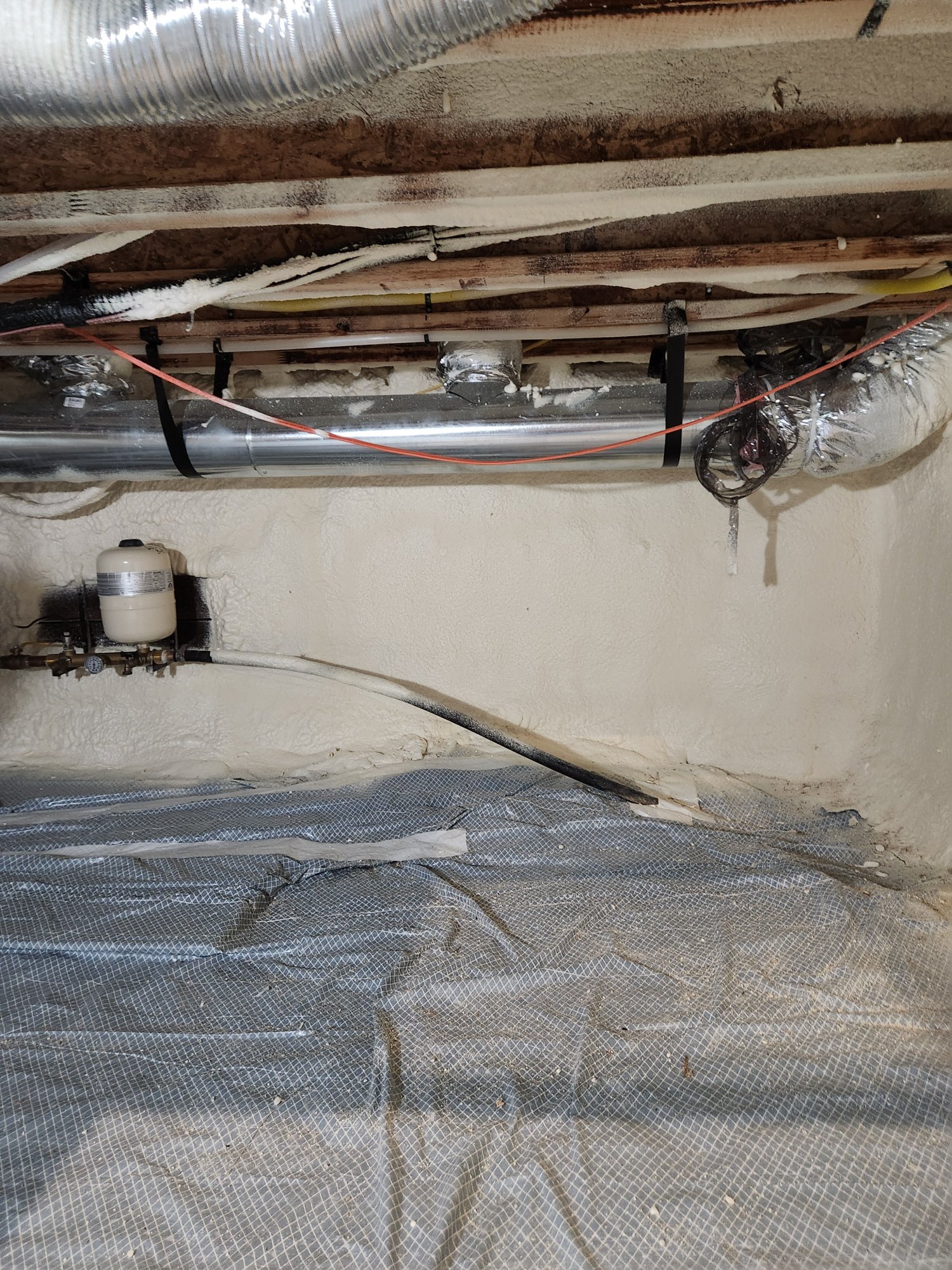
Peak Insulation Co. serves homeowners throughout Libby and surrounding Lincoln County areas, providing crawl space spray foam insulation directly at residential properties. From Libby to Eureka and along Highway 2, the team reaches properties across northwest Montana without requiring customers to travel. Peak Insulation Co. completes substrate moisture testing and foam application in a single visit, using closed-cell formulations that cure within 24 hours.
Service Area Coverage
- Serving Libby, Eureka, Troy, and rural Lincoln County properties
- Accessible via Highway 2, Highway 37, and Pipe Creek Road
- Coverage extends north to the Canadian border and south through Kootenai National Forest
- Crawl space insulation installed on-site with equipment brought to each property
The team schedules installations during dry weather windows between late April and early October when substrate conditions support proper foam adhesion and curing.
FAQ
Crawl Space Spray Foam Insulation questions, answered

Get a real number for your project this week.
Tell us about your build, attic, or remodel. We will come out, measure, and send a written quote you can actually plan around.