
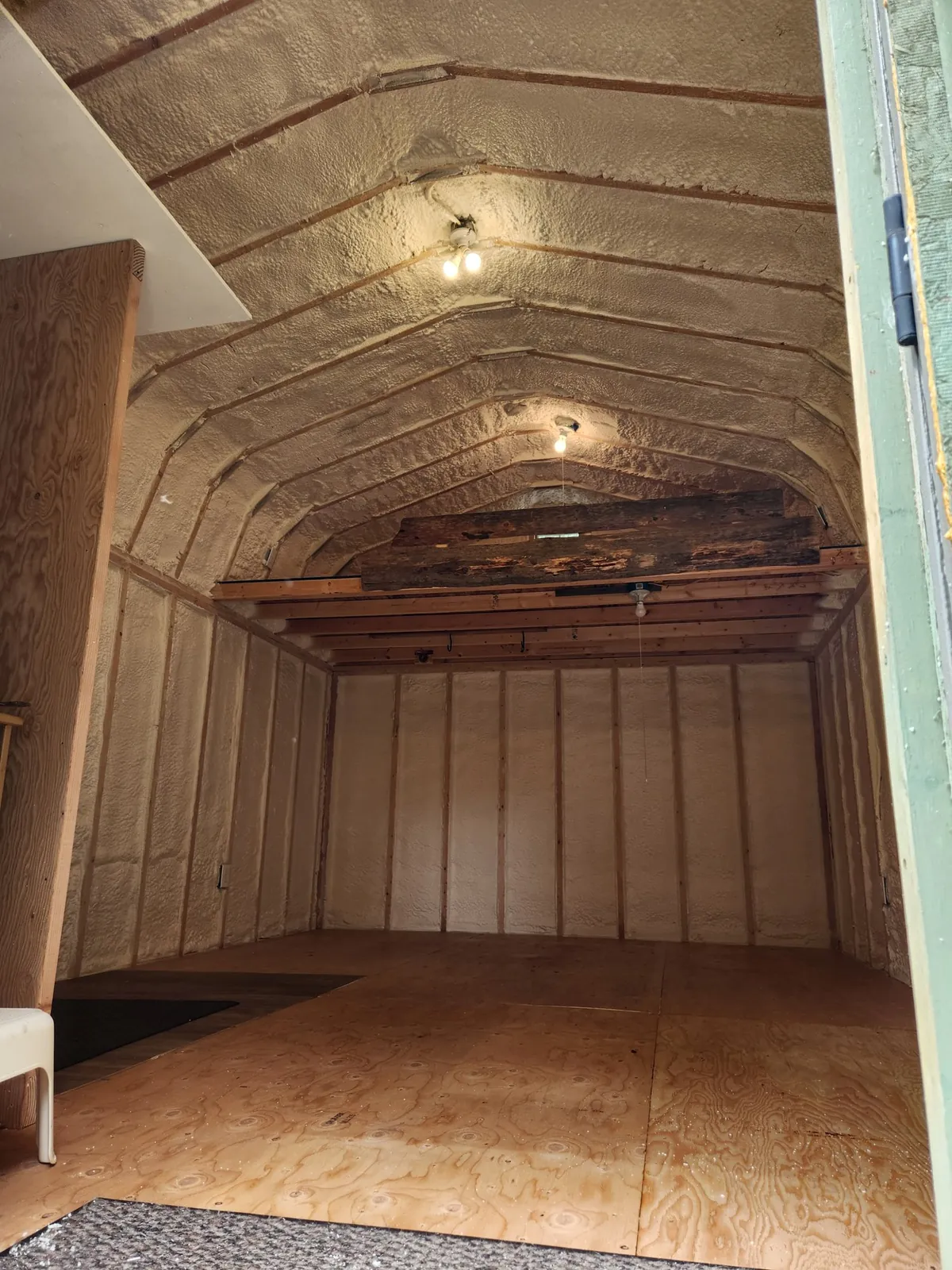
Kalispell, MT · Flathead County
Kalispell, MT Spray Foam Insulation for Cold-Climate Homes
Closed-cell spray polyurethane foam is the only insulation we install, and it suits the Flathead Valley's long heating season. One pass air-seals and insulates roof decks, walls, rim joists, and crawl space walls.
- Closed-Cell SPF Only: Roughly R-6 to R-7 per inch, applied at the thickness the assembly calls for.
- Air Sealing in One Pass: Rim joists, top plates, and penetrations are sealed as the foam is applied.
- Vapor Control by Thickness: At typical installed thicknesses, closed-cell foam also acts as a vapor retarder.
- Substrate Preparation: Surface moisture and temperature are checked before every spray so the foam cures and adheres.
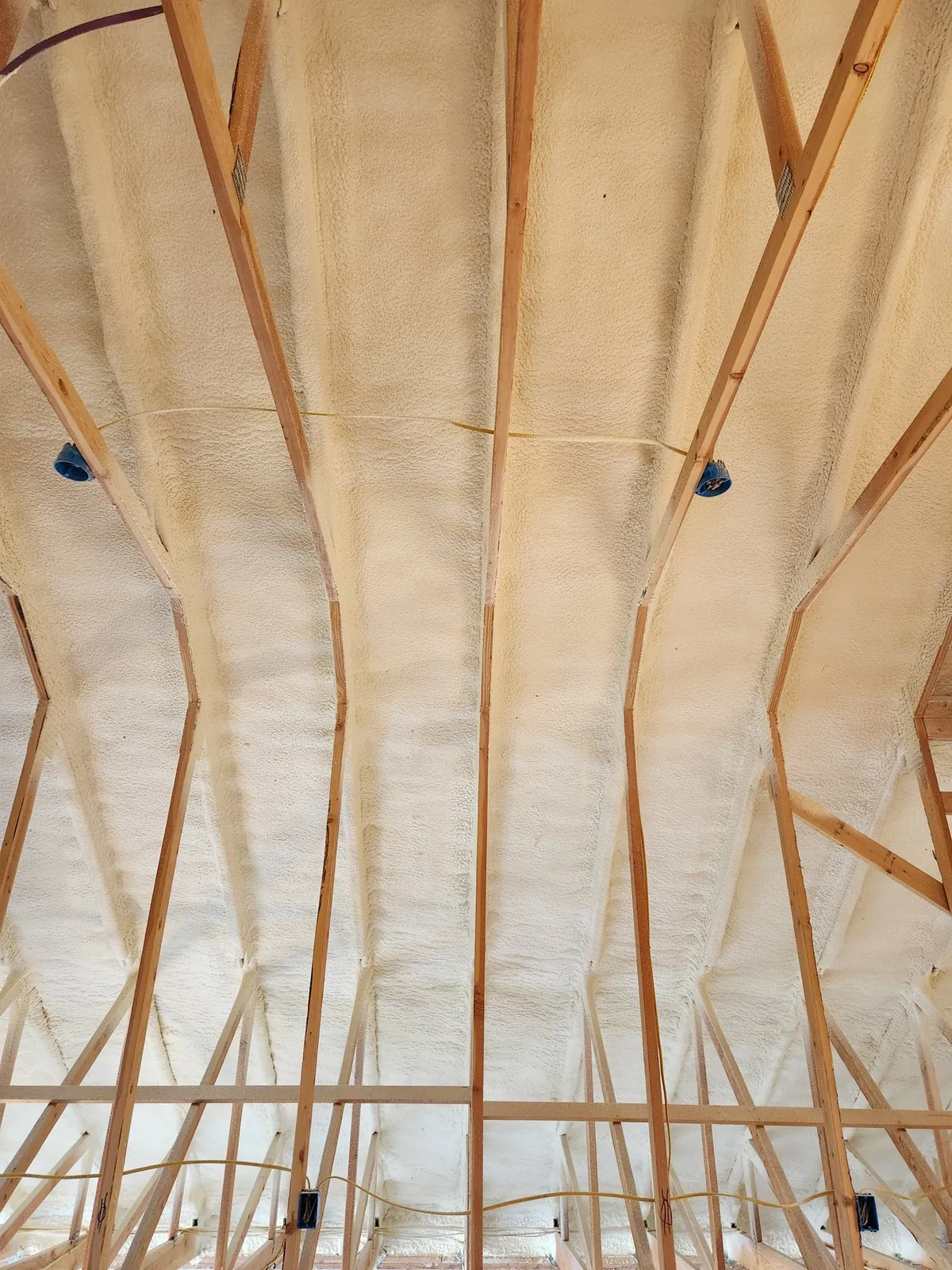
Example of the kalispell spray foam insulation work Peak Insulation provides for homes and shops across the Kalispell service area.
Cold-climate performance
Why Closed-Cell Spray Foam Fits Kalispell's Heating Load
Kalispell winters run cold enough that air infiltration, not conduction, drives much of the heat loss in a typical home. Closed-cell spray foam addresses both at once: it slows conductive loss at roughly R-6 to R-7 per inch and stops the air movement through rim joists, top plates, and penetrations that fibrous insulation cannot seal on its own.
Thickness is set by the assembly and the code requirements that apply to your building, not by a one-size rule. In roof decks and crawl space walls, the same foam that provides R-value also serves as the vapor retarder when it is installed thick enough, which keeps the layering simple.
Performance Characteristics That Matter in a Cold Climate
- R-Value Per Inch: Closed-cell foam is generally in the R-6 to R-7 per inch range, so target R-values fit in shallower cavities.
- Vapor Behavior: At common installed thicknesses closed-cell foam acts as a vapor retarder, which matters on cold sheathing and foundation walls.
- Air Leakage Reduction: Because the foam adheres and expands into gaps, air leakage drops noticeably. How much depends on the building and how leaky it started.
From the field
Closed-cell foam is not the cheapest option per square foot, and it is not the right answer for every cavity. Where air sealing, vapor control, and R-value per inch all matter in one assembly, it does the work of several layers at once.
Google Reviews
What neighbors near Kalispell say
Rated 5.0 on Google by homeowners and contractors across Northwest Montana
“They are absolutely professional and timely. They do a phenomenal job and clean up. I definitely recommend to all. 5 stars”
“We use Peak Insulation exclusively for all of our homes. They do great work, with very competitive pricing.”
“Josiah with Peak Insulation was very professional to work with. I called him about insulating my dog house after the cold weather arrived. The day after I called he stopped by my house and sprayed it. Prompt, professional service.”
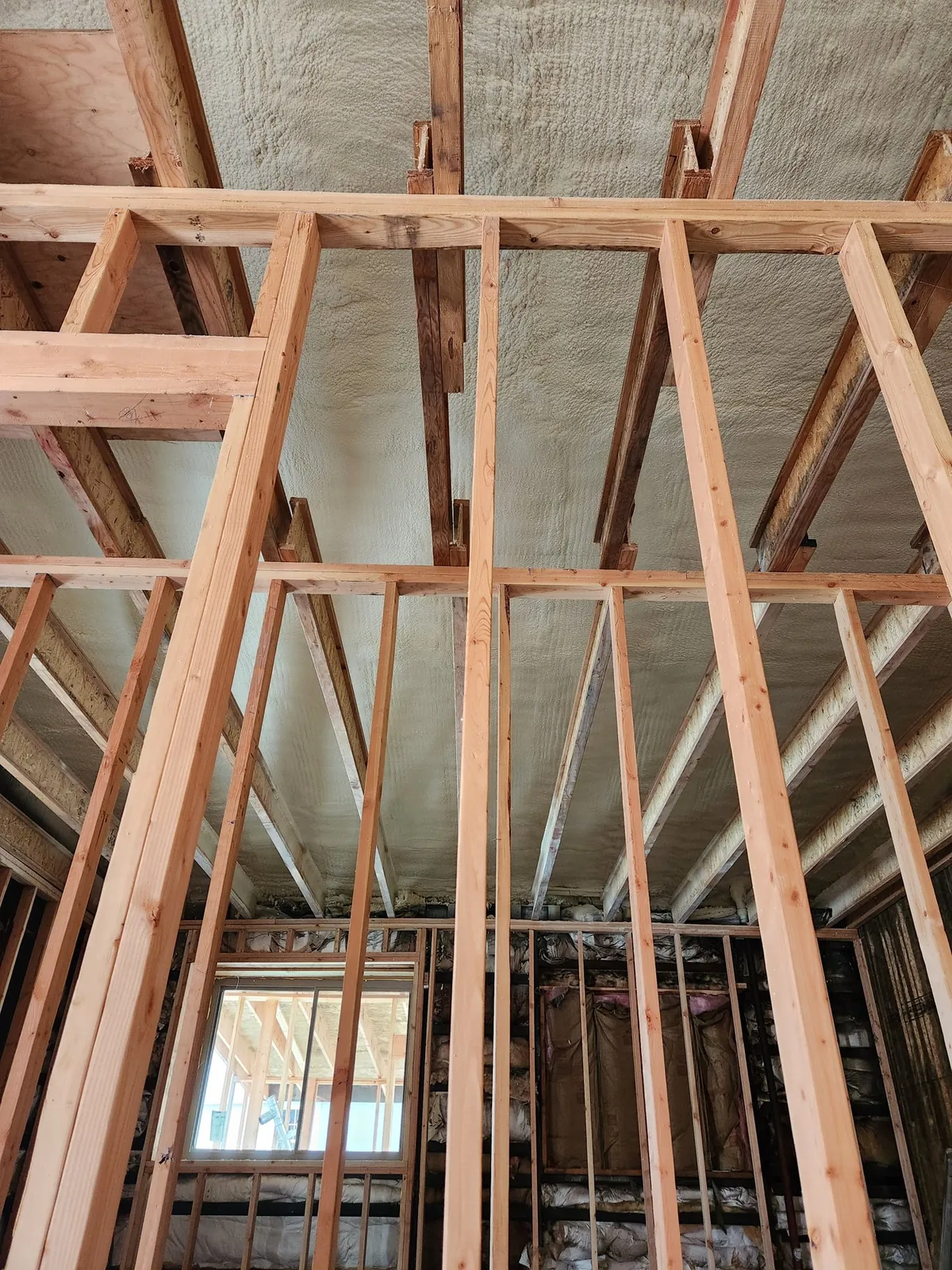
Our install process
How We Install Foam in Flathead Valley Homes
- 1
Walk the Building Envelope
We look at where air is moving, which assemblies are in play, and what the substrate looks like before quoting a scope.
- 2
Confirm Assembly and Code Requirements
Target thickness, vapor control, and any covering requirement are set against the code and assembly requirements for your project.
- 3
Prepare Surfaces and Mask Areas
Containment protects finishes, ventilation handles overspray, and metal substrates are prepared so the foam bonds.
- 4
Apply Foam in Controlled Lifts
Foam is applied in lifts so it cures correctly, then thickness is checked across the assembly for continuous coverage.
What sets us apart
Why Flathead Valley Builders Specify Spray Polyurethane Foam
On a new build, the envelope is the one part of the job that is hard to fix later. Rim joists, band boards, and top plates are where most framed assemblies leak, and those are exactly the spots closed-cell foam seals as it insulates.
Air Barrier Continuity
Spray foam seals rim joists, top plates, and penetrations in the same pass that insulates them, closing the gaps batts leave open around irregular framing.
Moisture and Condensation Control
At the right thickness, closed-cell foam keeps warm interior air away from cold sheathing, which is what drives condensation risk in a Kalispell winter. The assembly still has to be designed correctly.
Adhesion to the Structure
Closed-cell foam bonds to wood framing and sheathing and holds its shape in the cavity rather than slumping away from the top of a wall.
Dimensional Stability
Rigid closed-cell foam does not settle or sag in the cavity the way loose-fill can over time, so coverage stays where it was installed.
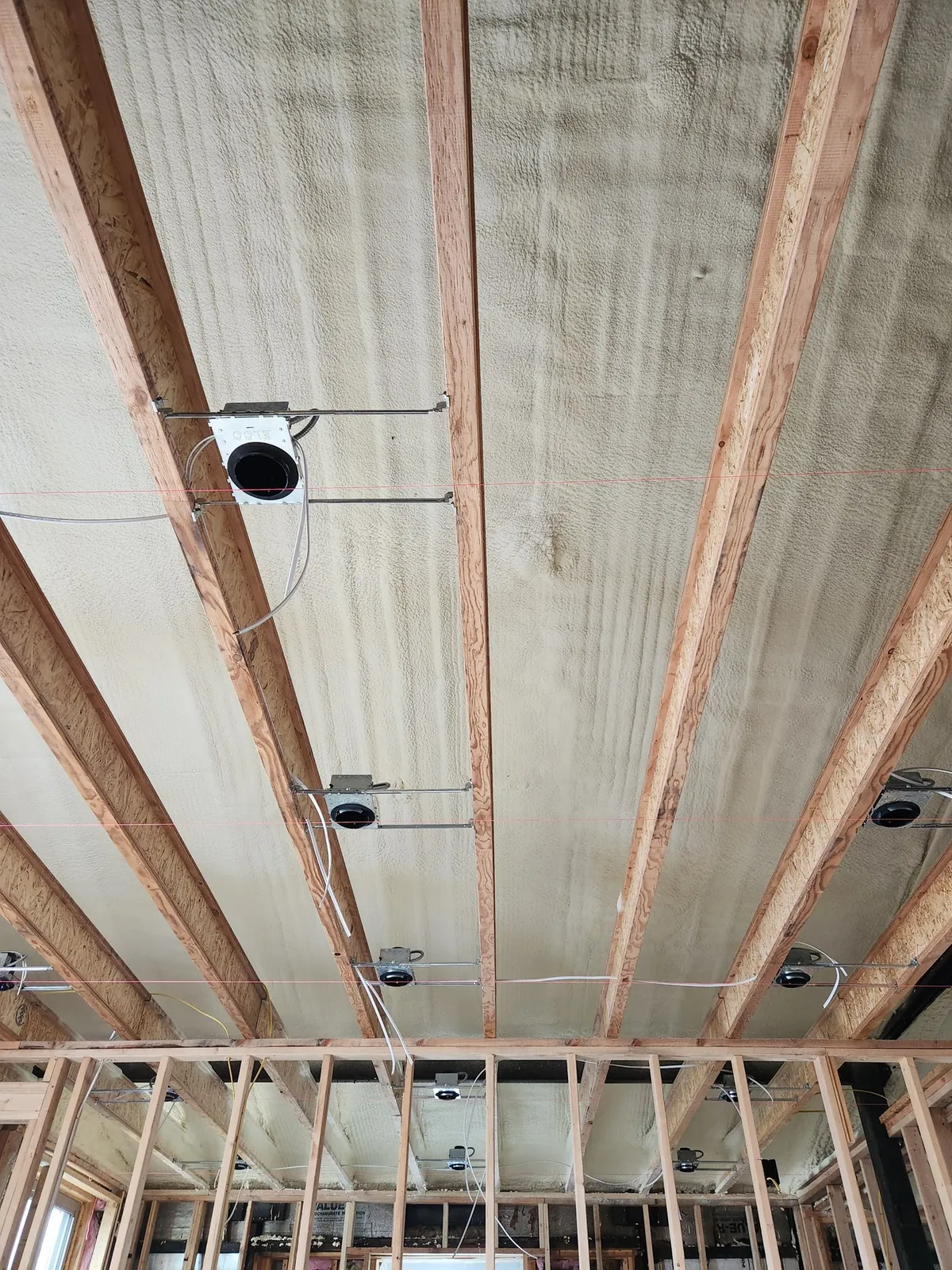
Comfort and efficiency
Trusted Insulation Upgrades for Montana's Cold Seasons
Before adding another layer of blown fiberglass to an attic that is already deep, it is worth asking whether the real problem is air leakage. Most Kalispell retrofit calls involve compressed attic insulation or rim joists that were never sealed during original construction. Spray foam addresses the air movement behind ice dams and cold floors, which added R-value alone does not fix.
What Usually Changes After Installation
- Fewer Drafts: Rim joist and top-plate sealing cuts the cold air infiltration you feel at floor level.
- More Even Roof Temperatures: An unvented roof assembly reduces the warm spots that melt snow unevenly and feed ice dams.
- Warmer Crawl Spaces: Closed-cell foam on crawl space walls and rim joists keeps that zone closer to indoor conditions.
- Less Furnace Cycling: Lower air leakage means the heating system works against a smaller load.
In practice, most of the comfort gain comes from reducing drafts rather than from R-value alone, because moving air carries far more heat than conduction through insulation.
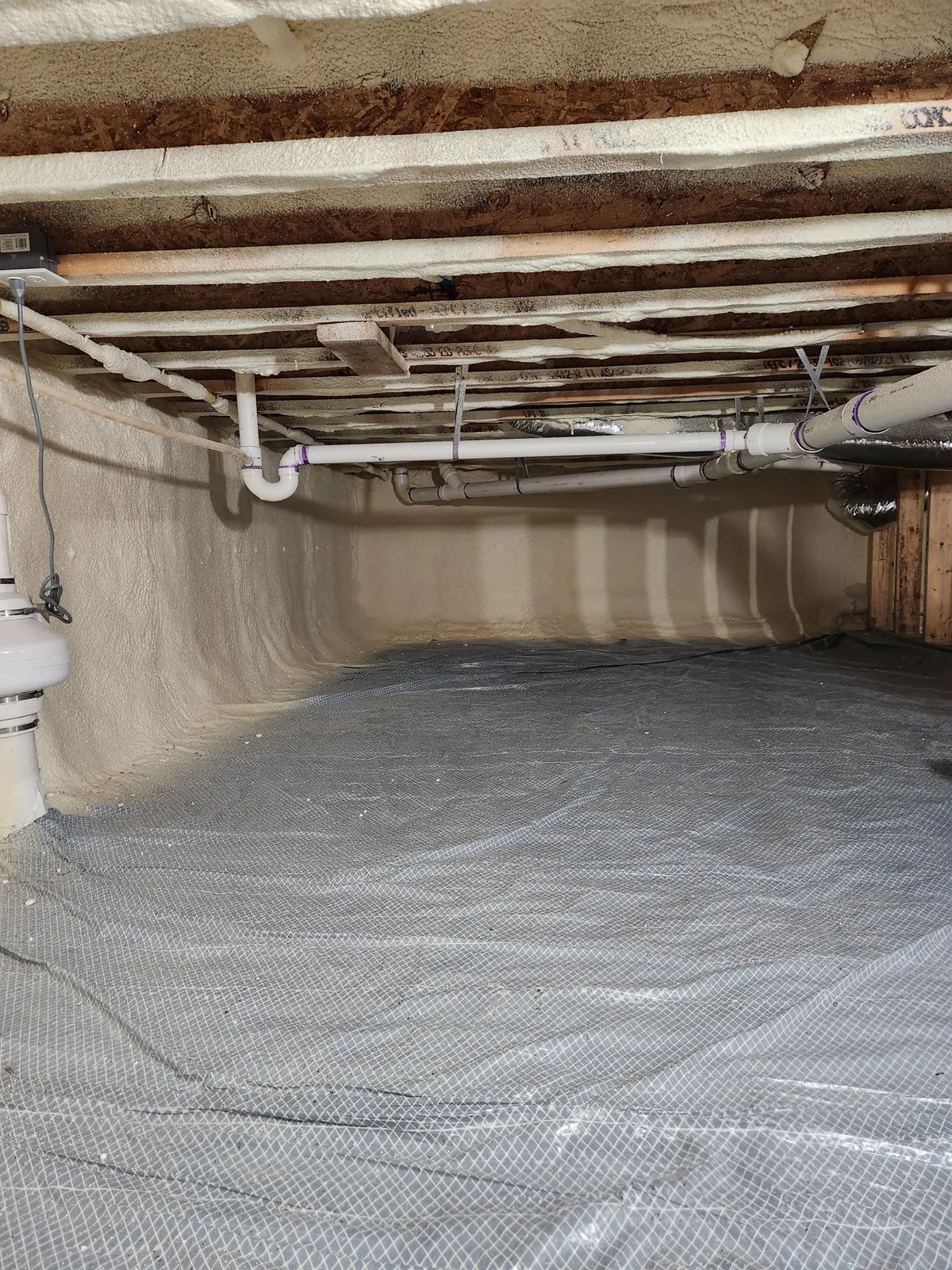
Example of the kalispell spray foam insulation work Peak Insulation provides for homes and shops across the Kalispell service area.
Moisture control
How Does Spray Foam Improve Indoor Comfort?
Upstairs bedrooms that run cold on a January morning are usually an air leakage problem, not an R-value problem. Leakage at the rim joist and around ceiling penetrations is what fibrous insulation cannot seal on its own.
What Closed-Cell Foam Does That Batts Cannot
- Continuous Air Barrier: Foam expands into cracks and around framing, stopping the convective loops batts leave open.
- Less Thermal Bridging: Foam applied over framing members reduces the conductive path through studs and joists.
- Conditioned Attic Option: Bringing the roof deck into the envelope removes the cold attic zone above finished ceilings.
- Steadier Humidity: Lower air exchange reduces indoor humidity swings during the heating season.
The honest limit is that foam seals the envelope, it does not fix mechanical problems. A bonus room with no supply register will still be cold after the assembly is sealed, because the issue is distribution rather than heat loss. We flag that kind of thing during the walkthrough instead of after the job.
Code and design
Pole Barns and Metal Buildings in the Flathead Valley
Metal buildings around Kalispell's agricultural and light-industrial corridors see condensation when humid interior air reaches cold steel panels. Closed-cell foam applied to the underside of prepared metal roofing and walls keeps that air off the panel, which is what causes the drip and the rust streaks below it. Surface preparation matters, and panel temperature has to be right during application.
We have sprayed a lot of pole barns and shop buildings across the valley, and prep is the difference between foam that stays bonded and foam that delaminates. It is not complicated work, but it does take the discipline to prep correctly even when the schedule is tight.
Recent work
See the work we put our name on
Service Area
Serving Kalispell and Surrounding Areas
We work with homeowners and commercial property owners throughout Kalispell and the greater Flathead Valley. Projects regularly take us to Whitefish and Columbia Falls, where the same cold-climate envelope challenges apply. Scheduling is built around new construction timelines and retrofit windows when occupants need to be out during application and cure.
Service Area
- Homes, cabins, and additions across the Flathead Valley.
- Shops, pole barns, and light commercial buildings on the Highway 93 corridor.
- Whitefish and Columbia Falls projects on the same scope and spec.
Scheduling is coordinated around inspection deadlines and occupancy timelines wherever we can.
View Peak Insulation Co. on GoogleKalispell Neighborhood Insulation & Building Code Reference
The areas we cover around Kalispell, the ZIP codes they fall in, the buildings we most often work on there, and the permitting and winter conditions that shape the assembly.
Area & Neighborhoods
Central Kalispell
Downtown, Courthouse District, Woodland Park
ZIP Codes
59901
Landmarks & Housing
Flathead County Courthouse, Woodland Park, Main Street / US-93
Older bungalows, Craftsman homes, Alley garages
Local Scope & Code Notes
Envelope work on older bungalows, craftsman homes, alley garages here centers on knee walls and roof decks, rim joists, basement walls.
Inside city limits, permits go through the City of Kalispell Building Department. Montana state-adopted residential code (IRC), administered locally; foam plastic needs a code-compliant thermal or ignition barrier (IRC R316).
Winter Conditions & Systems
Cold winters with inversion fog and steady snow load.
Knee walls and roof decks · Rim joists · Basement walls
Area & Neighborhoods
Evergreen & North Kalispell
Evergreen, Whitefish Stage, Reserve Drive
ZIP Codes
59901
Landmarks & Housing
Flathead River, Whitefish Stage Road
Ranch homes, Manufactured homes, Light commercial
Local Scope & Code Notes
Seasonal and part-time use of ranch homes, manufactured homes, light commercial changes where the sealed boundary belongs.
Outside city limits these parcels permit through Flathead County Planning and Zoning.
Winter Conditions & Systems
River-bottom humidity, freezing fog, hard frost.
Crawl space walls and liners · Rim joists · Shop buildings
Area & Neighborhoods
West Valley & Kila
West Valley, Kila, Smith Lake area
ZIP Codes
59901, 59920
Landmarks & Housing
Smith Lake, West Valley farmland
Farmhouses, Pole barns, Post-frame shops
Local Scope & Code Notes
Older framing and additions on farmhouses, pole barns, post-frame shops shape the scope more than the plan size.
Flathead County permitting; agricultural buildings still need the IRC R316 covering where foam is exposed in occupied areas.
Winter Conditions & Systems
Open wind exposure with drifting snow.
Metal building panels · Purlin and girt cavities · Shop ceilings
Area & Neighborhoods
Somers & Lakeside
Somers, Lakeside, Angel Point
ZIP Codes
59932, 59922
Landmarks & Housing
Flathead Lake north shore, Somers Bay
Lake homes, Cabins, Guest quarters
Local Scope & Code Notes
Older framing and additions on lake homes, cabins, guest quarters shape the scope more than the plan size.
Flathead County permitting; lakeshore protection review applies near Flathead Lake in addition to the building permit.
Winter Conditions & Systems
Lake moisture and wind, milder but damper winters.
Cathedral ceilings · Crawl space closed-cell · Rim joists
Area & Neighborhoods
Bigfork & Creston
Bigfork, Creston, Swan River corridor
ZIP Codes
59911, 59919
Landmarks & Housing
Swan River, Flathead Lake east shore, Jewel Basin trailheads
Custom homes, Cabins, Detached shops
Local Scope & Code Notes
Outbuildings alongside custom homes, cabins, detached shops are quoted with the house when we spray roof decks, wall cavities, crawl spaces and rim joists.
Flathead County permitting; high-performance custom builds often carry engineered assembly details in the plan set.
Winter Conditions & Systems
Cold valley nights with lake-driven humidity.
Roof decks · Wall cavities · Crawl spaces and rim joists
Not sure which assembly your Kalispell project needs?
Peak Insulation Co. works out of Libby, Montana and covers Northwest Montana & North Idaho. We do not publish a walk-in address, so quotes happen on site: we measure the assembly, check access, and give you a real number.
Residential insulation
Residential Insulation Contractor Serving Kalispell, MT
Peak Insulation Co. provides residential insulation services for Kalispell homes, cabins, garages, crawl spaces, attics, roof decks, walls, and new construction throughout the Flathead Valley. We specialize in closed-cell spray foam, which lets the air barrier and the insulation go in as a single layer rather than as two separate trades.
Homeowners here usually call about a symptom instead of a product: a room that never warms up, condensation on a shop wall, ice building at the eaves, or a remodel where the framing is open and now is the practical time to fix the envelope. We look at the assembly first, confirm the substrate is dry, and specify thickness for that space.
When another material genuinely fits a project better, we will say so instead of spraying foam where it is not the right tool.
Home Insulation Work We Handle in Kalispell
- Attic and roof deck insulation: Foam at the roofline or ceiling plane after top plates and penetrations are addressed.
- Crawl space and rim joist insulation: Perimeter walls and band boards sealed to slow the cold air that chills the floor above.
- Wall and retrofit insulation: Open stud bays during remodels and additions, where access makes a continuous layer practical.
- New construction insulation: Applied after rough-in and before drywall, with thicknesses documented for inspection.
Pricing
What Spray Foam Costs in Kalispell
Closed-cell spray foam in Montana typically runs $4 to $9 per square foot installed for roughly R-21, and the spread is wide because assemblies are not comparable. Square footage, access, thickness, and prep drive the number far more than anything else, so the only accurate price is one written against your building.
What Affects the Price in Kalispell
- Assembly Type and Access: Cathedral ceilings, rim joists, and tight crawl spaces take more prep and more setup than an open attic floor.
- Target Thickness: Thickness follows the R-value and vapor control the assembly needs, and material is the largest line item.
- Covering Requirements: Exposed foam in a garage or basement may need an approved covering or coating, which adds labor and material.
Quotes vary by scope and substrate condition. We provide an itemized estimate and re-entry timing after a site assessment.
FAQ
Frequently Asked Questions
Keep exploring
More insulation services near Kalispell
Closed-Cell Spray Foam in Kalispell, MT
Another Kalispell service we install year round. See scope, materials, and pricing detail.
Learn moreAttic Insulation in Kalispell, MT
Another Kalispell service we install year round. See scope, materials, and pricing detail.
Learn moreCrawl Space Insulation in Kalispell, MT
Another Kalispell service we install year round. See scope, materials, and pricing detail.
Learn moreSpray Foam Insulation in Eureka, MT
Same crew, same spec, Eureka and the surrounding Tobacco Valley.
Learn moreResidential Spray Foam Insulation
Our full service page covering materials, assemblies, and what a typical install includes.
Learn moreSpray Foam Insulation in Kalispell, MT
The Kalispell hub page with every insulation service we install across Flathead County.
Learn moreSpray Foam Insulation Contractor Serving Kalispell, MT
Peak Insulation Co. serves Kalispell and the wider northwest Montana and north Idaho region.
Learn more
Ready to Seal Your Kalispell Home Against Winter Air Leakage?
Schedule a site assessment before the next heating season. We will walk the envelope, look at the assemblies and the substrate, and give you a written scope with pricing and re-entry timing.