
Attic Spray Foam Insulation
Attic Spray Foam Insulation
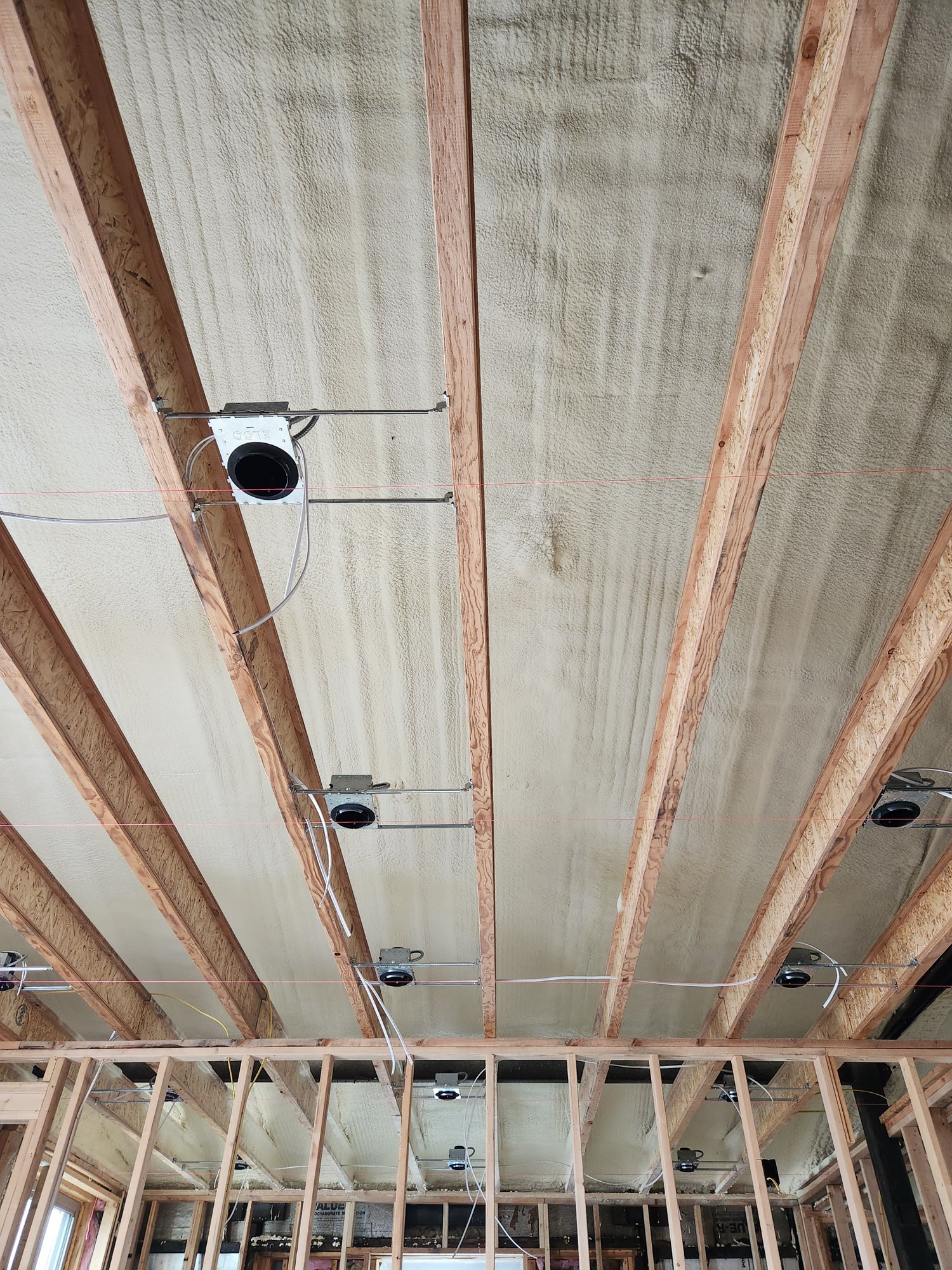
Peak Insulation Co. provides attic spray foam insulation for homes in Libby, Montana, sealing air leaks and delivering high R-value thermal protection built for harsh mountain winters. Our team installs closed-cell foam to the roof deck, preventing ice dams and moisture intrusion while meeting Montana energy code requirements.
What it is
The hidden heat loss that makes attic spray foam the most cost-effective insulation upgrade
Most Libby attics lose heat through air gaps around penetrations and thermal bridges at rafters, not just low R-value. Spray foam addresses both in one pass, which is why payback beats adding more fiberglass.
If you have ever stood in your living room on a January morning in Libby and felt cold air moving even though the furnace is running, you already know what air leakage feels like from the inside. That sensation costs money every hour the heat runs. The decision to seal the attic plane is less about insulation R-value and more about stopping the invisible drafts that make rooms uncomfortable no matter how high you set the thermostat.
Quick facts
- Air leakage dominates: Gaps waste more than thin insulation
- Thermal bridging through rafters: Wood conducts cold into living space
- Ice dam root cause: Warm attic melts snow, refreezes at eaves
- Closed-cell seals both: One application stops air and heat loss
Benefits
What Benefits Does Attic Spray Foam Insulation Deliver?
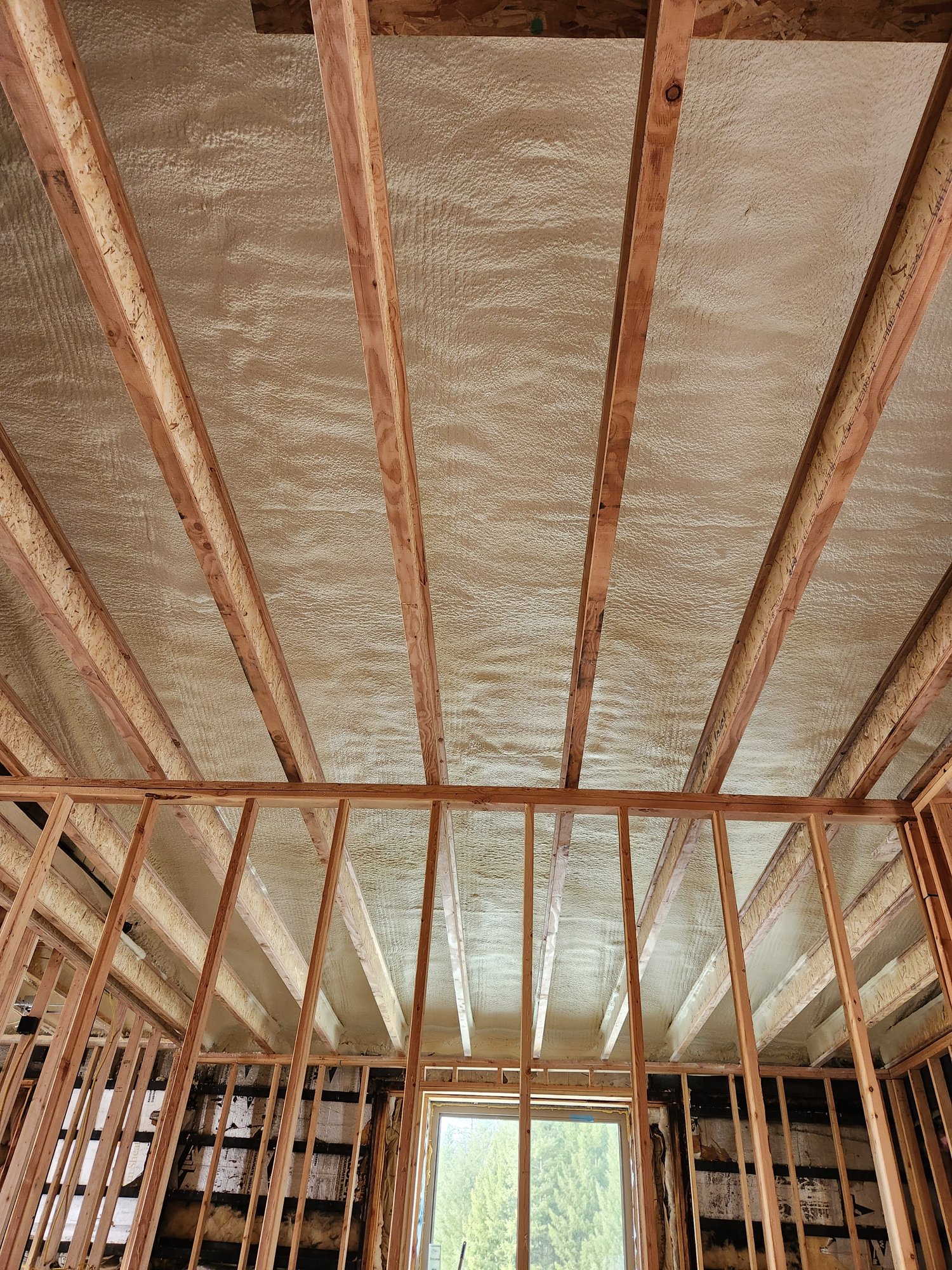
Closed-cell polyurethane stays bonded because it cures against a properly prepared substrate rather than relying on a mechanical fastening that temperature cycling can work loose. The foam absorbs thermal movement through millions of tiny cells rather than separating at the bond line. The right install pays you back in lower energy bills, a quieter building, and an envelope that holds up to Montana winters.
Performance gains that compound over time
- Top plate gaps sealed: Framing joints leak more than sheathing, and foam fills every one of them in one pass.
- Penetration chases closed: Wiring and plumbing create thermal bypasses that foam shuts down at every hole through the attic plane.
- Eave junctions tightened: Soffit transitions allow wind-driven infiltration constantly until foam seals the assembly.
- Built for freeze-thaw cycles: The cellular structure flexes through Montana's daily temperature swings without delaminating from the substrate.
- Air seal that lasts: When prep is done right, the foam bonds to substrate, not dust, and the air seal holds for the life of the building.
How spray foam seals air leaks
How Spray Foam Seals Air Leaks to Stop Energy Waste and Improve Home Comfort Year-Round
If you have ever stood in your living room on a January morning in Libby and felt cold air moving even though the furnace is running, you already know what air leakage feels like from the inside. That sensation costs money every hour the heat runs, and at typical closed-cell pricing of $2.00 to $4.50 per square foot, the decision to seal the attic plane is less about insulation R-value and more about stopping the invisible drafts that make rooms uncomfortable no matter how high you set the thermostat.
This fails quietly when the application skips the prep step. The foam bonds to dust, not substrate, and the air seal opens back up within eighteen months while the R-value chart still looks fine on paper. Nobody notices until the heating bill stops dropping and the cold spots return in the same rooms they started in.
- Top Plate Gaps: Framing joints leak more than sheathing
- Penetration Chases: Wiring and plumbing create thermal bypasses
- Eave Junctions: Soffit transitions allow wind-driven infiltration constantly
Why spray foam
Closed-Cell Spray Foam vs. Blow-In Insulation for Montana Homes
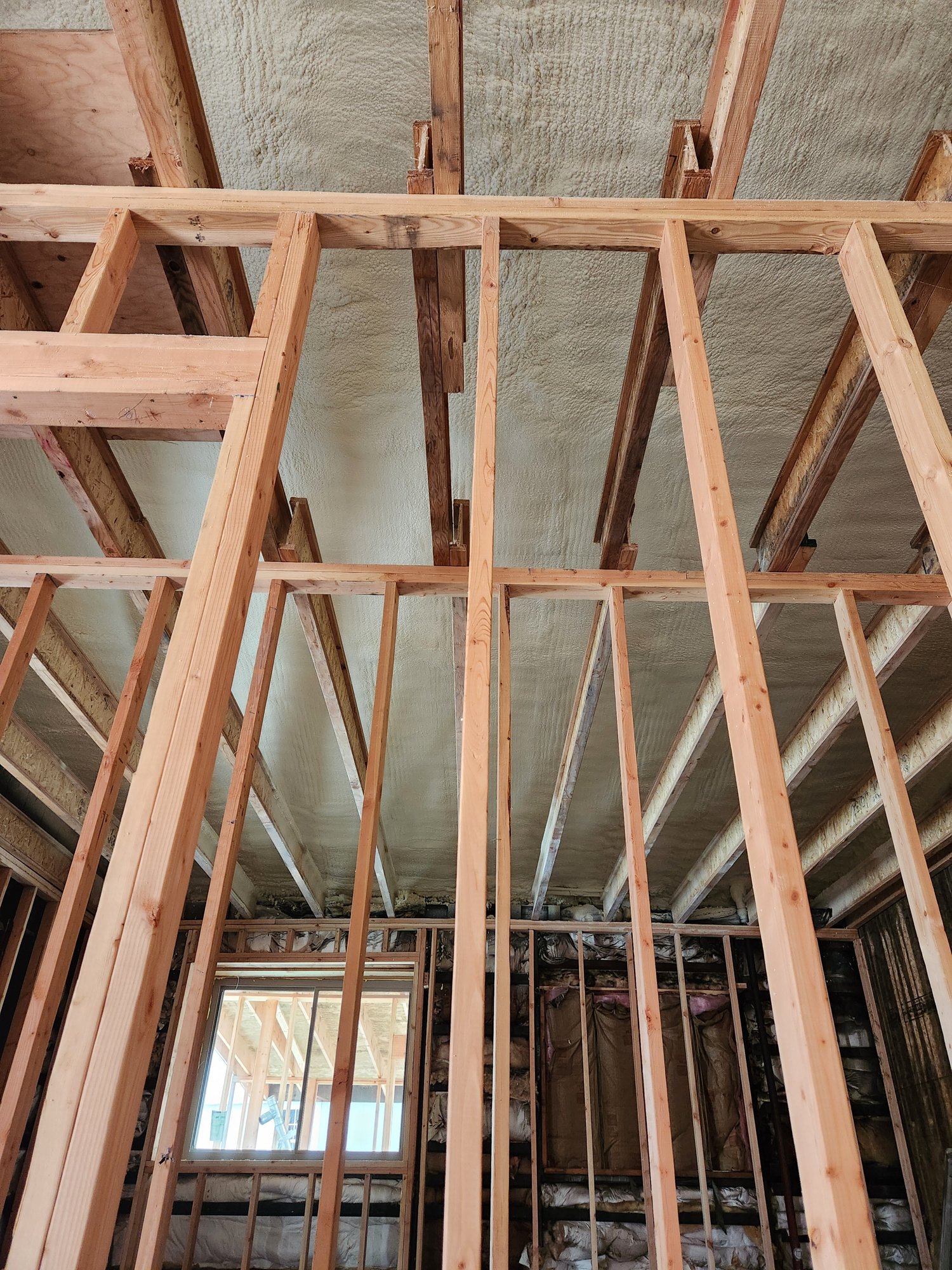
Closed-cell spray foam is the only insulation Peak Insulation Co. installs. Blow-in is listed here as the alternative homeowners most often compare it against, so you can see where each one actually fits in a cold-climate house.
| Feature | Closed-Cell Spray Foam | Blow-In (Loose Fill) |
|---|---|---|
| Typical R-value per inch | About R-6 to R-7 | About R-2.5 to R-3.8 depending on material |
| Air-sealing ability | Air-seals and insulates in the same pass when applied to a clean, prepared substrate | Slows air movement but is not an air barrier; gaps need separate sealing |
| Vapor-control role | At sufficient thickness it can act as a vapor retarder, which is why assembly design matters | Vapor open; a separate vapor retarder is typically required |
| Rim joists and irregular framing | Expands into odd shapes, around wiring and plumbing, and into corners | Hard to apply well in rim joists and small irregular cavities |
| Attic application style | Usually applied at the roof deck to bring the attic inside the thermal envelope | Applied on the attic floor over the ceiling plane in a vented attic |
| Settling and density change | Rigid once cured, so it does not settle in the cavity | Can settle or be disturbed over time, which reduces effective depth |
| Moisture sensitivity | Does not absorb water, but it will seal in an existing leak if the substrate is not dry first | Loses performance when wet and may need replacement after a leak |
| Depth needed to hit a target R-value | Less depth for the same R-value, useful in shallow rafters and tight assemblies | More depth required, which is fine in an open attic with headroom |
| Retrofit practicality | Works well in accessible attics, crawl spaces, and rim joists; closed walls usually need to be opened | Easy to add in an open attic and can be dense-packed into some closed walls |
| Up-front cost tendency | Higher up front; priced by thickness, access, and prep | Lower up front, especially for a simple attic top-up |
| Best-fit situations | Rim joists, crawl spaces, roof decks, cathedral ceilings, shops, and anywhere air leakage or condensation risk is the real problem | Open, well-ventilated attics where added R-value is the only goal and the ceiling plane is already sealed |
| Key limitation | Requires prepared substrates, suitable temperatures, and an assembly designed for an air-tight envelope | Does not stop air leakage on its own, so drafts and condensation issues can remain |
Typical R-value per inch
- Closed-Cell Spray Foam
- About R-6 to R-7
- Blow-In (Loose Fill)
- About R-2.5 to R-3.8 depending on material
Air-sealing ability
- Closed-Cell Spray Foam
- Air-seals and insulates in the same pass when applied to a clean, prepared substrate
- Blow-In (Loose Fill)
- Slows air movement but is not an air barrier; gaps need separate sealing
Vapor-control role
- Closed-Cell Spray Foam
- At sufficient thickness it can act as a vapor retarder, which is why assembly design matters
- Blow-In (Loose Fill)
- Vapor open; a separate vapor retarder is typically required
Rim joists and irregular framing
- Closed-Cell Spray Foam
- Expands into odd shapes, around wiring and plumbing, and into corners
- Blow-In (Loose Fill)
- Hard to apply well in rim joists and small irregular cavities
Attic application style
- Closed-Cell Spray Foam
- Usually applied at the roof deck to bring the attic inside the thermal envelope
- Blow-In (Loose Fill)
- Applied on the attic floor over the ceiling plane in a vented attic
Settling and density change
- Closed-Cell Spray Foam
- Rigid once cured, so it does not settle in the cavity
- Blow-In (Loose Fill)
- Can settle or be disturbed over time, which reduces effective depth
Moisture sensitivity
- Closed-Cell Spray Foam
- Does not absorb water, but it will seal in an existing leak if the substrate is not dry first
- Blow-In (Loose Fill)
- Loses performance when wet and may need replacement after a leak
Depth needed to hit a target R-value
- Closed-Cell Spray Foam
- Less depth for the same R-value, useful in shallow rafters and tight assemblies
- Blow-In (Loose Fill)
- More depth required, which is fine in an open attic with headroom
Retrofit practicality
- Closed-Cell Spray Foam
- Works well in accessible attics, crawl spaces, and rim joists; closed walls usually need to be opened
- Blow-In (Loose Fill)
- Easy to add in an open attic and can be dense-packed into some closed walls
Up-front cost tendency
- Closed-Cell Spray Foam
- Higher up front; priced by thickness, access, and prep
- Blow-In (Loose Fill)
- Lower up front, especially for a simple attic top-up
Best-fit situations
- Closed-Cell Spray Foam
- Rim joists, crawl spaces, roof decks, cathedral ceilings, shops, and anywhere air leakage or condensation risk is the real problem
- Blow-In (Loose Fill)
- Open, well-ventilated attics where added R-value is the only goal and the ceiling plane is already sealed
Key limitation
- Closed-Cell Spray Foam
- Requires prepared substrates, suitable temperatures, and an assembly designed for an air-tight envelope
- Blow-In (Loose Fill)
- Does not stop air leakage on its own, so drafts and condensation issues can remain
When is spray foam the better choice?
Closed-cell foam makes the most sense when air leakage, not just R-value, is the problem: rim joists, crawl space walls, vented attics with ice dam history, cathedral ceilings, and additions with shallow cavities where you need more R per inch. It also fits assemblies where you want the insulation and the air control layer installed in one pass.
When can blow-in still make sense?
Blow-in can still be reasonable in an open, well-detailed attic floor that already has a solid air barrier and plenty of depth available, or where budget is the deciding factor and the assembly has no moisture or condensation history. Peak Insulation Co. does not install blow-in, so if that is the right answer for your project we will tell you.
Recent work
See the work we put our name on
Service Area
Serving All Areas Within the Libby Region With Quick Response and Centralized Access for Residents
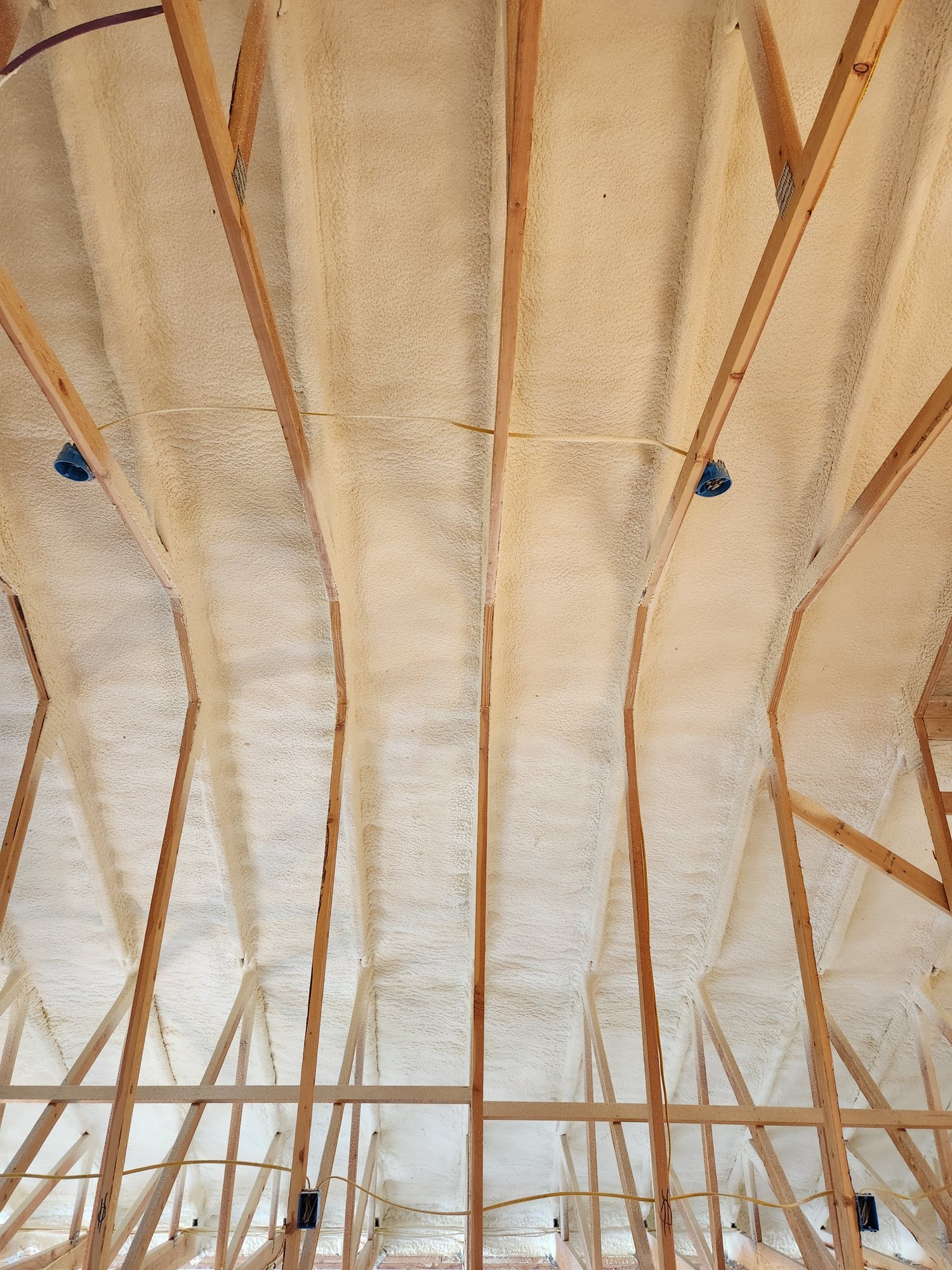
Peak Insulation Co. serves homeowners throughout Libby and surrounding areas, providing attic spray foam insulation directly at their properties. From downtown Libby to Eureka and rural Lincoln County locations, the team travels via Highway 2 and Highway 37 to reach residential properties across northwest Montana. Peak Insulation Co. completes attic installations within two to three days depending on square footage, using closed-cell spray foam systems that meet Climate Zone 6 R-value requirements.
Service Area Coverage
- Serving Libby, Eureka, Troy, and rural Lincoln County residential properties
- Accessible via Highway 2, Highway 37, and Pipe Creek Road
- Coverage extends north to the Canadian border and south through Kootenai National Forest areas
- Attic spray foam application completed on-site with full roof deck preparation
Installations typically begin with substrate moisture and temperature checks, followed by foam application scheduled during dry weather windows to ensure proper curing in mountain climate conditions.
FAQ
Attic Spray Foam Insulation questions, answered

Get a real number for your project this week.
Tell us about your build, attic, or remodel. We will come out, measure, and send a written quote you can actually plan around.